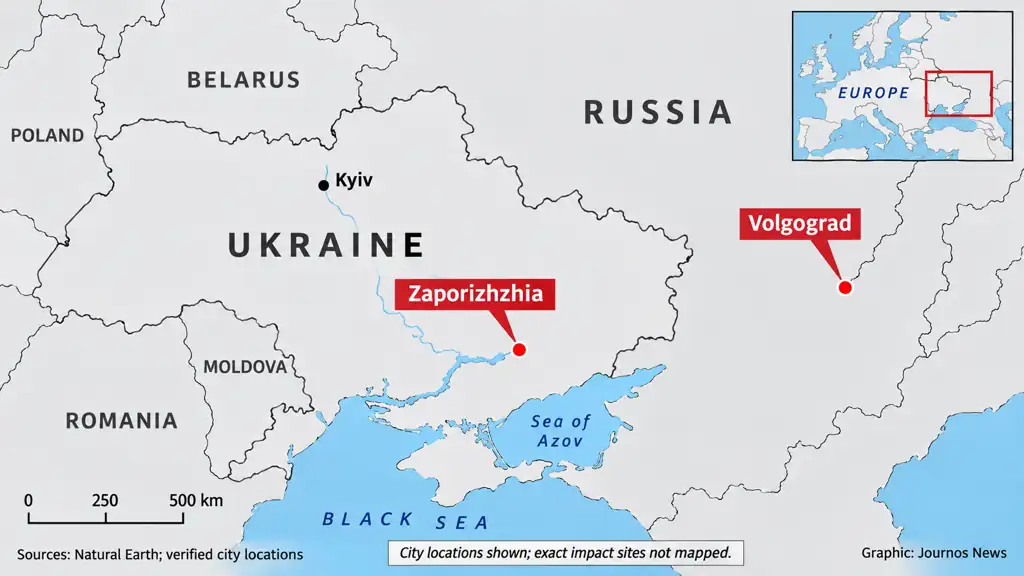
KYIV, Ukraine – Ukraine launched one of its largest reported drone attacks against Russia since the start of the full-scale invasion, with Moscow claiming its air defenses intercepted 1,198 Ukrainian long-range drones overnight from Thursday into Friday, November 13. The barrage came as diplomatic efforts to end the war expanded to include wider European security arrangements, raising concerns among European leaders about Russia’s demands and the future role of NATO.
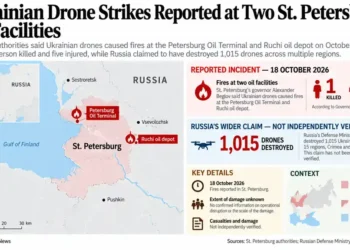
Russia’s Defense Ministry reported that the drones were intercepted across multiple regions between late Thursday and early Friday. The figure represents the Russian government’s account of the attack and has not been independently verified.
Despite the reported interceptions, strikes in three Russian regions killed seven people and wounded 17, according to local officials cited in reporting. The dead included a 12-year-old child.

Ukraine’s General Staff said its forces struck an oil refinery in Volgograd, causing a fire. The facility is a significant part of Russia’s energy infrastructure, although the extent of the damage was not independently established in the available reporting.
European security becomes part of peace negotiations
The drone barrage coincided with a significant development in diplomatic efforts involving Ukraine, Russia and the United States.
After two days of negotiations involving Ukrainian and Russian delegations in Abu Dhabi, US envoys Steve Witkoff and Jared Kushner held discussions with Russian President Vladimir Putin in Moscow before meeting Ukrainian President Volodymyr Zelenskyy in Dublin.
Kushner said Russia had agreed to include European representatives in the next round of negotiations. He indicated that discussions would address broader postwar European security arrangements alongside territorial questions between Ukraine and Russia.
The proposed expansion has raised concerns in European capitals because Moscow has long sought changes to the continent’s post-Cold War security structure, including NATO’s role and the military arrangements involving countries near Russia.
■ Related News


European leaders have warned that negotiations over the continent’s security must not take place without European participation or undermine the sovereignty of individual countries.
European leaders agree on negotiating team
On November 13, European Council President António Costa announced that European Union leaders had agreed on a negotiating team comprising the EU institutions and the E5 group: the United Kingdom, France, Germany, Italy and Poland.
Costa said Europe needed to speak with one united voice in discussions affecting Ukraine and the continent’s security. He also stressed that Ukraine alone has the legitimacy to decide matters concerning its territory and sovereignty.
The European Union said security guarantees for Ukraine should be addressed through the Coalition of the Willing, in close coordination with NATO.
The decision establishes a common European representation for the negotiations, although the precise format and scope of future discussions remain subject to diplomatic developments.
Kyiv warns against weakening Europe’s security framework
Zelenskyy has cautioned that proposals for a new European security framework could serve Moscow’s interests if they shift attention away from ending the war and weaken existing security arrangements.
During his meetings in Dublin, the Ukrainian president argued that Europe must be fully represented in negotiations involving its security and any commitments made to Ukraine.
EU foreign policy chief Kaja Kallas also warned against allowing discussions of Russia’s preferred security arrangements to take precedence over a ceasefire. She argued that expanding the agenda without first addressing the fighting could create opportunities for Moscow to advance its demands.
The Kremlin, meanwhile, indicated that it was open to contacts with European governments but said a decision on an expanded negotiating format would depend on its assessment of their intentions and willingness to contribute to a settlement.
War continues alongside diplomatic efforts
While diplomatic contacts have intensified, fighting has continued across both countries.
Russia launched 117 drones against Ukraine overnight, according to Ukrainian authorities. The attacks killed at least two people, while a strike on apartment buildings in Zaporizhzhia wounded 30, including six children.
Russian attacks on energy infrastructure also caused power outages in 12 Ukrainian regions, according to Ukrainian officials.
The parallel escalation underscores the difficulty of securing a ceasefire while negotiations remain focused on territorial disputes, security guarantees and the future European security order.
The next round of negotiations is expected to include European representatives. However, no comprehensive peace agreement or ceasefire has been announced.
Primary Sources: European Council, “Remarks by President António Costa at the press conference following the informal meeting of Heads of State or Government of 13 November 2026,” November 13, 2026, setting out the agreed European negotiating team comprising EU institutions and the E5 countries, and the principles governing European participation and Ukraine’s sovereignty; President of Ukraine, “Volodymyr Zelenskyy Discussed Diplomatic Process, Winter Preparations, and European Integration with Presidents of European Council and European Commission,” November 12, 2026, documenting Zelenskyy’s discussions with European leaders and his position that Europe must be fully represented in negotiations. The Russian Defence Ministry’s reported figure of 1,198 intercepted Ukrainian drones and Ukraine’s General Staff statement about the Volgograd refinery strike were cited in contemporaneous reporting; the original statements were not independently retrieved for this article.