BERLIN, Germany – Germany’s far-right Alternative for Germany (AfD) has secured a historic victory in Saxony-Anhalt, winning 43.8% of the vote in the eastern state while Chancellor Friedrich Merz’s Christian Democratic Union (CDU) received just 17.2%.
The result gives the AfD 39 of the Saxony-Anhalt Landtag’s 83 seats, leaving it three seats short of the 42 required for a parliamentary majority. While the result does not allow the party to govern alone, it creates a significant test for Germany’s established parties and their longstanding refusal to cooperate formally with the AfD.
The election also represents a major setback for the CDU and adds pressure on Merz as his government faces broader political challenges over economic conditions, immigration and voter dissatisfaction.

AfD Wins Record State Election Result
The AfD emerged as the largest parliamentary group but cannot form a government on its own with 39 seats.
Government formation will therefore depend on whether other lawmakers or parties are prepared to support an administration involving the AfD, either through a formal arrangement or individual votes.
Germany’s established parties have maintained a political firewall against conventional cooperation with the AfD. Merz reiterated that position following the election, preserving a central boundary in Germany’s postwar political system even as the AfD’s electoral support expands.
The party argues that its strong result gives it a mandate to lead the state government. Whether that translates into governing authority remains unresolved.
CDU Faces Major Electoral Setback
The scale of the CDU’s defeat gives the election national political significance.



The party’s 17.2% result places it well behind the AfD and represents a sharp decline from its previous position in Saxony-Anhalt. The setback is particularly consequential for Merz because the CDU is the principal party in Germany’s federal government.
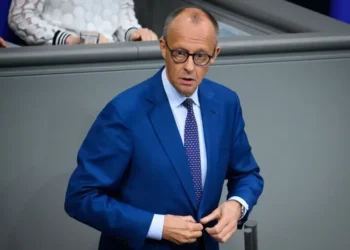
Merz acknowledged the seriousness of the result and said it changes Germany’s political situation, while signaling that he intends to continue with his government’s economic and political program.
The outcome gives the AfD a strong platform to argue that dissatisfaction with established parties is increasingly translating into electoral support.
Political Firewall Comes Under Pressure
The immediate challenge is not simply the AfD’s ability to win votes but whether its electoral strength can eventually overcome the barriers preventing it from entering government.
The party’s 39 seats leave it dependent on lawmakers outside its parliamentary group. Other parties must now decide how to respond while maintaining their existing rejection of formal cooperation.
Possible arrangements could include an alternative governing coalition, continued exclusion of the AfD from government or support for individual measures without a formal coalition. The supplied material does not establish which path will ultimately be taken.
Any formal participation by the AfD in the state government would carry significance beyond Saxony-Anhalt because it could establish a precedent for the party’s entry into government at state level.
Eastern Germany Gives AfD New Momentum
The result underscores the AfD’s particularly strong support in parts of eastern Germany.
The party has expanded its voter base in several eastern states amid dissatisfaction with established parties, immigration policy and economic conditions. Its 43.8% result in Saxony-Anhalt represents a historic state-level performance and strengthens its argument that it has moved beyond the role of a protest party confined to the political margins.
For Germany’s political center, the result demonstrates the scale of the challenge posed by the AfD in regions where the party has established a substantial electoral base.
Merz Faces Pressure Beyond the State Election
The Saxony-Anhalt result does not alter the composition of Germany’s federal government. Merz remains chancellor, and the federal coalition continues to hold responsibility for national policy.
Its political impact, however, extends beyond the state because the election exposes the difficulty facing the CDU as it attempts to contain the AfD’s rise without entering formal cooperation with it.
Merz is already facing concerns over Germany’s economic performance, unpopular reforms, immigration and the cost of living, according to the supplied material. The election gives those domestic pressures a new political dimension by demonstrating the electoral strength of an alternative on the right.
How the federal government responds to those pressures, including its approach to immigration, economic policy and competition with the AfD, will be closely watched.
Government Formation Becomes the Next Test
The immediate political question is how Saxony-Anhalt will be governed.
With the AfD three seats short of a majority, other parties hold the balance in any attempt to form a government. Their decisions will determine whether the AfD remains outside the executive despite its dominant electoral performance or gains a role in governing the state.
The election therefore creates different challenges for the two main sides of Germany’s political divide. The AfD must demonstrate that its historic vote share can translate into governing influence, while the CDU and other established parties must respond to the result without abandoning their stated refusal to cooperate with the far-right party.
The formal government-formation process will determine the next stage of that political contest.
Reporting Credit: State Returning Officer / Statistical Office of Saxony-Anhalt — official election results, vote shares, turnout and parliamentary seat allocation; Saxony-Anhalt Landtag — parliamentary information on the 83-seat legislature and government formation; Christian Democratic Union of Germany (CDU) — party response to the election result; Alternative for Germany (AfD) — election response and statements concerning government formation; Federal Government of Germany / Federal Chancellor’s Office — Chancellor Friedrich Merz’s response and the federal government’s position on cooperation with the AfD.