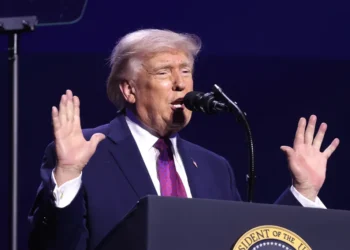
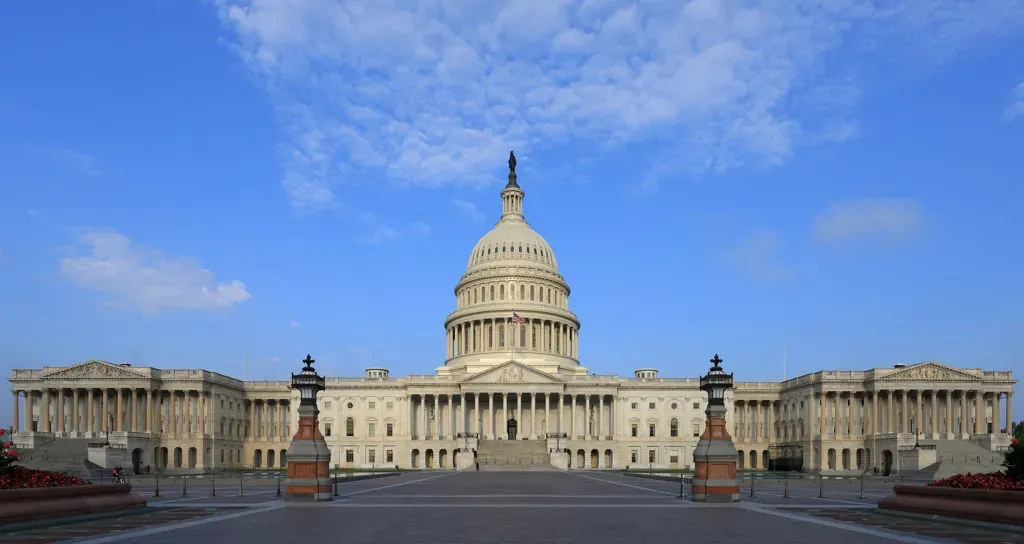
WASHINGTON, United States – Democrats have won control of both chambers of Congress in the November 3 midterm elections, delivering a major political setback to President Donald Trump and ending Republican control of the legislature for the final two years of his term.
Democrats gained control of both chambers of Congress after winning key Republican-held seats in the November 3 midterm elections. The change gives the party greater authority over congressional committees, investigations, legislative scheduling and federal spending negotiations, positioning it to challenge President Donald Trump’s legislative priorities during the final two years of his term.
The transfer of congressional control represents a significant change in Washington’s political balance. Republicans had entered the election with narrow majorities in both chambers, allowing Trump’s administration to advance much of its legislative agenda with support from congressional party leaders.

The new Democratic majorities will have greater authority over congressional committees, investigations, legislative scheduling and federal spending negotiations. However, the election does not give Democrats control over the executive branch or the constitutional powers of the presidency.
Democrats capture decisive Senate seats
Democratic gains in the Senate were central to the party’s recovery of congressional power.
The party secured victories in Republican-held seats in Texas, South Carolina, North Carolina, Ohio, Kansas and Iowa, according to the reported election projections. Those victories were sufficient to move Democrats across the threshold required to control the upper chamber
Among the significant results was the victory of James Talarico in Texas, where he defeated Republican Ken Paxton. The outcome marked a major Democratic breakthrough in a state that has remained a Republican stronghold in federal elections.
In Kansas, Democrat Adam Hamilton defeated incumbent Republican Senator Roger Marshall, marking an extraordinary reversal in a state that had consistently supported Republican Senate candidates for decades.
■ Related News




Iowa also shifted to the Democrats, with Josh Turek defeating Republican Ashley Hinson. In Ohio, former Democratic senator Sherrod Brown returned to the Senate after defeating Republican incumbent Jon Husted.
North Carolina and South Carolina produced further Democratic victories through Roy Cooper and Annie Andrews, respectively. These results expanded the party’s Senate gains beyond the traditionally competitive battlegrounds.
The reported victories represent a significant shift in the Senate’s political balance. However, the results should be distinguished from the final certified vote totals, which are issued by the respective state election authorities.
House Democrats regain control
Democrats also crossed the threshold required to take control of the House, where 218 of the 435 seats are needed for a majority.
The party’s gains included congressional districts that had supported Trump in the 2024 presidential election, indicating that Democratic candidates made advances beyond traditionally competitive districts. Comparing the 2024 and 2026 election results will help establish the scale of these shifts and the extent of Democratic gains in previously Republican-leaning districts.
The House result gives Democrats control of the chamber’s speakership, committee leadership and legislative agenda. Hakeem Jeffries is expected to become the next House speaker, replacing Republican leadership when the new Congress convenes.
The precise final party composition remains subject to outstanding vote counts. The 218-seat threshold establishes control, but it does not establish the final number of seats each party will hold.
Economic concerns and dissatisfaction with Trump
Economic pressure was a major concern for voters heading into the election, particularly inflation and the cost of living.
An October survey conducted by the AP-NORC Center for Public Affairs Research found that 85% of voters considered the economy one of the most important issues in deciding their vote, while 84% identified the cost of living as a major concern. Healthcare ranked next, cited by 69%, followed by the war with Iran at 64%.
The survey also found that 64% disapproved of Trump’s handling of his job, while 74% disapproved of his management of the economy and 79% disapproved of his handling of the cost of living.
These findings provide important context for the Democratic gains. They show that dissatisfaction with economic conditions and the administration was widespread before voters went to the polls.
Election-day polling also indicated that concerns about government corruption and the state of American democracy were important to many voters. Early exit-poll findings suggested that Trump’s approval rating stood at approximately 38%, while roughly six in 10 voters said he was a factor in their House vote.
The Iran conflict added another dimension to the election. Higher energy costs and public disagreement over the military campaign gave Democrats an opportunity to challenge the administration’s foreign policy and its economic consequences.
However, polling cannot establish that these issues individually determined the election outcome. Voters had different priorities, and candidate performance, local political conditions and campaign organization also influenced individual races.
A stronger congressional check on Trump’s administration
The Democratic takeover will significantly change the relationship between Congress and the White House.
With control of the House, Democrats will be able to select committee chairs, determine much of the legislative agenda and conduct more extensive investigations into executive branch activities.
Congressional committees can summon witnesses, request government documents and issue subpoenas under their applicable rules and legal authority. Their investigations can examine government spending, administrative decisions, potential misconduct and the implementation of federal policies.
Democrats are expected to use those powers to investigate matters involving the administration and Trump’s family business interests.
Potential areas of scrutiny include government contracting, immigration enforcement, the administration’s handling of the Iran conflict, federal agency decisions and questions surrounding presidential family finances.
However, an announced intention to investigate is not the same as an investigation formally authorized by a congressional committee. Specific inquiries must be evaluated through their official announcements, committee records and subsequent actions.
The new majority will also have greater influence over federal spending negotiations. Congress controls appropriations, giving lawmakers substantial leverage over government funding and the resources available to executive agencies.
That authority could create confrontations over the administration’s military spending, domestic programmes, immigration enforcement and foreign assistance.
Impeachment remains possible but is not automatic
Democratic control of the House will restore the party’s ability to initiate impeachment proceedings against Trump or other federal officials.
The House has the constitutional authority to approve articles of impeachment by a simple majority. The Senate then conducts the trial, with conviction and removal requiring a two-thirds vote of senators present.
The distinction is important because impeachment is not itself removal from office.
Although some Democrats have discussed the possibility of impeachment, the election result does not establish that party leaders have decided to pursue another proceeding against Trump.
A Democratic-controlled House could instead prioritize investigations, hearings and demands for government accountability without immediately moving toward impeachment.
The outcome will depend on the evidence uncovered, the positions of Democratic leadership and the political calculations surrounding the new Congress.
Trump signals willingness to work with Democrats
Trump has acknowledged the Democratic victories and indicated that he is prepared to work with the opposition party.
In remarks reported after the election, he said he expected the administration and Democrats to reach agreements on some issues. His response contrasts with his earlier warning that he would use his presidential veto against Democratic legislation.
Before the election, Trump told CBS News that the presidency retained substantial executive authority and that he was prepared to use his veto power if Democrats controlled Congress. He also suggested that repeated vetoes could eventually force negotiations.
The president’s response suggests that cooperation and confrontation could both define the next two years.
The administration will retain control over executive departments, federal agencies and the implementation of its policies. However, Democratic committee chairs will have greater opportunities to examine those activities and challenge the administration through congressional oversight.
The Senate majority will also influence the consideration of presidential nominations, including Cabinet appointments and federal judicial nominees requiring Senate confirmation.
Foreign policy faces greater congressional scrutiny
The change in congressional control could have consequences beyond Washington, particularly for countries affected by American military operations, security commitments and foreign assistance.
The conflict involving Iran is likely to become an important source of disagreement between the administration and the new Democratic majorities.
Democrats could use congressional hearings, spending negotiations and legislative proposals to scrutinize the military campaign and seek greater accountability over its objectives and costs.
Congress could also debate restrictions on military funding or attempt to pass legislation addressing the president’s authority to continue military operations. However, any attempt to impose binding restrictions would face constitutional, procedural and presidential obstacles.
The Senate and House could also revisit American support for Ukraine, military assistance to Israel and relations with NATO allies.
Democratic lawmakers have generally placed greater emphasis on continued support for Ukraine than the Trump administration’s approach. A new majority could seek additional assistance or challenge decisions to reduce American commitments.
Nevertheless, congressional control does not automatically transfer responsibility for diplomacy or military command from the president to Congress.
Trump remains commander-in-chief, and the administration retains substantial authority over foreign relations. Congress can influence policy through legislation, funding and oversight, but disagreements between the branches could produce prolonged political and institutional disputes.
A divided political system ahead of 2028
The Democratic victories establish a new political environment for the remainder of Trump’s presidency and the next presidential election cycle.
Democrats will have an opportunity to demonstrate that they can govern Congress, investigate the administration and advance their own legislative priorities. Their performance could influence public perceptions of the party as it prepares for the 2028 presidential election.
Republicans, meanwhile, will retain the presidency and the executive branch. Trump’s ability to influence his party and mobilize Republican support could remain an important factor in negotiations with congressional Democrats.
The new Congress will therefore face competing pressures: Democrats will want to demonstrate effective oversight and deliver policy results, while Republicans will seek to defend the president’s agenda and prevent legislative defeats.
The election has changed the balance of institutional power, but it has not resolved the underlying political divisions in the country.
Democrats now have the congressional majorities needed to challenge the administration more directly. Whether they can translate that advantage into lasting policy changes will depend on their ability to maintain party unity, secure sufficient votes and negotiate with a Republican president who retains substantial constitutional authority.
The new congressional term begins on January 3, 2027. From that date, Washington will enter a period of divided government in which congressional investigations, spending negotiations and disputes over presidential authority are likely to become central features of American politics.
Primary Source
- State Election Authorities: Official 2026 general election returns and available certification records for the relevant U.S. Senate and House contests.
- U.S. House of Representatives: Official institutional records concerning House membership, leadership, committee authority and congressional proceedings.
- U.S. Senate: Official institutional records concerning Senate membership, leadership, nominations and confirmation powers.
- U.S. Constitution: Article I, Article II and the Twentieth Amendment, covering congressional powers, presidential authority and the beginning of a new congressional term.
- AP-NORC Center for Public Affairs Research: October 2026 voter survey release, topline results and survey methodology.
- Presidential Statements: Original recordings or transcripts of President Donald Trump’s relevant pre-election and post-election remarks.