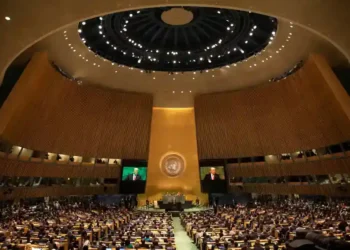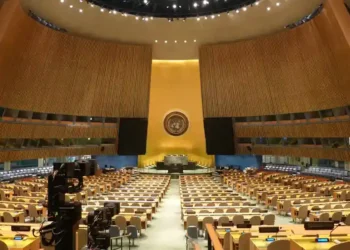
UNITED NATIONS, New York – The United Nations General Assembly’s 2026 vote on the United States’ economic embargo against Cuba is testing international support for a resolution calling for the restrictions to end, as Washington increases pressure on Havana and the two governments clash over the island’s political and economic future.
The vote was scheduled for October 28, following a debate that began the previous day. However, the official 2026 voting record and final tally could not be independently confirmed in the UN records available for this report. The outcome therefore remains unverified and must not be confused with the previous year’s result.
In 2025, the General Assembly adopted the resolution by 165 votes in favor, seven against and 12 abstentions. That vote was recorded on October 29, 2025, under resolution A/RES/80/4. It provides the latest verified comparison, not evidence of how countries voted in 2026.

The diplomatic dispute has become more confrontational this year. Cuban officials accuse Washington of pressuring countries to change their votes, while the United States argues that support for the resolution risks shielding Cuba’s government from scrutiny over its political system and human rights record. The competing claims remain subject to attribution and verification.
What the UN resolution does
The annual measure is titled “Necessity of ending the economic, commercial and financial embargo imposed by the United States of America against Cuba.” Cuba brings it before the General Assembly, where each of the UN’s 193 member states has one vote. The assembly has considered the resolution annually since 1992.
The draft calls on states to refrain from measures that restrict international trade and navigation in ways addressed by the text. It reaffirms principles including the sovereign equality of states, non-intervention and non-interference in domestic affairs. It also raises concerns about the effects of US legislation, including the 1996 Helms-Burton Act, on other countries’ dealings with Cuba.
The resolution is not legally binding in the way a domestic law or enforceable court order would be. It expresses the General Assembly’s political position and carries diplomatic weight, but it cannot compel Washington to end the embargo. Changes to the US sanctions framework depend on decisions by the US government and, where legislation applies, Congress.
The distinction matters because a large majority in the General Assembly would demonstrate international opposition to the embargo without automatically changing the restrictions faced by Cuban businesses, banks, government entities or foreign companies dealing with the island.


Cuba alleges pressure on countries before the vote
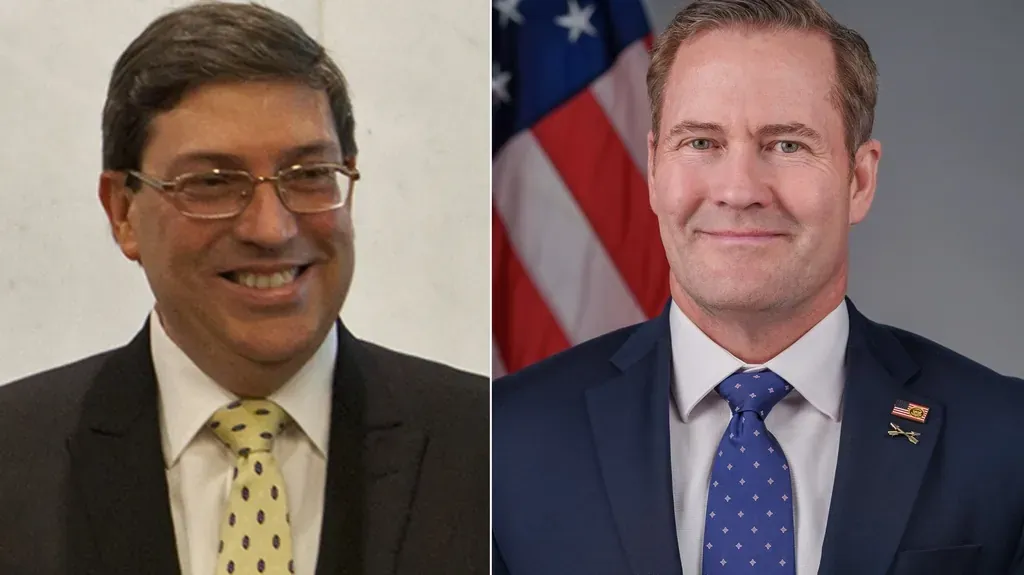
Cuban Foreign Minister Bruno Rodríguez has accused US officials of threatening countries that support the resolution. In remarks reported on October 21, Rodríguez alleged that governments could face consequences including visa restrictions, punitive tariffs, suspended cooperation and economic sanctions if they voted with Cuba. He also alleged that Washington was seeking to influence domestic politics in countries that opposed its position.
These are allegations by the Cuban government. The material reviewed for this report did not independently establish that each alleged threat occurred or that a particular country changed its position because of US pressure.
The US State Department had not immediately responded to the allegations when they were reported. US Ambassador to the United Nations Mike Waltz, meanwhile, urged countries to reject the resolution. He argued that the measure would excuse abuses by Cuba’s government and overlook the suffering of Cubans.
A definitive assessment requires a response from the State Department and documentary evidence, such as official communications, statements from the governments involved or records showing that specific threats were made. Without such evidence, the allegations should not be reported as established facts.
Washington’s objections to the resolution
The Trump administration has argued that Cuba’s economic crisis cannot be explained solely by US restrictions. Its position emphasizes the Cuban government’s political system, restrictions on civil liberties, alleged corruption and economic policies.
During the UN debate, Waltz challenged the Cuban government’s account of the embargo’s effects and pointed to trade between the two countries. He said US exports to Cuba exceeded $876 million in the first eight months of 2026. That figure was presented as part of the US delegation’s argument; the underlying trade data and the categories included in the total should be independently checked before publication.
Cuba argues that permitted trade does not remove the broader financial, shipping and regulatory barriers created by the sanctions system. Its government says restrictions increase costs and make it harder to obtain fuel, equipment, medicines and other essential supplies.
The two positions address different questions. Evidence of US exports would not by itself establish that the embargo has no wider economic effect. Conversely, evidence of shortages in Cuba would not, on its own, establish that US policy is their sole cause. A sound assessment must examine the legal restrictions, actual trade flows, domestic economic decisions and other external factors.
A public confrontation at the General Assembly
The debate also produced an unusually heated exchange between Waltz and Rodríguez on October 27. The confrontation followed remarks by the US ambassador criticizing Cuba’s government and its handling of the country’s economic difficulties.
Cuban delegates interrupted and shouted objections. Rodríguez then challenged Waltz during the proceedings, and the General Assembly’s presiding officer briefly suspended the meeting before the debate continued. The exchange highlighted the deterioration in diplomatic relations but did not resolve the substantive dispute over the embargo.
The official meeting record and recording are important for establishing the precise sequence of events, the words used by each delegation and the chair’s rulings. Until those details are checked against the official record, characterizations of the incident should remain restrained and attributed.
The confrontation took place as the United States intensified its pressure on Cuba. President Donald Trump has threatened additional economic measures against countries supplying oil to the island, while US officials have also raised the possibility of more direct action. Such statements have added to Havana’s concerns about energy supplies and the risk of further escalation.
Cuba’s economic and humanitarian pressures
Cuba is facing a severe economic crisis marked by fuel shortages, electricity disruptions and difficulties obtaining essential goods. Power cuts can affect more than household lighting: they can interrupt water pumping, food preparation, communications and the operation of health facilities. UN officials have warned that energy shortages are placing essential services under strain.
The embargo is a longstanding part of the country’s external economic environment. US restrictions can complicate financial transactions, trade and access to equipment, including when transactions involve third-country companies. Cuba argues that these barriers contribute to shortages and raise the cost of obtaining supplies.
But the causes of the crisis are broader than one policy. Cuba’s domestic economic management, low productivity, limited access to foreign currency, infrastructure problems and dependence on imported fuel also require examination. The relative contribution of each factor cannot be established by official statements alone.
A complete assessment of the humanitarian impact requires dated data from UN agencies and Cuban public institutions on electricity generation, fuel imports, food availability, medical supplies and interrupted healthcare. This report has not independently verified a complete, current dataset for those indicators. Specific claims about the number of people affected, postponed procedures or the share of shortages attributable to sanctions should therefore remain out of the article until supported by primary evidence.
How the embargo developed
The United States began imposing economic restrictions on Cuba in 1960, after the Cuban Revolution and the nationalization of US-owned properties. Washington expanded the restrictions in the following years. In February 1962, President John F. Kennedy formally established a broad trade embargo.
Congress later codified major elements of US policy in legislation. The Cuban Democracy Act of 1992 tightened aspects of the sanctions framework, while the Helms-Burton Act of 1996 strengthened and codified the embargo and included provisions affecting foreign companies’ dealings with Cuba. These laws help explain why lifting the restrictions involves more than an executive announcement.
Relations have shifted at different points. The Obama administration restored diplomatic relations and eased some restrictions, but many sanctions remained in place. Subsequent administrations reversed or tightened parts of that approach. The Trump administration’s renewed pressure has added to the longstanding dispute over whether economic restrictions encourage political change or deepen hardship for ordinary Cubans.
The annual UN vote has become a recurring diplomatic test of those competing approaches. It records how governments view the embargo, but it does not itself settle the legal or political questions surrounding US policy.
What the 2026 vote can establish
The final tally will help show whether international opposition to the embargo has remained as broad as in previous years, or whether pressure from Washington has altered the voting pattern. The comparison must use the official 2026 record, including votes in favor, votes against, abstentions and countries that did not vote.
The 2025 result—165 in favor, seven against and 12 abstentions—remains the latest verified baseline for this report. It cannot be used as a substitute for the current vote.
The final record should also be read alongside the full resolution, the meeting transcript and official explanations of vote from both governments. Those sources can establish what the resolution says, how countries justified their decisions and what legal effect the measure does—and does not—have.
Until the official tally is confirmed, the 2026 vote’s outcome and any year-on-year change remain unresolved.
Reporting Credit: United Nations General Assembly — resolution A/RES/80/4 and recorded vote of October 29, 2025; 2026 debate materials and the scheduled vote on the embargo resolution. United Nations meeting coverage and transcript records — debate proceedings and statements by the Cuban and US delegations on October 27, 2026. US Mission to the United Nations — public position attributed to Ambassador Mike Waltz. Cuban Ministry of Foreign Affairs — allegations of US diplomatic pressure as stated by Foreign Minister Bruno Rodríguez. Further verification of the official 2026 vote tally, the full meeting record, the US State Department’s response, and current UN-agency data on Cuba’s energy and humanitarian conditions remains outstanding.