CAIRO, Egypt – Egypt has pledged to support Saudi Arabia as Houthi attacks intensify, while lawmakers consider whether to authorize possible military assistance to the kingdom.
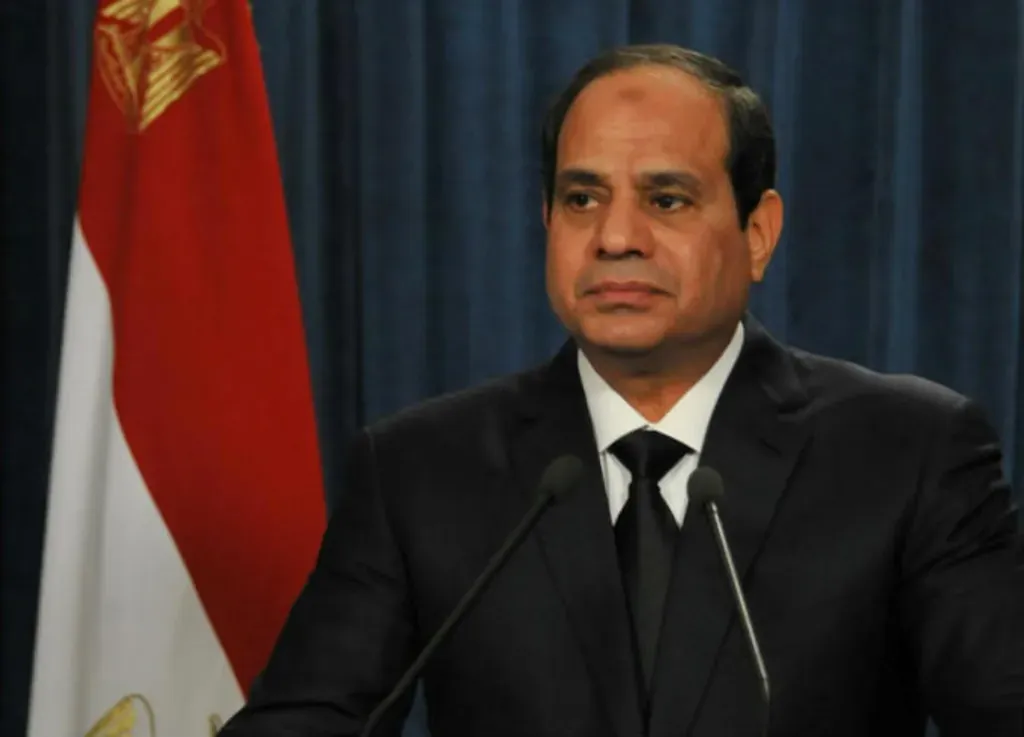
The National Defence Council, chaired by President Abdel Fattah el-Sisi, announced the pledge on October 18. It promised “all necessary and possible forms of support” to protect Saudi Arabia’s security, stability and territorial integrity.
The statement did not specify what that support would involve. It also called for stronger diplomatic efforts to reduce regional tensions and resolve conflicts peacefully.

A separate decision on military action remains pending. El-Sisi asked parliament on October 17 to authorize measures to defend Saudi Arabia if Riyadh requested assistance. Lawmakers began deliberations the following day but postponed a vote to allow more members to speak.
The latest reports available for this draft said the debate would resume on October 19 and could continue into October 20. No confirmed parliamentary decision or military deployment had been established in the material reviewed.
Egypt pledges support but leaves details open
The National Defence Council met at the presidential palace on October 18 to discuss the worsening regional security situation. Its statement described the attacks on Saudi Arabia as unacceptable and linked Saudi security to Egypt’s own national security.
The council pledged support to protect Saudi territory, resources and Islamic holy sites. It also called for continued political and diplomatic work with regional and international partners to reduce tensions.
However, the statement did not name a military unit, set a deployment timetable or identify a specific operation. It did not publicly define whether support would involve personnel, equipment, intelligence or other assistance.
■ Related News



That distinction matters. A political pledge signals Egypt’s position, but it does not establish that troops have been sent or that a particular military mission has been approved.
Parliament has not completed its decision
El-Sisi called for an emergency parliamentary session on October 17. He said Egypt would take measures to defend Saudi Arabia if the kingdom asked for help, while seeking legislative authorization for any action.
Parliament met on October 18 but postponed a vote after a closed session that lasted nearly three hours. Lawmakers told AFP that the session had been extended to give members more time to express their views.
Mada Masr also reported that lawmakers wanted further details about the proposed role of Egypt’s armed forces. The report said the vote had been delayed until after additional sessions on Monday and Tuesday.
The debate concerns a possible military mission, not a confirmed deployment. The full text of any proposed authorization, including its legal limits and operational scope, was not available in the material reviewed for this draft.
The outcome remains important. Parliamentary approval would be a legal step toward possible action, but it would not by itself prove that Saudi Arabia had formally requested assistance or that Egyptian forces had begun operations.
Saudi Arabia faces renewed Houthi attacks
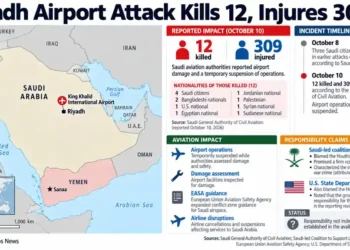
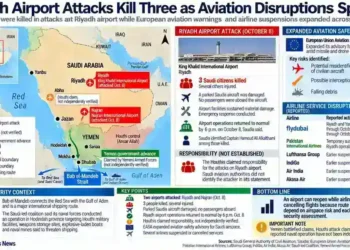
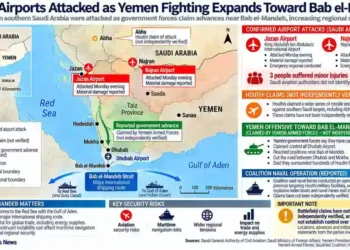
Egypt’s pledge comes amid a sharp rise in attacks attributed to Yemen’s Houthi movement. Recent strikes have targeted Saudi airports and oil infrastructure, raising concerns about civilian safety, transport and energy supplies.
Reuters reported that attacks on Riyadh’s main airport and Saudi Aramco facilities formed part of the security crisis behind Cairo’s move. The Houthis, who control Yemen’s capital and other areas, have been involved in a prolonged conflict with the Saudi-led coalition and forces aligned with Yemen’s internationally recognized government.
The latest escalation has also increased risks for shipping and regional trade. Saudi Arabia sits along the Red Sea and near the Bab el-Mandeb strait, a key route connecting the Red Sea with the Gulf of Aden.
However, the reported attacks do not establish that Egypt has agreed to join combat operations in Yemen. El-Sisi’s public statement made the proposed assistance conditional on a request from Saudi Arabia and parliamentary authorization.
Egypt’s earlier role in Yemen
Egypt joined the Saudi-led coalition that intervened in Yemen in 2015. Its participation was more limited than that of some other coalition members, and the current proposal would require its own political and legal decisions.
The new pledge comes as Cairo and Riyadh maintain close security and diplomatic ties. Egyptian officials have described the two countries’ security as closely linked, while Saudi leaders have pursued cooperation with regional partners amid the renewed attacks.
Yet the form of any Egyptian contribution remains unclear. Possible forms of assistance discussed in public reporting should not be treated as approved plans. The government has not publicly detailed a mission, force size or rules for any deployment.
The distinction is especially important when considering whether a defensive mission would remain within Saudi territory or extend into Yemen. No confirmed operational plan establishing either option was available in the sources reviewed.
Diplomacy remains part of Egypt’s stated position
The National Defence Council paired its support pledge with a call for stronger diplomatic efforts. It said Egypt would work with relevant regional and international parties to reduce tensions and pursue peaceful solutions.
That statement leaves open how Cairo intends to balance military preparations with diplomacy. The government has not publicly outlined a negotiating initiative tied directly to the proposed assistance.
Any military role could carry risks for Egyptian personnel and could draw the country deeper into a conflict that has already affected regional security and trade. The extent of those risks would depend on the mission, its location and the forces involved.
For now, the public record supports a pledge of support and a request for parliamentary authorization. It does not establish a formal Saudi request, a completed vote or an operational deployment.
What remains unresolved
The next key development is parliament’s decision. Lawmakers’ deliberations are expected to continue, but the exact timing and result of a vote require confirmation.
Other questions remain open. Has Saudi Arabia formally requested assistance? What powers would the authorization grant el-Sisi? Would any mission involve troops, air defence, intelligence or other support? Would it be limited to protecting Saudi territory?
The answers will determine whether Egypt’s pledge becomes a concrete military commitment. Until officials provide them, the move should be described as a potential expansion of support rather than a confirmed entry into combat.
The government’s stated call for de-escalation also remains part of the policy. Egypt-Saudi security cooperation is now under greater scrutiny as Cairo weighs its response to the attacks and parliament considers the authority for any military action.
Reporting Credit: The Egyptian Presidency’s October 18 National Defence Council statement was consulted for the official pledge and the call for diplomatic de-escalation. Reuters reporting was used for the president’s request for parliamentary authorization and the regional security context. Reports from Mada Masr, Ahram Online and AFP were consulted for the postponed vote and ongoing parliamentary deliberations. Direct confirmation from Saudi officials, the full proposed authorization text and an updated parliamentary record remain outstanding.