WASHINGTON, United States – The Pentagon is investigating how components from the F-35 fighter program ended up in Hong Kong after a shipment traveling from Australia to the United States was unexpectedly diverted, raising questions about the security and accountability of the aircraft’s international supply chain.
The F-35 Joint Program Office confirmed that the Defense Department is aware of what it described as a “shipment issue” involving unserviceable F-35 Lightning II components.
The office said it is working with U.S. authorities and industry partners to recover the components, investigate what happened and introduce safeguards against a repeat incident.

The circumstances surrounding the diversion remain unclear.
Australian Defense Minister Richard Marles confirmed that F-35 components had ended up in Hong Kong but said his understanding was that the missing items were not sensitive equipment or sensitive parts. Australia is participating in the investigation with the United States and Lockheed Martin.
Other reporting has described the shipment as including an F-35 cockpit canopy and a weapons-bay door. The reported presence of a canopy has increased concern because components associated with the aircraft’s low-observable characteristics could potentially provide information about its design or manufacturing. The Pentagon has not publicly characterized the individual components as classified or disclosed their technical sensitivity.
How the shipment was diverted
The parts were being transported from Australia to the United States for repair or disposal when the shipment was unexpectedly routed to Hong Kong, according to reporting based on people familiar with the matter.
The shipment was being handled by an intermediary working on behalf of Lockheed Martin, the F-35’s prime contractor. It remains unclear why the routing changed, who authorized the diversion or who currently possesses the components.
■ Related News


The uncertainty is central to the Pentagon investigation.
The Defense Department has confirmed that there was a shipment problem and that it is seeking to recover the components. It has not publicly provided a complete reconstruction of the shipment’s movements.
Lockheed Martin said it could not discuss the status of individual shipments for security reasons but said its teams follow U.S. regulations governing the movement of F-35 components and use safeguards intended to protect the program and allied partners.
Why Hong Kong matters
Hong Kong is a special administrative region of China, and the territory does not maintain an independent military or foreign-policy system.
That has heightened concern in Washington over the possibility that Chinese authorities could obtain access to the components.
Congress has opened an inquiry into the circumstances surrounding the shipment, according to reporting that first brought the incident to public attention. Pentagon and State Department officials had already briefed congressional staff on the matter before the incident became public.
The existence of a shipment in Hong Kong does not by itself establish that China’s military or intelligence services obtained or examined the components.
The current public evidence establishes that the parts were diverted to Hong Kong and that U.S. authorities are attempting to recover them. Questions about who currently controls the components and whether they were accessed by Chinese authorities remain under investigation.
The F-35 supply chain is unusually global
The incident exposes a difficult feature of the F-35 program: its sustainment system is international by design.
The aircraft is operated by the United States and numerous allied countries. Spare parts are maintained through a global pool rather than being held exclusively by each individual operator.
A 2023 Government Accountability Office investigation found that the F-35 program’s spare-parts system involved more than 50 domestic and international facilities operated by contractors other than Lockheed Martin and Pratt & Whitney. The Department of Defense owned the global pool, while contractors managed many of the parts.
That arrangement allows parts to be moved between countries as aircraft require maintenance.
It also creates a complicated chain of custody.
A component can move through military organizations, contractors, logistics companies and international facilities before reaching its final destination. Each additional handoff creates a requirement for accurate records, authorization and physical security.
GAO had already identified accountability problems
The Hong Kong incident comes against the backdrop of documented problems with F-35 spare-parts accountability.
In a 2023 report, the Government Accountability Office found that one F-35 prime contractor had recorded losses of more than 1 million spare parts worth over $85 million since May 2018.
The F-35 Joint Program Office had reviewed less than 2% of those losses. More than 900,000 parts valued at more than $66 million had not been reported to the program office for review as of October 2022.
The GAO said the Defense Department did not have a complete system for tracking the location, quantity and value of all government-owned F-35 spare parts held at contractor facilities.
It recommended that the Pentagon establish clearer requirements for contractors to report losses and dispose of excess, obsolete or unserviceable components.
The Pentagon agreed with the recommendations.
The problem has not disappeared
A more recent GAO assessment, released in June 2026, found that F-35 sustainment continues to face significant challenges.
The watchdog reported that the aircraft’s mission-capable rate declined from 67% in fiscal 2021 to 44% in fiscal 2025, while the full-mission-capable rate declined from 38% to 25%.
GAO said the F-35 Joint Program Office’s new sustainment strategy requires an estimated additional $13.7 billion through fiscal 2031 and depends heavily on private-sector suppliers to provide more than $7 billion in additional parts and other material. Capacity constraints remain for some key components.
GAO also found that the program was still working to improve its property-accountability systems.
As of fiscal 2025, the program office had conducted inventories of F-35 parts and equipment valued above $1 million, but had not verified the accuracy and completeness of all property records. GAO said information-technology systems needed for complete accountability were not yet fully in place.
The latest investigation therefore comes at a time when the Pentagon is already attempting to strengthen oversight of the F-35 sustainment network.
The security question remains unresolved
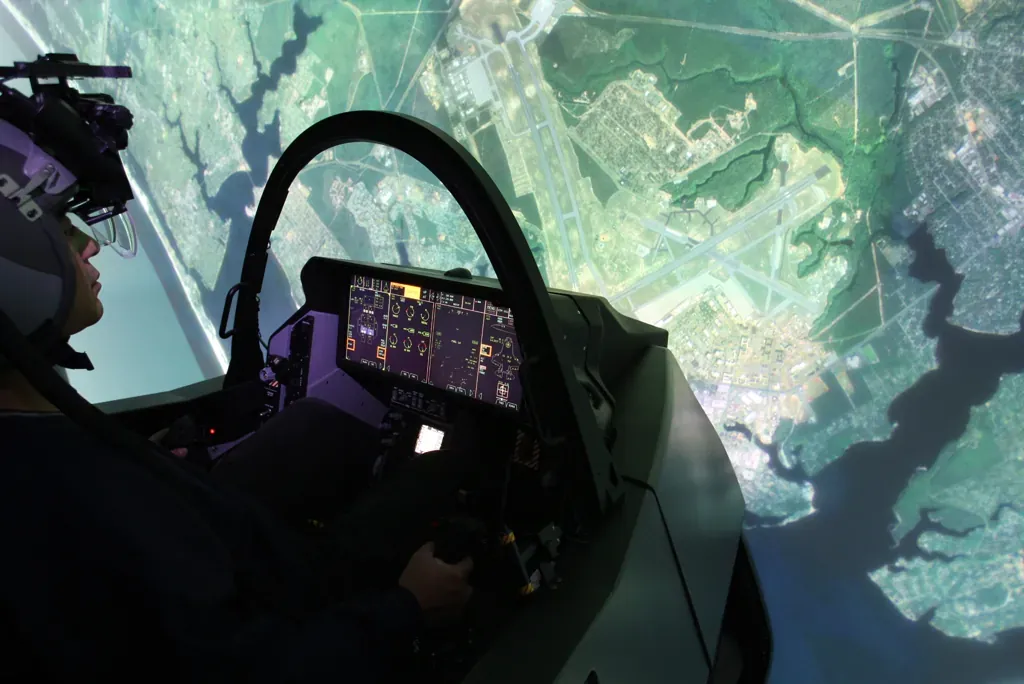
The F-35 is a fifth-generation fighter whose capabilities include low-observable technology, advanced sensors and networking systems.
That makes the physical security of its components different from the handling of ordinary commercial aircraft parts.
But not every F-35 component necessarily contains sensitive technology.
Marles emphasized that distinction when he said Australia’s understanding was that the missing equipment was not sensitive. Other defense specialists have similarly noted that the F-35 contains thousands of individual components with varying degrees of sensitivity.
The significance of the incident therefore depends partly on exactly which components were diverted, whether they were accessible to unauthorized parties and whether any technical information could be extracted from them.
Those questions have not been publicly resolved.
China already has extensive interest in the F-35
The incident has attracted additional scrutiny because China has long sought information about advanced U.S. military technology.
A Defense Science Board report released in 2013 said Chinese cyberattacks had obtained information from numerous U.S. defense programs, including the Joint Strike Fighter program.
That history has contributed to concern that physical components could provide another potential source of technical information.
But previous cyber-espionage allegations do not establish that the components now in question were accessed by China.
The Pentagon’s investigation will need to establish the chain of custody and determine what happened after the shipment was diverted.
The investigation now has several questions to answer
The immediate questions are logistical but have broader security implications.
Who changed the shipment’s destination?
Why was Hong Kong selected?
Who handled the components after they arrived?
Where are they now?
Were they ever inspected or opened?
What technical information, if any, could be obtained from the specific components?
And were existing F-35 supply-chain safeguards followed at each stage?
The answers will determine whether the episode was primarily a logistics failure, a contractor-control failure, an unauthorized diversion or something more serious.
For now, the Pentagon has confirmed the shipment problem and the investigation, but has not publicly answered those questions.
The incident also provides a new test of reforms that the Defense Department has been pursuing for years.
The F-35 program depends on a global network because aircraft operated by multiple countries require a common supply system. That makes international logistics unavoidable.
It also means that accountability cannot stop at the edge of a U.S. military facility.
The parts have to remain traceable wherever the F-35 program sends them.
Reporting Credit: U.S. Department of Defense / F-35 Joint Program Office — confirmation of the shipment issue and recovery investigation; U.S. Government Accountability Office — findings on F-35 global spare-parts accountability and sustainment; Australian Department of Defence — statements concerning the diverted components and Australia’s participation in the investigation; U.S. Congress — congressional inquiry into the reported diversion.