Journos News - Breaking News, World News, Top Stories, Todays Headlines and Flash Reports
Saturday, September 19, 2026
  • Login
  • Home
  • World
    • Africa
    • Americas
    • Asia
    • Europe
    • Middle East
    • Oceania
  • Politics
  • Business
  • Technology
  • Health
  • Science
  • Sports
  • Entertainment
  • Culture
No Result
View All Result
  • Home
  • World
    • Africa
    • Americas
    • Asia
    • Europe
    • Middle East
    • Oceania
  • Politics
  • Business
  • Technology
  • Health
  • Science
  • Sports
  • Entertainment
  • Culture
No Result
View All Result
Journos News - Breaking News, World News, Top Stories, Todays Headlines and Flash Reports
No Result
View All Result
Home World News Africa

West African Scientists Warn Health Systems Are Weakening as Outbreak Risks Persist

Laboratory experts meeting in Togo say surveillance and diagnostic capacity need sustained investment before the next epidemic emerges.

The Daily Desk by The Daily Desk
September 19, 2026
in Africa, World News
0
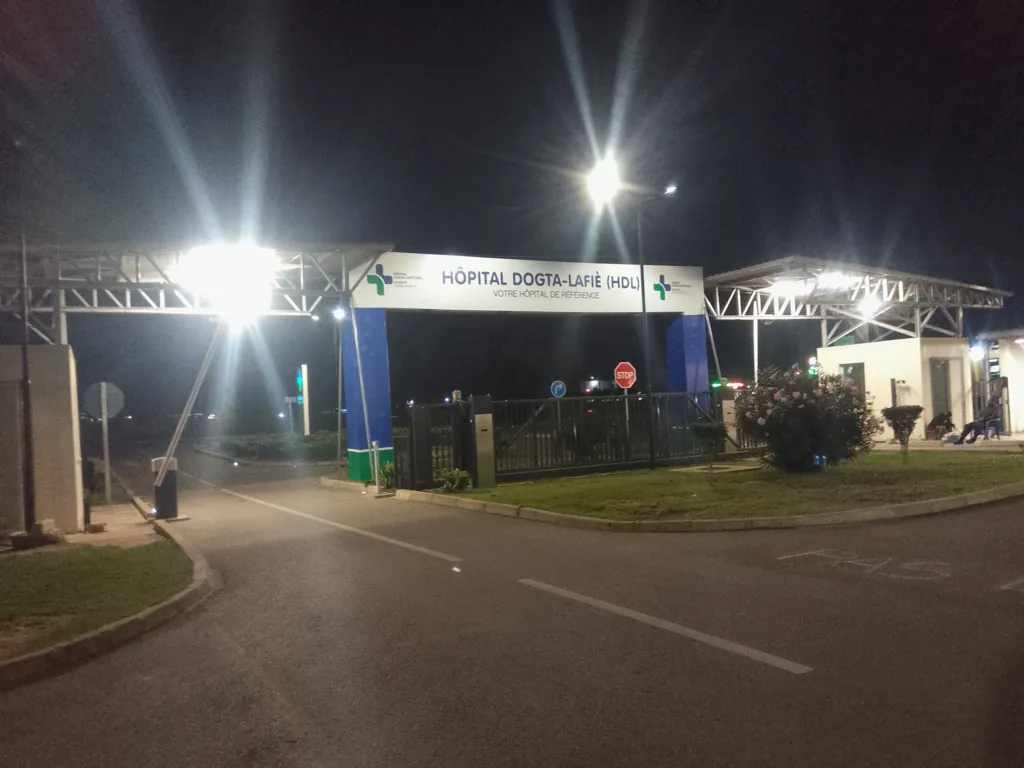
DOGTA-LAFIÈ hospital and health center in Lomé, Togo, photographed on August 9, 2025.

DOGTA-LAFIÈ reference hospital in Lomé, Togo, photographed on August 9, 2025, by Baname LARE.

LOME, Togo – West African laboratory scientists are warning that health systems across the region are losing preparedness between major outbreaks, urging governments to strengthen disease surveillance, diagnostic capacity and the health workforce before another epidemic develops.

The warning came Friday at a regional congress in Lomé, where laboratory specialists discussed lessons from the Ebola and COVID-19 crises and the region’s ability to detect emerging diseases. The scientists called for greater cooperation among West African governments and sustained investment in laboratories and trained personnel.

Kossi Kabo, head of the Association of Medical Biologists of Togo and a co-chair of the congress, said countries need to detect outbreaks earlier rather than waiting until transmission has already expanded.

The concern reflects a recurring problem in epidemic preparedness: systems built or strengthened during a crisis can weaken once the immediate threat recedes.

Preparedness can deteriorate between outbreaks

Scientists at the Lomé meeting said governments need to maintain surveillance and diagnostic systems even when there is no major epidemic dominating public attention.

Arthur Bodurie Calvin Garber, president of the Sierra Leone Association of Medical Laboratory Scientists, said investment needs to cover people as well as physical infrastructure. Laboratory networks require trained specialists and continued operational support if they are to function effectively when an outbreak occurs.

The issue extends beyond individual laboratories.

Africa CDC describes regional laboratory networks as a key part of detecting, characterizing and tracing disease transmission. Its Regional Integrated Surveillance and Laboratory Network connects public-health laboratories, national institutes, academic institutions and other partners across Africa to strengthen preparedness and response.

■ Related News

FDA Building 21 stands behind the Food and Drug Administration sign at the agency’s main campus entrance in Silver Spring, Maryland.

FDA Fills Four Senior Posts as Trump Administration Reshapes Agency

September 9, 2026
A gloved person wearing a surgical mask handles a COVID-19 vaccine vial and syringe during vaccination preparation.

Major U.S. Medical Groups Align on 2026–27 Flu, COVID and RSV Guidance

September 4, 2026
Journos News graphic showing the Islamabad hospital nursery fire, newborn fatalities, incident timeline, PIMS floor plan, and investigation focus. - Journos News, File.

Fire at Islamabad Hospital Nursery Kills 14 Newborns

August 27, 2026
Hotel employees participate in Ebola training in Conakry, Guinea, as part of public health preparedness activities.

Congo Ebola Outbreak Kills 317 in One Week as Health Crisis Accelerates

August 26, 2026

The scientists meeting in Togo said stronger regional cooperation would help countries detect threats earlier and coordinate responses across borders.

Ebola remains a warning from the region’s recent history

The scientists pointed to the 2014–2016 West African Ebola epidemic as a major example of the consequences of delayed detection and limited preparedness.

At least 11,000 people died during that epidemic, overwhelmingly in Guinea, Liberia and Sierra Leone. The crisis exposed weaknesses in surveillance, laboratory capacity, treatment infrastructure and emergency coordination across affected countries.

More recent outbreaks have shown that the threat has not disappeared.

Africa CDC said this week that an ongoing Bundibugyo virus disease outbreak in the Democratic Republic of Congo has not yet been consistently controlled across all affected areas. Its Emergency Consultative Group said transmission was declining in some locations but increasing in others, particularly North Kivu.

The continental agency recommended maintaining the emergency response, strengthening surveillance and contact identification, and restoring essential health services disrupted by the outbreak.

The situation in Congo is not a West African outbreak, but it is part of the broader continental environment that the scientists in Lomé say requires stronger preparedness.

Detection is only one part of outbreak readiness

Early laboratory confirmation can determine how quickly health authorities can identify a pathogen and begin tracing contacts.

Africa CDC says effective laboratory systems provide evidence needed to confirm suspected pathogens, monitor transmission and guide treatment and prevention measures.

That capacity also needs to be connected to surveillance systems and emergency-response structures. A laboratory may identify an infection, but health authorities still need trained personnel, reporting systems, treatment facilities and community cooperation to contain its spread.

The Lancet Global Health reported this year that lessons from African outbreaks between 2022 and 2025 point to the importance of maintaining routine investments between crises, including decentralized laboratories, digital surveillance, community structures and clinical-trial readiness.

The findings reinforce the message from the Lomé congress: preparedness cannot be treated solely as an emergency expenditure activated after an outbreak begins.

Regional cooperation is becoming more important

Disease outbreaks rarely respect national borders, particularly in West Africa, where populations and trade move across several countries.

The scientists therefore called for governments to cooperate on detection and response rather than relying entirely on national systems.

Africa CDC’s regional laboratory framework similarly emphasizes coordination among national public-health institutes, laboratories, academic institutions and other partners. Its Western Africa network is one of five regional networks established under the continental system.

For countries with limited resources, shared laboratory expertise, training and surveillance capacity can also reduce duplication and improve access to specialized capabilities.

The challenge is sustaining those systems before an emergency creates political pressure to rebuild them.

The warning from Lomé is therefore less about predicting a particular disease outbreak than about the conditions that determine how quickly one can be detected and contained.

With infectious threats continuing to emerge across Africa, scientists say the period between crises should be treated as part of outbreak preparedness, not as a reason to scale it back.

Reporting Credit: Africa Centres for Disease Control and Prevention — current assessment of the Bundibugyo virus disease outbreak, surveillance gaps and regional laboratory preparedness; Association of Medical Biologists of Togo — statements from the Lomé regional laboratory congress; Sierra Leone Association of Medical Laboratory Scientists — comments on workforce and infrastructure investment; Togo Ministry of Health — national public-health and epidemic surveillance documentation.


Tags: #AfricaCDC#DiseaseSurveillance#EpidemicPreparedness#LaboratoryScience#Outbreaks#PublicHealth#WestAfrica
The Daily Desk

The Daily Desk

The Daily Desk is the editorial byline of Journos News, representing reporting produced by the newsroom across world news, politics, business, technology, disasters, and other areas of public interest. Stories published under this byline are independently researched, verified, and edited in accordance with Journos News’ editorial standards, with an emphasis on accuracy, transparent sourcing, attribution, context, and editorial independence.

Related Posts

Army medic checks patients' temperatures during Ebola treatment training at a simulated treatment center near York, England.

US citizen tests positive for Ebola as Congo outbreak continues to spread

August 10, 2026
Personal protective equipment is arranged for medical staff during an Ebola response training exercise at an Army health clinic.

Congo Quarantines Nearly 200 River Passengers After Suspected Ebola Death Near Kinshasa

August 7, 2026
People cool off in the fountain at Berlin's Lustgarten during a summer heatwave in Germany.

Europe Heat Wave Triggers Highest Alerts Across Italy as Extreme Temperatures Grip Continent

August 7, 2026
A nurse wearing protective gloves administers a vaccine injection into an adult patient's upper arm during an immunization appointment.

Experimental Vaccines Show Early Promise in Preventing Colon Cancer for People With Lynch Syndrome

August 6, 2026
Fresh iceberg lettuce displayed for sale at a grocery store during the CDC investigation into a multistate Cyclospora outbreak linked to recalled lettuce.

CDC Links Multistate Cyclospora Outbreak to Recalled Iceberg Lettuce from Taylor Farms de Mexico

August 6, 2026
Dr. Tedros Adhanom Ghebreyesus, Director-General of the World Health Organization, attends the European Union–African High-Level Event on Health in Brussels, Belgium.

DR Congos Bundibugyo Ebola Outbreak Becomes Countries Largest as Cases Surge Across Five Provinces

August 6, 2026
Colorized scanning electron micrograph showing Ebola virus particles budding from an infected African green monkey kidney cell at 20,000× magnification.

Ebola Deaths Surpass 1,700 in Eastern Congo as Outbreak Outpaces Containment Efforts

August 5, 2026
Close-up photograph of pink heather flowers blooming on dense green shrubs, highlighting delicate blossoms and evergreen foliage.

Ebola Outbreak Drives Rise in Maternal Deaths as Pregnant Women Avoid Hospitals in Eastern Congo

August 4, 2026
Load More
JournosNews logo

Journos News delivers globally neutral, fact-based journalism that meets international media standards — clear, credible, and made for a connected world.

  • Categories
  • World News
  • Politics
  • Business & Markets
  • Technology
  • Health
  • Science
  • Sports
  • Arts & Culture
  • Resources
  • Editorial Standards
  • Submit a Story
  • Advertise with Us
  • Syndication & Partnerships
  • Site Map
  • Press & Media Kit
  • Editorial Team
  • Careers

Join thousands of readers receiving the latest updates, tips, and exclusive insights straight to their inbox. Never miss an important story again.

  • About Us
  • Editorial & Trust Center
  • Contact Us
  • Privacy Policy
  • Terms of Use & Copyright Notice

© JournosNews.com All rights reserved.

Welcome Back!

Login to your account below

Forgotten Password?

Retrieve your password

Please enter your username or email address to reset your password.

Log In
JournosNews

Independent Journalism.
Verified Facts.

You're about to read a professionally edited article from JournosNews.com.

Every article is produced in accordance with our editorial standards, emphasizing factual accuracy, transparent attribution, fairness, editorial independence, and meaningful context.

Editorial Standards
No Result
View All Result
  • Home
  • World
    • Africa
    • Americas
    • Asia
    • Europe
    • Middle East
    • Oceania
  • Politics
  • Business
  • Technology
  • Health
  • Science
  • Sports
  • Entertainment
  • Culture

© JournosNews.com All rights reserved.

This website uses cookies. By continuing to use this website you are giving consent to cookies being used. Visit our Privacy and Cookie Policy.