BEIJING, China – China is strengthening its national logistics network under a new 2030 development plan, seeking to make the movement of goods more efficient and reduce costs across the economy as global supply chains face increasing competition and disruption.
The plan, jointly issued by China’s National Development and Reform Commission (NDRC) and the Ministry of Transport, sets a target of reducing total social logistics costs to 13.1% of GDP by 2030, 0.8 percentage points below the level at the end of 2025.
The strategy places logistics among six major national infrastructure networks prioritized during China’s 15th Five-Year Plan for 2026–2030, alongside water systems, power grids, computing infrastructure, next-generation communications networks and urban underground pipelines.

A more integrated logistics system
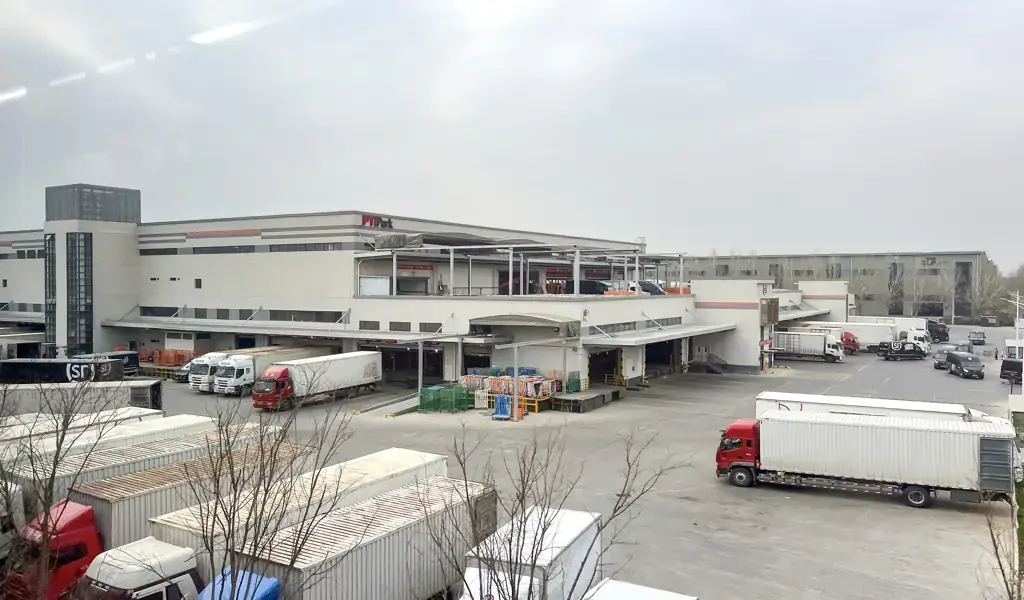
China’s government wants logistics hubs to become more closely connected with manufacturing and other industries, while improving links between major transportation corridors.
The plan identifies 17 key tasks across seven areas, including improving logistics hubs, strengthening freight corridors, addressing gaps in urban and rural logistics facilities, expanding international logistics networks and improving information sharing.
The objective is to move beyond isolated transportation facilities toward a more integrated system in which roads, railways, ports, waterways, warehouses and digital platforms operate more efficiently together.
Ports and railways receive greater attention
China is also focusing on connections between major ports and inland transportation networks.
The program calls for stronger rail connections to coastal ports, expanded multimodal-transfer facilities and improvements linking railways, roads, inland waterways and port infrastructure.




It also promotes smarter logistics hubs and ports, including greater use of artificial intelligence, intelligent sensing equipment and automated systems.
These improvements could reduce reliance on less efficient transportation routes while allowing goods to move more quickly between China’s manufacturing centers and export gateways.
Digital technology becomes part of logistics infrastructure
Digitalization is another major component of the plan.
China wants greater interoperability among logistics information systems and wider use of digital technologies to coordinate transportation, warehouses and cargo flows.
AI-powered scheduling, smart facilities and automated equipment are expected to play a growing role. The government also plans to expand driverless logistics vehicles in controlled environments such as ports and logistics parks.
For manufacturers and exporters, better digital coordination could help reduce delays and improve the ability to track and manage goods throughout the supply chain.
Supply-chain resilience is increasingly strategic
The logistics push comes as governments and businesses worldwide seek greater control over critical supply chains.
Trade restrictions, geopolitical tensions and disruptions to shipping routes have encouraged companies to diversify production and transportation networks.
For China, maintaining an efficient domestic logistics system is particularly important because of the country’s enormous manufacturing and export base.
A stronger logistics network could help Chinese companies move goods more efficiently inside the country while maintaining connections with international markets.
International connectivity remains important
The plan does not focus exclusively on domestic transportation.
China is also seeking stronger international logistics connections, including infrastructure capable of supporting external trade and cross-border supply chains.
That could reinforce China’s position as a major manufacturing, export and distribution hub at a time when other economies are attempting to develop alternative supply-chain centers.
China’s goods trade reached 30.13 trillion yuan in the first seven months of 2026, according to data cited by Xinhua Silk Road, underscoring the scale of the trade flows supported by the country’s logistics system.
Green logistics is also a priority
The government is incorporating environmental goals into the infrastructure program.
The plan calls for greener logistics facilities and equipment alongside digital and intelligent upgrades.
That could increase investment in energy-efficient warehouses, cleaner transportation equipment and technologies designed to reduce fuel consumption and emissions.
A test for China’s manufacturing competitiveness
Reducing logistics costs could have a direct effect on Chinese businesses.
Lower transportation and distribution expenses can improve manufacturers’ margins, reduce the cost of moving goods between production centers and ports, and make exports more competitive.
The government therefore views logistics not simply as a transportation issue but as part of improving the efficiency of the broader real economy.
The challenge will be implementation. China’s network is already extensive, but gaps remain in multimodal connections, information sharing and integration between different transportation systems.
What Happens Next
Beijing’s focus through 2030 will be on connecting logistics hubs and industrial centers, expanding freight corridors, improving port and rail links, and accelerating digital and green technologies.
The most important measures to watch will be logistics costs, infrastructure investment, multimodal transportation, port connectivity, digital adoption and international freight capacity.
If successful, the strategy could lower the cost of China’s domestic economy while strengthening the country’s ability to withstand disruptions and compete in increasingly contested global supply chains.
Key Facts
- Country: China
- Plan: National logistics network development through 2030
- Target: Social logistics costs at 13.1% of GDP by 2030
- Main agencies: NDRC and Ministry of Transport
- Priority areas: Logistics hubs, freight corridors, ports, digitalization and green technology
- Planning period: 2026–2030
- Strategic objective: Lower costs and strengthen supply-chain connectivity
- Status: DEVELOPING — BUSINESS & GLOBAL TRADE
Reporting Credit: National Development and Reform Commission of China — national logistics strategy and economic targets; Ministry of Transport of China — transportation infrastructure and logistics-network development; General Administration of Customs of China — trade data and international goods flows.