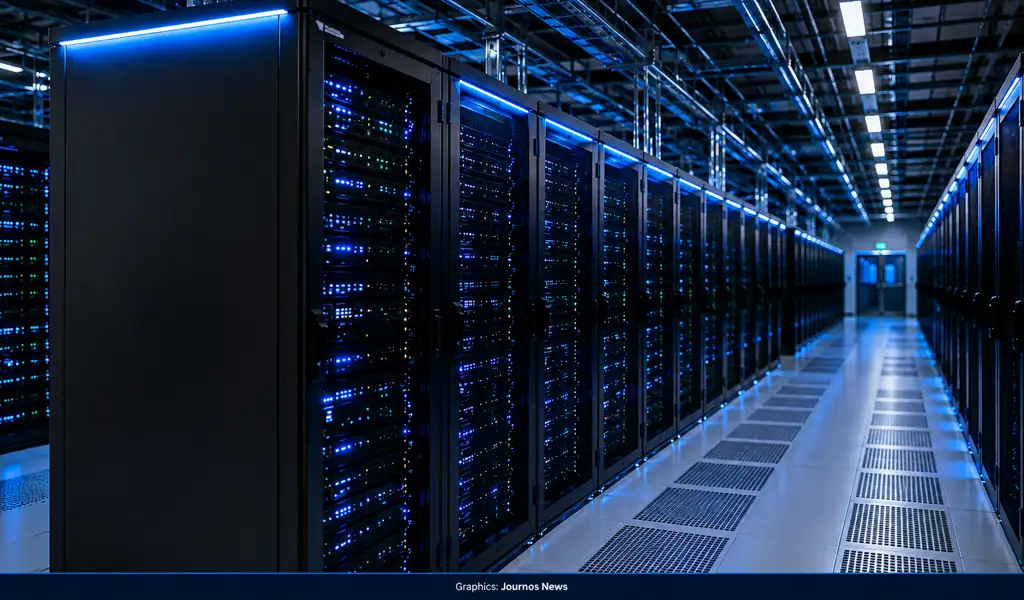
BANGKOK, Thailand – Thailand is emerging as one of Southeast Asia’s fastest-growing data-center markets as global technology companies and infrastructure investors commit billions of dollars to new facilities, but the pace of expansion is raising questions about whether the country’s power system can keep up.
The Thailand Board of Investment (BOI) has approved a growing pipeline of data-center and data-hosting projects as the government seeks to establish the country as a regional hub for cloud computing, artificial intelligence and digital infrastructure. In May, the BOI said six major investment projects worth a combined 958 billion baht ($29 billion) had been approved, led by large-scale digital infrastructure investment.
The investment boom is being driven partly by the rapid growth of artificial intelligence, which requires increasingly large amounts of computing capacity and electricity.

Power becomes a central issue
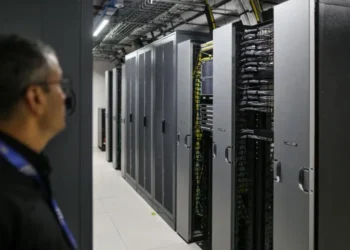
Data centers operate around the clock and require substantial amounts of electricity not only to run servers but also to cool computing equipment.
Thailand’s rapid expansion has therefore brought power availability into the center of investment planning.
Under rules introduced in 2026, developers submitting new data-center projects for BOI investment promotion must obtain confirmation from Thailand’s Energy Regulatory Commission (ERC) that sufficient electricity will be available for the proposed facility.
The requirement reflects growing concern that investment announcements could move faster than the country’s ability to provide reliable electricity and grid connections.
Bangkok remains the country’s main hub
Bangkok and the surrounding metropolitan area remain central to Thailand’s data-center expansion because of their connectivity, telecommunications infrastructure and concentration of businesses.
■ Related News




At the same time, developers are increasingly looking toward industrial areas outside Bangkok where land and power infrastructure can support large-scale campuses.
Thailand’s data-center capacity is projected to expand sharply as hyperscale operators build new facilities, with industry research warning that power supply, grid readiness and energy costs could become constraints on future growth.
Global technology companies drive investment
The expansion is attracting some of the world’s largest technology companies.
Google, Amazon Web Services and TikTok are among companies linked to major investments in Thailand’s digital infrastructure, while local and international data-center operators are developing additional capacity.
For Thailand, the attraction is broader than the construction of server facilities.
The government expects data centers to support cloud services, AI development, digital businesses and the wider modernization of the economy.
Thailand’s BOI describes data centers and cloud services as important components of the country’s digital-economy strategy.
Investment brings economic opportunities
Large data-center projects can generate construction activity, technology investment and demand for engineering, telecommunications and energy services.
They can also strengthen a country’s position in the regional digital economy by providing businesses with locally hosted cloud and computing infrastructure.
But the economic benefits need to be weighed against infrastructure requirements.
Data centers can consume substantial electricity while creating relatively fewer permanent jobs than traditional manufacturing facilities of comparable investment value.
That has prompted questions over whether the benefits to the wider economy will justify the additional pressure placed on power networks and other public infrastructure.
Thailand seeks cleaner power
Energy sourcing is becoming another important factor.
Global technology companies are increasingly seeking renewable electricity for data-center operations as investors and regulators pay greater attention to carbon emissions.
Thailand is therefore under pressure to expand clean-energy availability while maintaining reliable electricity supplies.
The issue is particularly important for AI data centers, where growing computing intensity can translate directly into higher power consumption.
Grid planning becomes critical
The challenge is not simply generating enough electricity.
Large data centers also require high-capacity transmission infrastructure and reliable connections capable of handling significant loads continuously.
Industry discussions in Bangkok this year have increasingly focused on grid readiness, power procurement, infrastructure planning and sustainable energy solutions as Thailand prepares for another wave of hyperscale development.
If grid expansion does not keep pace with projects, developers could face delays or higher connection costs.
That could ultimately affect Thailand’s competitiveness against other Southeast Asian markets competing for the same investment.
A regional race for data centers
Thailand is competing with Singapore, Malaysia and Indonesia to attract data-center investment.
Singapore remains a major regional technology hub but faces land and energy constraints. Malaysia has attracted substantial hyperscale investment, while Indonesia is developing its own rapidly expanding digital infrastructure market.
Thailand’s advantages include its established industrial base, telecommunications infrastructure, geographic position and government investment incentives.
The question is whether those advantages will remain sufficient as electricity requirements rise.
The investment boom faces a test
Thailand’s data-center strategy is now moving from attracting investment to ensuring that projects can actually be supplied with power and integrated into the country’s infrastructure.
That makes electricity planning an increasingly important part of industrial policy.
If Thailand succeeds in expanding generation, transmission and renewable-energy availability alongside data-center construction, the sector could become an important pillar of the country’s digital economy.
If infrastructure falls behind investment commitments, however, power constraints could become a brake on one of Southeast Asia’s fastest-growing technology industries.
What Happens Next
Thailand is expected to continue approving major data-center and cloud investments while strengthening requirements for electricity availability and infrastructure planning.
The key indicators will be new project approvals, grid-connection capacity, electricity costs, renewable-energy availability and the pace of construction.
For Bangkok and Thailand, the data-center boom is increasingly becoming an energy and infrastructure challenge as much as a technology investment story.
Key Facts
- Country: Thailand
- Main hub: Bangkok and surrounding areas
- Major investment pipeline: Hundreds of billions of baht
- Key investors: Global technology and data-center companies
- Main growth driver: Cloud computing and artificial intelligence
- Main infrastructure concern: Electricity and grid capacity
- New requirement: ERC confirmation of sufficient power for new BOI data-center applications
- Regional competitors: Singapore, Malaysia and Indonesia
- Status: DEVELOPING — BUSINESS & TECHNOLOGY
Reporting Credit: Thailand Board of Investment — data-center investment approvals and digital-economy policy; Thailand Energy Regulatory Commission — electricity availability requirements; Thailand Ministry of Energy — power and energy policy; Electricity Generating Authority of Thailand — electricity supply and grid planning.