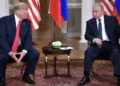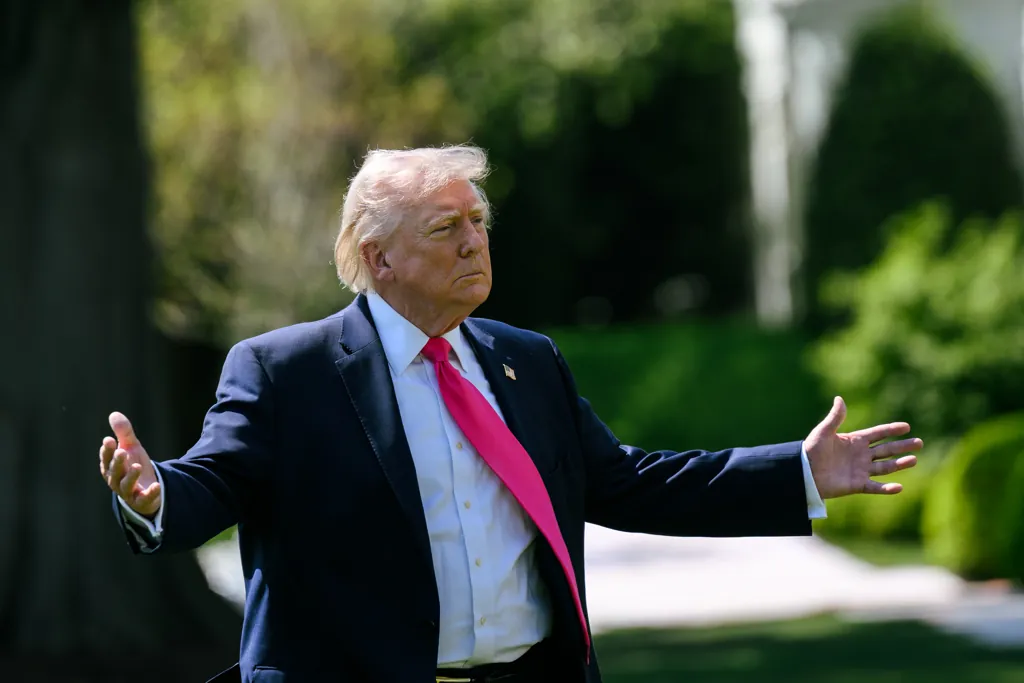
WASHINGTON – U.S. President Donald Trump said Sunday that Saudi Arabia, Qatar and the United Arab Emirates persuaded him to postpone planned military strikes against Iran, choosing instead to give diplomacy another opportunity.
Speaking to reporters aboard Air Force One while returning to Washington from Bedminster, New Jersey, Trump said U.S. forces had prepared what he described as “the biggest attack since World War II.” However, he said he decided against authorizing the operation after consulting Gulf leaders and receiving messages from unnamed Iranian officials.
Trump said Saudi Crown Prince Mohammed bin Salman encouraged him to pursue negotiations instead of further military action. According to Trump, the Saudi leader warned that additional strikes could trigger unpredictable consequences across the Middle East.

The comments marked another shift in the administration’s approach. A day earlier, Trump said he was “losing faith” in negotiations and warned that the United States would strike Iran “very hard” if diplomacy failed.
Gulf leaders push for diplomacy
Trump said he spoke with Crown Prince Mohammed by telephone on Saturday before announcing on social media that regional partners had reached what he called the “perimeters” of a possible agreement.
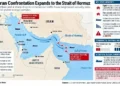
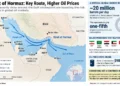
According to Trump, the proposed framework would address U.S. concerns over Iran’s nuclear program while reopening the Strait of Hormuz, a strategic shipping route that normally carries about one-fifth of the world’s traded oil.
Trump also said Israel had agreed to honor a ceasefire reached in June as part of broader efforts to reduce regional tensions. Israeli officials did not immediately comment on the claim.
Iran says key issues remain unresolved
Iran indicated that major differences remain.
■ Related News

Foreign Ministry spokesperson Esmail Baghaei said the Strait of Hormuz would “in no way return to the status it was before February 28,” referring to the date the conflict began.
Speaking on Iranian state television, Baghaei said Tehran continues discussing maritime transit through the strait with Oman. However, he added that there are no negotiations on fully reopening the waterway.
Iran has repeatedly targeted vessels attempting to transit the Strait of Hormuz without its authorization during the conflict.
Meanwhile, Iran’s defense minister said on social media that the country remained prepared to respond to what he described as concrete U.S. threats.
The latest developments also highlight reported divisions within Iran’s leadership, with some officials favoring negotiations while others view continued military pressure as strengthening Tehran’s bargaining position.
Mediators work toward a tentative framework
Trump said he expects negotiations to resume “tomorrow afternoon,” although he did not identify the participants.
A regional official involved in the mediation efforts said the latest proposal would bring the United States and Iran back to the negotiating table while leaving several key issues for future talks.
According to the official, the proposal calls for reopening the Strait of Hormuz and ending attacks across the region, including operations by Iran-backed militias in Iraq targeting Arab Gulf states and Jordan.
In return, the United States would lift its naval blockade of Iran and allow Iranian oil exports to resume under a tentative ceasefire framework, the official said.
The mediator emphasized that negotiations remain ongoing and that no final agreement has been reached.
Saudi Arabia cites regional security concerns
A person briefed on Saturday’s conversation between Trump and Crown Prince Mohammed described the discussion as candid and constructive.
According to the person, the Saudi leader warned that expanded U.S. military action could provoke Iranian retaliation against American partners across the Gulf, disrupting regional security and the global economy.
The person also said Saudi Arabia, Qatar and the United Arab Emirates believe they can defend against potential Iranian attacks. However, they remain concerned that Kuwait could face greater risks from Iran-backed militias operating in Iraq.
Trump said those concerns helped shape his decision to delay military action because Gulf leaders believed diplomacy still offered the best opportunity to prevent a wider regional conflict.
This report is based on reporting by The Associated Press.