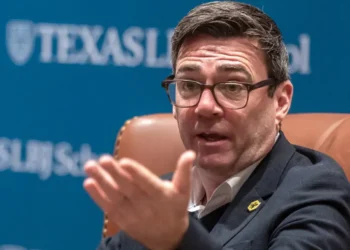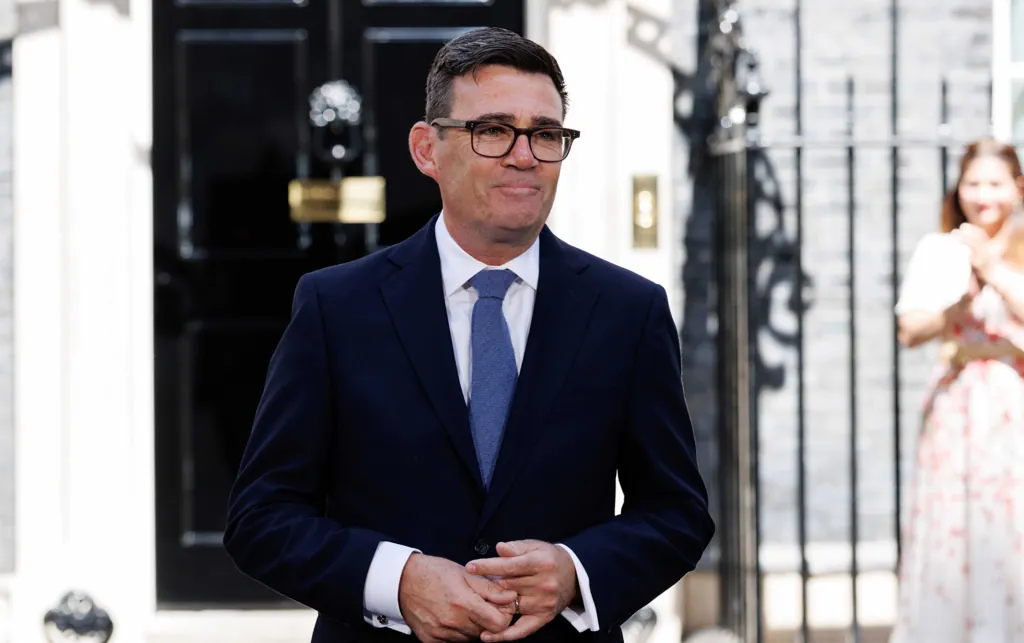
LONDON, United Kingdom – New British Prime Minister Andy Burnham convened his first Cabinet meeting on Tuesday after replacing Keir Starmer as Labour Party leader and prime minister, pledging to focus his government on easing living costs while undertaking a broad overhaul of Britain’s leadership.
Burnham told ministers his administration would adopt a “one-team approach” despite removing several senior figures closely associated with Starmer, who resigned after losing the support of his party just two years after leading Labour to a landslide election victory.
The new prime minister said reducing financial pressure on households would be his government’s immediate priority.

“We need to think every day, what can we do just to take that little bit of pressure off people’s shoulders,” Burnham told Cabinet members, adding that the government should give people greater confidence that economic conditions would improve.
Government Unveils First Cost-of-Living Measure
Burnham announced his first major policy initiative by cutting taxes on domestic electricity bills to reduce household expenses.
The government said the measure, scheduled to take effect on Oct. 1, would save the average household about 45 pounds ($60) each year. Officials said the tax reduction would be funded by scrapping a digital identity card program introduced under Starmer’s government.
Burnham also acknowledged that difficult fiscal decisions lie ahead, telling ministers the government would need to reassess spending priorities while pursuing its broader policy agenda.
In his first address after taking office on Monday, Burnham pledged to decentralize political power, revive British industry and eliminate rough sleeping alongside efforts to ease the cost-of-living crisis.
Cabinet Reshuffle Signals a New Direction
Burnham moved quickly to reshape his administration following his appointment.
■ Related News


Former Defense Secretary John Healey replaced Rachel Reeves as finance minister after previously criticizing the Treasury for failing to allocate sufficient funding for defense amid growing international security concerns.
Healey has argued Britain’s defense spending should increase from a projected 2.6% of gross domestic product next year to 3% by 2030.
Former Health Secretary Wes Streeting, whose resignation in May contributed to the political pressure that ultimately led to Starmer’s departure, was appointed defense secretary.
Burnham retained Shabana Mahmood as home secretary, while Ed Miliband became foreign secretary, Angela Rayner was appointed housing secretary and Jonathan Reynolds assumed responsibility for business, innovation and science.
Louise Haigh, a close Burnham ally, was named First Secretary of State and Chancellor of the Duchy of Lancaster, effectively serving as deputy prime minister.
The reshuffle also removed several prominent Starmer supporters from senior positions, including former Deputy Prime Minister David Lammy, former Business Secretary Peter Kyle and former Chief Secretary to the Treasury Darren Jones.
International Agenda Begins Immediately
Burnham enters office with limited foreign policy experience as Britain faces continuing conflicts in Ukraine and the Middle East while managing relations with the United States under President Donald Trump.
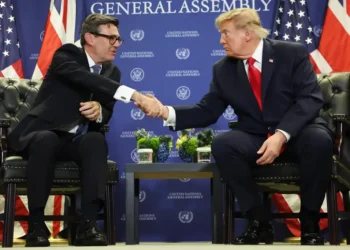
The prime minister’s office said Burnham held an “extremely warm” telephone conversation with Trump shortly after taking office, during which he reaffirmed Britain’s commitment to defense and security.
Trump later wrote on social media that the two leaders had “a very good conversation” and expected to meet in the near future.
Burnham also spoke with Ukrainian President Volodymyr Zelenskyy, French President Emmanuel Macron, German Chancellor Friedrich Merz, and leaders of the European Union and NATO.
During his conversation with NATO Secretary-General Mark Rutte, Burnham said appointing Healey as finance minister demonstrated his government’s commitment to strengthening Britain’s defense capabilities.
Russian Naval Activity Highlights Security Concerns
Britain’s security challenges were underscored on the day Burnham assumed office when a Russian naval vessel conducted a live-fire exercise in the English Channel.
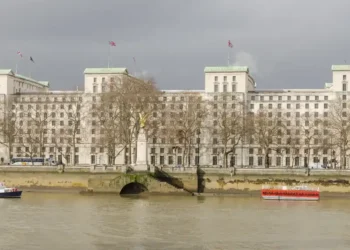
The Ministry of Defence said the frigate Neustrashimy carried out the exercise in international waters about 46 miles (74 kilometers) south of Plymouth while being monitored by the Royal Navy.
The ministry said British forces continued tracking the vessel and remained prepared to safeguard national security.
Defense Secretary Wes Streeting described the Russian exercise as “performative and irresponsible,” saying Britain remained committed to supporting Ukraine and its allies against Russian aggression.
Kremlin spokesperson Dmitry Peskov said Russian naval forces operated in full compliance with international maritime law. Asked whether Moscow expected relations with Britain to improve under Burnham, Peskov said Russia had “no such hopes.”
This report is based on reporting by The Associated Press.
Article Topics: United Kingdom | Andy Burnham | Labour Party | UK Politics | Cabinet Reshuffle | Cost of Living | Foreign Policy | Russia