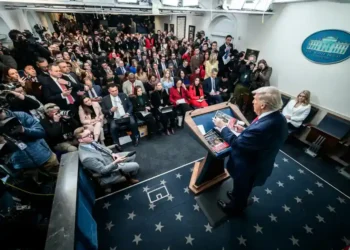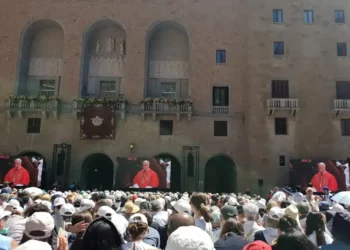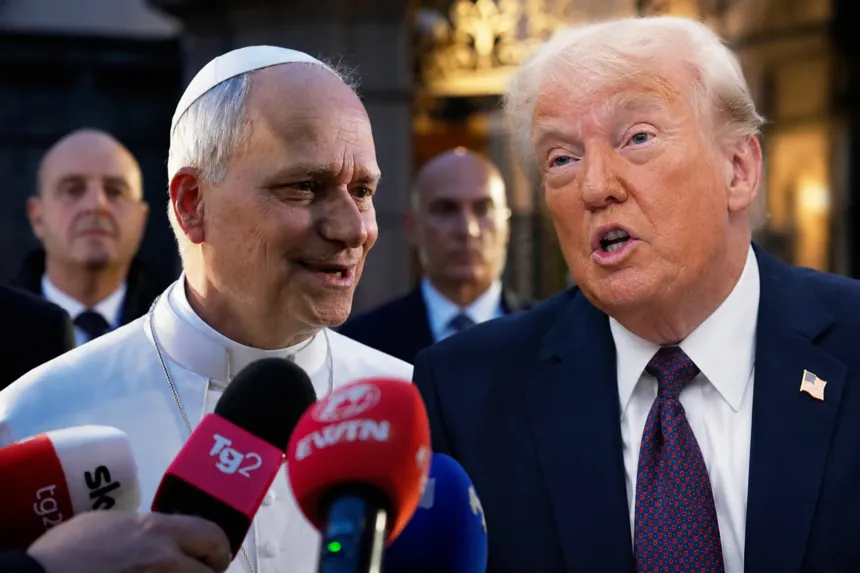
The emergence of Pope Leo XIV alongside the political influence of President Donald Trump represents two powerful institutions navigating a period of global uncertainty: the Roman Catholic Church and American populist conservatism. Although they operate in fundamentally different spheres — one spiritual and universal, the other political and national — their public positions intersect on issues ranging from migration and nationalism to economic inequality and cultural values.
The relationship between the papacy and Trump-era politics has become part of a broader international discussion about the future of Western democracy, religious authority and ideological polarization. Analysts, historians and political observers have noted that tensions between Catholic social teaching and nationalist political movements have intensified in recent years, particularly in the United States and Europe.
At the center of the debate is a recurring question: how does a global religious institution rooted in moral universalism interact with political movements built around national sovereignty, border control and cultural protectionism?

The answer has implications far beyond the United States or the Vatican.
Introduction
The Catholic Church has historically maintained relationships with political leaders across ideological lines. From Cold War diplomacy to contemporary debates over migration and climate policy, the Vatican often attempts to balance moral advocacy with diplomatic neutrality. Yet relations between modern popes and political leaders can also reveal deeper tensions inside societies.
President Donald Trump reshaped American conservatism during his presidency through an agenda emphasizing immigration restrictions, economic nationalism and skepticism toward global institutions. According to Reuters and AP News reporting during Trump’s presidency, these policies frequently placed the administration at odds with Vatican positions on migration, refugees and international cooperation.
Pope Leo XIV inherited a Church facing declining influence in parts of Europe, rapid growth in the Global South and internal divisions over doctrine, governance and modern social issues. Observers cited by the Financial Times and BBC News have noted that the Church’s role increasingly extends beyond theology into debates over democracy, globalization and social cohesion.
The interaction between the papacy and Trump-era politics therefore reflects wider structural changes affecting religion and politics worldwide.
Historical Relations Between the Vatican and American Presidents
Relations between the Vatican and the United States have historically fluctuated according to geopolitical priorities and domestic politics. During the Cold War, cooperation between Washington and the Vatican intensified around opposition to Soviet communism, particularly under Pope John Paul II and President Ronald Reagan.
In later decades, disagreements emerged over issues such as the Iraq War, economic globalization and environmental policy. Pope Francis, for example, repeatedly emphasized migration, poverty reduction and climate change during Trump’s presidency, sometimes placing the Vatican in indirect conflict with White House policies.
Reuters reported during Trump’s first term that disputes over border walls and migration became among the clearest public differences between the administration and Vatican leadership. Trump’s immigration agenda — including border enforcement expansion and refugee restrictions — contrasted with repeated Vatican appeals for protections for migrants and asylum seekers.
At the same time, Trump retained significant support among American Catholics, especially conservative Catholics concerned with abortion, religious liberty and judicial appointments.
The Political Importance of American Catholics
The United States contains one of the world’s largest Catholic populations, making American Catholic voters politically influential in presidential elections. Catholic voters have historically shifted between Democratic and Republican candidates depending on economic conditions, social issues and regional demographics.
Under Trump, divisions within American Catholicism became more visible. Conservative Catholic groups often aligned with the administration on abortion policy, judicial conservatism and opposition to secular progressive movements. Meanwhile, other Catholic organizations criticized immigration enforcement policies, reductions in refugee admissions and nationalist rhetoric.
According to AP News reporting during the Trump presidency, American bishops themselves sometimes reflected broader ideological polarization inside U.S. society. Some emphasized social justice and migration concerns, while others prioritized abortion policy and religious freedom debates.
The emergence of Pope Leo XIV has therefore been closely watched within the United States, where Catholic political identity remains deeply contested.
Nationalism and the Vatican’s Universal Mission
One of the central tensions between modern populist politics and Catholic doctrine concerns nationalism. The Catholic Church defines itself as universal, transcending national boundaries and ethnic divisions. Vatican diplomacy traditionally emphasizes multilateralism, international cooperation and humanitarian obligations.
Trump-era politics, by contrast, frequently emphasized national sovereignty and border protection. Similar nationalist movements across Europe also gained strength during the same period, often criticizing globalization, migration flows and supranational institutions.
BBC News and Financial Times analyses have noted that the Vatican has increasingly warned against forms of political nationalism that frame migrants or minority groups as cultural threats. Catholic social teaching generally stresses human dignity regardless of nationality.
However, the relationship is not purely oppositional. Conservative political movements in Europe and the United States have also defended aspects of Christian identity, arguing that secularization threatens traditional cultural values. Some populist leaders have portrayed themselves as defenders of Christianity against cultural liberalism or demographic change.
This overlap has created a complex relationship between religious conservatism and political nationalism.
Immigration as a Defining Fault Line
Migration policy became one of the clearest areas of disagreement between Vatican leadership and the Trump administration. Trump’s calls for stricter border controls, expanded deportation policies and limitations on refugee admissions became central themes of his political identity.
The Vatican repeatedly emphasized humanitarian protections for migrants and refugees. Catholic aid organizations globally also play major roles in refugee assistance and migrant services.
Reuters reported multiple occasions during Trump’s presidency in which Vatican officials criticized anti-migrant rhetoric or policies perceived as undermining refugee protections. Pope Francis notably questioned the morality of building barriers instead of fostering inclusion, remarks widely interpreted as indirect criticism of Trump’s proposed border wall.
Yet migration debates also exposed divisions among Catholics themselves. Some American Catholics supported tougher immigration enforcement due to economic concerns, security fears or broader anxieties about cultural change.
The issue therefore became symbolic of a wider struggle over globalization and identity politics.
Abortion, Courts and Conservative Alliances
Despite disagreements on migration and social policy, Trump maintained strong relationships with many conservative Catholic voters because of abortion politics and judicial appointments.
The appointment of conservative Supreme Court justices during Trump’s presidency significantly reshaped the U.S. legal landscape surrounding abortion rights. Following the Supreme Court’s 2022 decision overturning Roe v. Wade, many conservative Catholic organizations credited decades of political mobilization by religious conservatives.
This convergence demonstrated how Catholic political identity cannot be reduced to a single issue. For many conservative Catholics, abortion policy outweighed disagreements with Trump on migration or diplomacy.
According to reporting by Reuters and AP News, religious conservatives viewed judicial appointments as among the administration’s most lasting achievements. The alliance between conservative Catholics and Republican politics consequently deepened during and after Trump’s presidency.
Global Catholicism and Shifting Demographics
The global Catholic Church increasingly reflects demographic changes outside Europe and North America. Large Catholic populations in Latin America, Africa and parts of Asia now shape the Church’s priorities and debates.
This shift affects Vatican perspectives on economic inequality, migration and global development. World Bank and UN data have shown that migration pressures are often linked to economic instability, climate stress and conflict in developing regions.
Pope Leo XIV faces the challenge of governing a Church whose membership spans radically different political and economic contexts. Positions that resonate with conservative American Catholics may differ from priorities in Latin America or Africa, where migration, poverty and inequality often dominate public concerns.
The Vatican therefore operates not only as a religious institution but also as a global diplomatic actor balancing competing regional realities.
Media Polarization and Religious Identity
Modern media ecosystems have intensified ideological divisions surrounding religion and politics. Cable news networks, digital platforms and partisan commentary frequently frame Vatican statements through domestic political narratives.
During Trump’s presidency, comments from Church leaders were often interpreted through the lens of American partisan conflict rather than broader Catholic doctrine. Analysts cited by Bloomberg and the Financial Times observed that religious identity itself increasingly became politically polarized.
This polarization complicated Vatican efforts to present moral teachings as universal rather than partisan. Statements on migration or economic inequality were sometimes portrayed by critics as political interventions rather than theological positions.
The result has been growing tension between institutional religious authority and increasingly fragmented political audiences.
Why the Relationship Matters Globally
The relationship between Pope Leo XIV and Donald Trump symbolizes broader global questions about the future of democracy, globalization and identity politics.
Across Europe and the Americas, political movements emphasizing sovereignty, border control and cultural traditionalism continue to influence elections and policy debates. At the same time, religious institutions remain influential voices on humanitarian issues, economic ethics and social cohesion.
The Vatican’s interactions with powerful political figures therefore extend beyond diplomacy. They help reveal deeper disagreements over how societies define moral responsibility, national identity and international cooperation.
These tensions are unlikely to disappear quickly because they reflect structural transformations affecting economics, migration patterns, digital media and political trust worldwide.
Conclusion
The relationship between Pope Leo XIV and President Donald Trump reflects more than personal or diplomatic differences. It illustrates competing visions of how modern societies should respond to globalization, migration, cultural change and political polarization.
While the Vatican emphasizes universal moral obligations and international cooperation, Trump-era politics highlighted national sovereignty and populist conservatism. Yet areas of overlap — particularly around abortion policy and cultural conservatism — also demonstrate why many Catholics continue to support nationalist political movements.
What remains unresolved is how religious institutions will adapt to increasingly polarized political environments while maintaining global credibility. As debates over migration, identity and democracy continue, the interaction between the papacy and populist politics is likely to remain a defining feature of international public life.