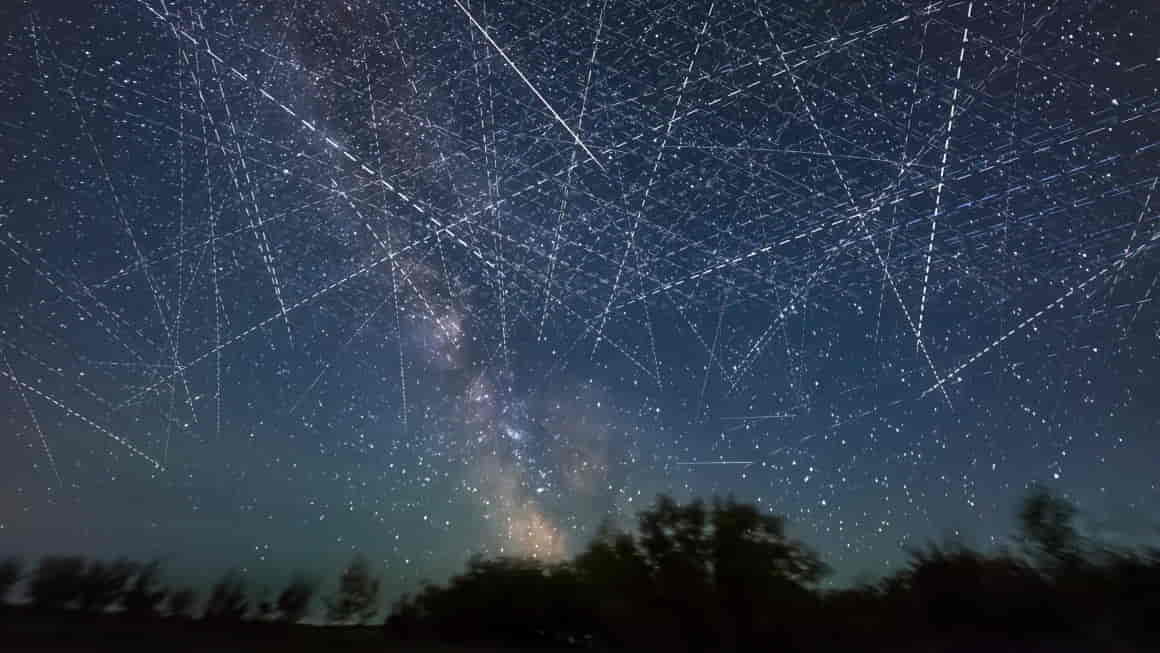
What is Kessler Syndrome and Why Do Some Scientists Believe It’s Already Happening?
In November, the International Space Station (ISS) was forced to adjust its orbit to avoid a piece of space debris. The potential collision was so close—within 2.5 miles (4 kilometers)—that the seven astronauts aboard the ISS were ready to react. A Russian spacecraft fired its engines for five minutes to move the station out of harm’s way. A collision with debris could have been catastrophic, potentially damaging the ISS and putting the astronauts in danger.
This is not an isolated event. The ISS has had to make similar maneuvers multiple times since it was first occupied in November 2000. As more and more objects are launched into space, the risk of collisions is increasing year by year.
Space Junk: A Growing Problem
The rise in space traffic, driven by satellite launches and other space missions, has raised alarms among space experts. Every year, thousands of new pieces of debris are generated from previous collisions, explosions, and weapon tests. These fragments remain in orbit, creating a dangerous environment for both astronauts and satellites. The result: increasing risks to technologies that support our everyday lives, such as GPS, weather satellites, and communication systems.

Dr. Vishnu Reddy, a planetary scientist at the University of Arizona, warns that space debris is growing exponentially. “We are heading towards the situation we’ve always dreaded,” he says, referring to the potential for a catastrophic event known as Kessler Syndrome.
What is Kessler Syndrome?
Kessler Syndrome, named after astrophysicist Donald Kessler, refers to a chain reaction in space where one collision creates debris that causes more collisions, leading to a runaway effect. Over time, Earth’s orbit could become so cluttered with debris that satellites become inoperable and space exploration could be halted.
While scientists disagree on the likelihood of Kessler Syndrome happening and when it might occur, there is broad agreement that space traffic is a serious problem that needs urgent attention.
The Frequency of Collisions in Space
Since the start of space exploration in 1957, there have been more than 650 “break-ups, explosions, collisions, or anomalous events” in space, according to the European Space Agency (ESA). These include accidental satellite collisions, the explosion of rocket parts, and weapon tests by countries like the United States, Russia, India, and China.
For example, in 2021, Russia destroyed one of its own satellites as part of a missile test, releasing over 1,500 pieces of debris. The largest collision occurred in 2009 when a defunct Russian satellite, Kosmos 2251, collided with the Iridium 33 satellite, creating nearly 2,000 pieces of debris.
■ Related News

The Hidden Dangers of Space Junk
Tracking space debris is a complex and difficult task. Space situational awareness—tracking objects in space—relies on observing potential “conjunctions,” or close approaches between space objects. But most debris is too small to be tracked, especially objects smaller than a tennis ball.
Even small debris poses a major risk. As objects in space travel at incredible speeds, even the tiniest piece of debris can cause significant damage. NASA notes that a fleck of paint can smash through metal in space, making the growing cloud of space junk a serious concern.
The Growing Risk in Low Earth Orbit
Space debris is most concentrated in Low Earth Orbit (LEO), which extends up to 1,200 miles (2,000 kilometers) above Earth. This region is home to the ISS, weather satellites, and massive constellations like SpaceX’s Starlink satellites. If a chain reaction of explosions were to occur here, it could put astronauts’ lives at risk and disable crucial satellite technologies.
One silver lining is that debris in LEO will eventually fall back to Earth or disintegrate due to atmospheric drag. However, this process could take decades, especially for debris in higher orbits, like Geosynchronous Orbit (GEO) at around 22,236 miles (35,786 kilometers). Here, objects could stay in orbit for centuries, creating long-term risks.
The “Gravity” Scenario
The 2013 movie Gravity dramatized Kessler Syndrome: A missile destroys a satellite, setting off a cascade of collisions that devastate other space objects. While the movie’s fast-paced disaster is fictional, a real-life Kessler Syndrome event would unfold over many years or decades.
Since the movie’s release, space debris has grown significantly. The U.S. military now tracks 47,000 objects, double the number in 2013. However, predicting when or where a catastrophic chain reaction might start is nearly impossible due to the unpredictable nature of space debris and space weather.
Has Kessler Syndrome Already Begun?
While it’s difficult to pinpoint exactly when Kessler Syndrome might begin, scientists are divided on whether we’ve already crossed that threshold. Some argue that collisions in space are already escalating, while others believe the problem hasn’t yet reached a critical point.
Carolin Frueh, an associate professor of aeronautics and astronautics at Purdue University, believes the term “Kessler Syndrome” is no longer useful. The concept has become too ambiguous, and it’s unclear whether we’re witnessing the early stages of the phenomenon.
Preventing the Space Disaster
There are two major strategies to prevent Kessler Syndrome from escalating: debris cleanup and better regulation.
- Space Debris Cleanup: There are ongoing efforts to develop technology that can remove debris from orbit. For example, the European Space Agency’s ADEO (Drag Augmentation Deorbiting Subsystem) is a prototype designed to bring defunct satellites back to Earth by increasing atmospheric drag. However, these technologies are still experimental and very costly.
- Space Traffic Regulation: Another solution is to implement stricter regulations to prevent irresponsible space activities. The United Nations has adopted the Pact for the Future, which includes the goal of creating international frameworks for managing space debris. However, the document lacks enforceable measures. Experts argue that individual countries, particularly the United States, need to take the lead in setting laws and guidelines for space traffic management.
Conclusion: Urgency is Key
The situation in space is becoming more dire with each passing year. While Kessler Syndrome may not be an immediate threat, the rapid proliferation of space debris is making it harder to avoid. Scientists remain divided on when or if the cascade of collisions will start, but there is consensus that urgent action is needed to prevent catastrophic damage to space infrastructure.
As Dr. Nilton Renno of the University of Michigan notes, the issue is akin to the growing problem of plastic pollution in the oceans: “We used to think the oceans were infinite, and we threw in trash. Now we realize these resources are finite, and we’re causing huge damage.” Similarly, space, once thought to be vast and limitless, is quickly becoming overcrowded—and we need to take action before it’s too late.