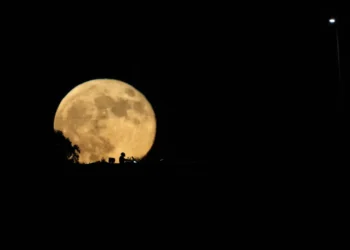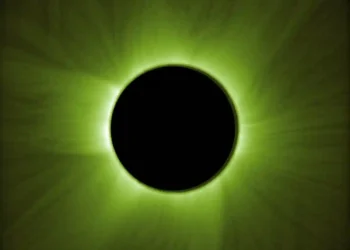
A total lunar eclipse on Tuesday is giving the moon a reddish-orange hue, visible across Asia, Australia, the Pacific Islands, and the Americas. The phenomenon occurs when Earth passes directly between the sun and the moon, casting a shadow that alters the moon’s color, according to NASA. Researchers note this marks the last of three consecutive total lunar eclipses, with previous events in March and September 2025.
Study Design and Observation
The eclipse, sometimes called a blood moon, was monitored by astronomers including Dr. C. Alex Young, associate director for science communication at NASA’s Goddard Space Flight Center in Greenbelt, Maryland. Observational data were collected from various locations in the Asia-Pacific region and the Americas. The event comprised three stages: penumbral (subtle dimming), partial (partial coverage by Earth’s shadow), and total eclipse, with totality representing full immersion in the shadow.
Key Timing and Viewing Notes
For observers in regions of totality, no specialized equipment is necessary, though binoculars or small telescopes can enhance detail visibility. The penumbral phase began at 3:44 a.m. ET, partial eclipse at 4:50 a.m. ET, and totality peaked at 6:34 a.m. ET, with the event concluding at 9:23 a.m. ET. Visibility depends on local weather conditions, as cloud cover may obstruct observation.

Cultural and Astronomical Context
The March full moon carries multiple traditional names, including the “worm moon” in North America and Europe, reflecting seasonal ecological activity. Indigenous groups near the Great Lakes, such as the Ojibwe, call it the “snow crust moon,” while some Plains tribes refer to it as the “sore eye moon,” linked to sunlight glare on snow.
Future Lunar and Solar Eclipses
Following this lunar event, NASA reports upcoming eclipses in 2026–2027, including a total solar eclipse on August 12, 2026, visible from Greenland, Iceland, Spain, Russia, and parts of Portugal. Subsequent eclipses include a partial lunar eclipse in August 2027, an annular solar eclipse on February 6, 2027, and a total solar eclipse on August 2, 2027, spanning Spain, North Africa, Egypt, and Saudi Arabia. Each eclipse provides opportunities for observational study and public engagement with celestial phenomena.
Limitations and Observational Considerations
Observation of lunar eclipses depends on geographic location, local time, and weather conditions. While the red coloration results from Earth’s shadow filtering sunlight through the atmosphere, variations in atmospheric conditions may affect the hue and intensity of the observed phenomenon.
Broader Context
Total lunar eclipses offer researchers and the public opportunities to observe planetary alignment effects in real time. These events also contribute to long-term studies of Earth-Moon-sun interactions, atmospheric scattering, and cultural astronomy, providing both scientific and educational insights.
■ Related News