CANBERRA, Australia – The United States and Australia are deepening their engagement across the Pacific as intensifying strategic competition reshapes the region, with both allies placing greater emphasis on security partnerships, regional resilience and cooperation with Pacific island countries.
Australia has described the Indo-Pacific as facing its most complex strategic environment since the end of World War II, with the maritime domain becoming a particularly important area of competition. Canberra has also highlighted growing risks involving critical undersea infrastructure, including submarine cables.
The United States and Australia are responding through their long-standing alliance as well as broader regional partnerships, seeking to strengthen the ability of Pacific countries to respond to security, economic and infrastructure challenges.

Australia expands regional partnerships
Canberra has spent recent years strengthening security relationships with Pacific island countries and other Indo-Pacific partners.
Australia’s approach extends beyond military cooperation. Programs such as the Pacific Engagement Visa are designed to deepen people-to-people, business and educational links between Australia and Pacific island countries and Timor-Leste.
Australia has also increasingly worked through regional and multilateral arrangements rather than relying exclusively on bilateral alliances.
That strategy reflects Canberra’s effort to build a stronger regional network while maintaining its central defense relationship with Washington.
Strategic competition is widening
The competition in the Pacific is no longer limited to military presence.


China has expanded its diplomatic, economic and security engagement with Pacific island states, while Australia, the United States, New Zealand, Japan and other partners have sought to increase their own regional involvement.
Recent analysis has highlighted competition over infrastructure, policing, digital systems, economic assistance and potential military access.
For Pacific island governments, the growing attention from major powers can create additional opportunities for investment and security cooperation, but it can also increase pressure to choose sides in a strategic contest they may not want to define their foreign policy.
Maritime security becomes a priority
Australia is placing particular emphasis on maritime security.
Australian Defence Minister Richard Marles has warned that the maritime environment is becoming increasingly contested and has pointed to attacks and threats involving subsea infrastructure as a growing security concern.
Under the AUKUS partnership, Australia, the United Kingdom and the United States are also developing deeper cooperation on nuclear-powered submarines and advanced defense capabilities.
The arrangement is intended to strengthen Australia’s ability to operate with U.S. and British forces while improving deterrence in the Indo-Pacific.
Pacific nations seek greater agency
The regional competition is also encouraging Pacific governments to strengthen their own diplomatic and security relationships.
Australia has argued that Pacific countries should remain central to decisions affecting their region rather than becoming passive participants in competition among larger powers.
Canberra’s broader regional strategy therefore combines defense cooperation with economic, development and diplomatic engagement.
That approach is particularly important as Pacific island states continue to emphasize issues such as climate change, development financing, maritime resources and sovereignty.
Australia works with Indonesia and other partners
Australia’s regional strategy is also expanding beyond its traditional alliances.
On August 26, Australia and Indonesia held their 10th Foreign and Defence Ministers’ 2+2 meeting, where ministers discussed regional security and encouraged the creation of a Partnership for Regional Resilience.
The two countries said the changing geostrategic environment requires regional countries to exercise greater agency in support of peace, stability and prosperity.
That reflects a broader Australian effort to build overlapping partnerships throughout Southeast Asia and the Pacific rather than relying solely on the U.S.-Australia alliance.
Washington’s role remains critical
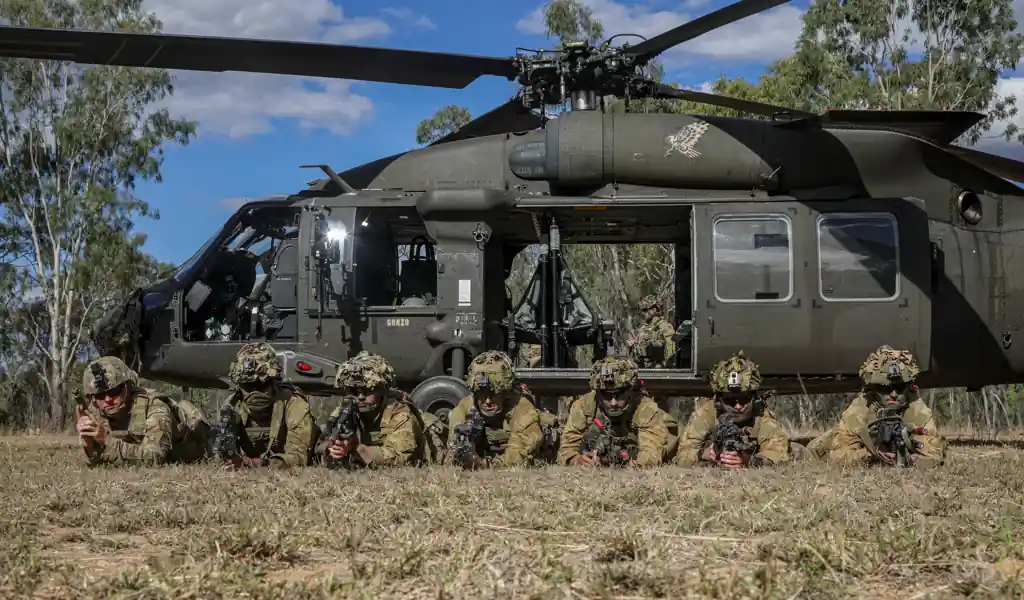
Despite Australia’s growing network of partnerships, the United States remains central to Canberra’s defense strategy.
The two countries share intelligence, military capabilities, exercises and operational planning, while American forces maintain a significant presence across the Indo-Pacific.
For Washington, Australia is also an important geographic partner because of its location between the Pacific and Indian oceans and its ability to support U.S. military operations and logistics.
The alliance therefore remains one of the central pillars of the regional security architecture.
A more contested Pacific
The growing U.S.-Australian engagement comes as strategic competition across the Indo-Pacific becomes more complex.
China’s growing influence, stronger regional defense partnerships, competition over critical infrastructure and uncertainty about the future balance of power are pushing governments to reconsider their security strategies.
Australia is attempting to respond by strengthening its alliance with Washington while simultaneously developing deeper relationships with Pacific island states, Southeast Asian countries and other regional partners.
For Pacific nations, the challenge will be maintaining their own strategic independence while extracting economic and security benefits from competing external powers.
What Happens Next
The United States and Australia are expected to continue expanding military exercises, diplomatic engagement, infrastructure cooperation and regional partnerships.
The central test will be whether their approach can strengthen regional security without turning Pacific island states into arenas for escalating great-power competition.
Key Facts
- Core partners: United States and Australia
- Region: Indo-Pacific and Pacific Islands
- Main concern: Intensifying strategic competition
- Key areas: Maritime security, defense, infrastructure, diplomacy and regional resilience
- Major alliance: U.S.-Australia alliance
- Major framework: AUKUS
- Regional priority: Greater Pacific island participation and agency
- Status: DEVELOPING — INDO-PACIFIC
Reporting Credit: Australian Department of Defence — Indo-Pacific strategy and regional security; Australian Department of Foreign Affairs and Trade — Pacific engagement and regional partnerships; U.S. government — U.S.-Australia alliance and Indo-Pacific policy; Australia-Indonesia Foreign and Defence Ministers — regional resilience and security cooperation.