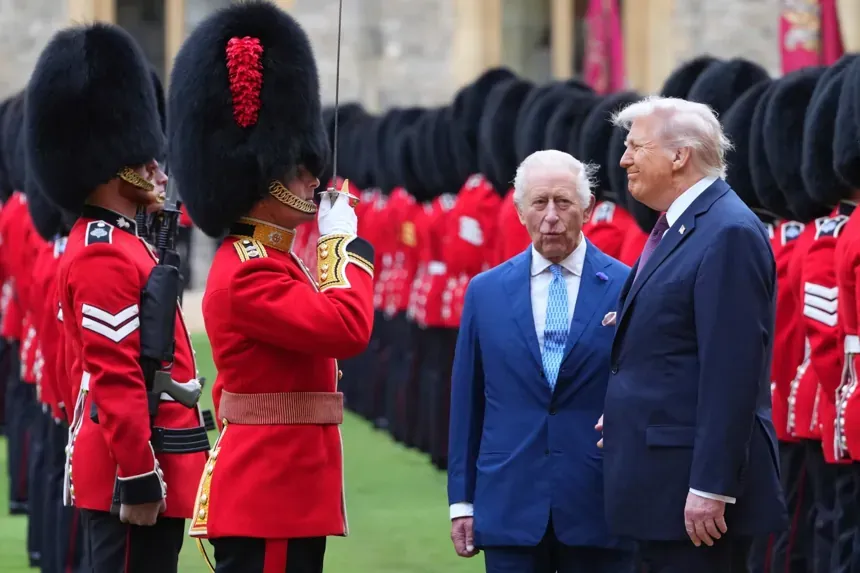
King Charles III is set to begin a high-profile state visit to the United States, reinforcing the UK–US alliance even as tensions over the Iran conflict test political alignment between the two governments. The visit, scheduled for late April, highlights the enduring diplomatic relationship between London and Washington at a time of wider geopolitical strain.
The trip comes as the British government faces pressure over its stance on U.S. military actions involving Iran, creating friction with Washington. Despite these disagreements, the visit is being positioned as a reaffirmation of long-standing transatlantic ties that extend beyond shifting political leadership.
Diplomatic Continuity Takes Priority
The four-day visit by King Charles III and Queen Camilla is designed to celebrate shared history and cooperation, including events marking the 250th anniversary of American independence. According to reporting from The Associated Press, the monarch is expected to emphasize themes similar to those championed by Queen Elizabeth II, focusing on democratic values and the deep-rooted relationship between the two nations.

Royal visits are conducted at the request of the British government and often serve as instruments of soft diplomacy. Analysts note that the monarchy plays a stabilizing role, helping maintain continuity in bilateral relations even when elected leaders diverge on key policies.
Political Differences Test Alliance
The visit unfolds against a backdrop of policy disagreements over the Iran conflict, where British Prime Minister Keir Starmer has resisted calls to fully align with U.S. military strategy. This divergence has contributed to diplomatic tension, with U.S. President Donald Trump openly criticizing the UK government’s position.
Despite these differences, Trump has continued to express personal warmth toward King Charles, underscoring a separation between political disputes and ceremonial diplomacy. Historians cited by AP suggest that such distinctions are central to preserving the “special relationship,” which is seen as deeper than any single administration.
Strategic Stakes for Transatlantic Relations
The زيارة carries broader strategic implications, particularly as the Iran conflict reshapes alliances and security priorities. Reuters reporting indicates that tensions surrounding the war have pushed UK–US relations to one of their most strained points in decades, increasing the importance of symbolic diplomatic efforts.
By proceeding with the visit, both governments signal a shared interest in preventing political اختلافات from undermining long-term cooperation. The monarchy’s involvement provides a platform for reaffirming commitments in areas such as defense, trade, and global governance.



Soft Power and Symbolism at the Forefront
Ceremonial elements—including a White House استقبال, congressional address, and state banquet—are expected to showcase the cultural and historical ties linking the two countries. These gestures reflect a deliberate effort to emphasize continuity and partnership despite current geopolitical tensions.
Experts note that Queen Elizabeth II’s 1991 address to the U.S. Congress remains a benchmark for such visits, highlighting shared democratic ideals and mutual respect. King Charles is expected to echo these themes, reinforcing the narrative of enduring alliance.
Future Outlook for UK–US Relations
The success of the visit will likely be measured not only by its ceremonial impact but also by its ability to stabilize relations during a period of geopolitical uncertainty. While disagreements over Iran remain unresolved, the continuation of high-level engagement suggests both sides are committed to preserving strategic cooperation.
As global tensions persist, the UK–US partnership faces renewed scrutiny. The visit by King Charles III serves as a reminder that, even amid policy اختلافات, longstanding alliances continue to rely on diplomatic continuity and institutional ties.