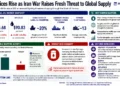
The global energy disruption triggered by the Iran war is accelerating demand for renewable power systems and electrified transport, sharpening China’s structural advantage in clean technology manufacturing. As oil and gas flows through the Strait of Hormuz remain constrained, higher fuel costs are pushing governments, industries, and households toward solar power, battery storage, and electric vehicles—segments where Chinese firms already hold dominant global market share.
The scientific and policy significance lies in how geopolitical fossil fuel shocks are altering technology adoption curves. Energy economists and climate researchers increasingly view supply disruptions as external accelerants for low-carbon transitions, particularly in import-dependent Asian and European markets. Rather than creating a new trend, the crisis appears to be intensifying an already established shift toward electrification and distributed renewable systems.
Study Design and System-Level Energy Signals
Although the underlying source reporting is based on economic and energy systems analysis rather than a single peer-reviewed journal paper, the dominant scientific angle is technology innovation rooted in energy transition research. The evidence base includes export data, industrial market share estimates, power security modeling, and infrastructure risk assessments tied to fossil fuel chokepoints.

Recent industry analyses cited in global reporting indicate China accounts for more than 70% of electric vehicle manufacturing and roughly 85% of global battery cell production capacity. These figures matter scientifically because they show how prior long-term industrial policy, scale economics, and materials processing capacity can determine which countries benefit when energy systems face external stress.
This mirrors findings from broader climate-energy research: when hydrocarbon volatility rises, the comparative cost stability of solar, wind, and storage technologies improves. In systems terms, renewables become not only decarbonization tools but also risk-mitigation infrastructure.
Key Findings: Energy Security Is Driving Technology Uptake
The most important research-backed signal is that fuel price instability is changing behavior across multiple sectors. Higher gasoline and LNG costs are improving the near-term economic case for electric vehicles, rooftop solar, and utility-scale storage in countries heavily dependent on imported energy.
From Pakistan to Southeast Asia and Europe, policymakers and utilities are reassessing energy resilience through the lens of supply-chain diversification. Analysts cited in the reporting note that countries already importing large volumes of Chinese panels and batteries are likely to accelerate procurement as they attempt to shield grids and transport systems from prolonged oil shocks.
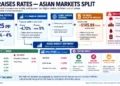
A parallel market indicator supports that view: investor interest in major Chinese clean-tech manufacturers has strengthened as expectations grow that renewable demand will rise under sustained oil stress.



Limitations and Uncertainty
It remains too early to treat the present surge in clean-tech demand as a permanent structural realignment. Current conclusions are based largely on real-time trade flows, energy pricing signals, and policy responses rather than long-duration longitudinal research.
Several uncertainties remain:
- whether Strait of Hormuz disruptions persist
- how quickly alternative fossil fuel supply routes normalize
- whether higher borrowing costs slow renewable infrastructure financing
- how tariffs and industrial policy in the U.S. and Europe affect Chinese export gains
The evidence currently supports correlation rather than direct causation: the war-driven oil shock is associated with stronger clean-tech demand, but long-term adoption will still depend on domestic grid readiness, financing, and regulatory frameworks.
Broader Scientific Context
The broader scientific takeaway is consistent with climate-transition literature: geopolitical instability can compress timelines for electrification by exposing the fragility of centralized fossil fuel systems.
China’s advantage stems less from the conflict itself and more from pre-existing dominance in manufacturing ecosystems for batteries, EV drivetrains, solar wafers, and storage systems. The current crisis simply amplifies the value of those capabilities at a moment when energy security and climate resilience are increasingly converging policy goals.