LONGWOOD, Florida (Journos News) – Cryptocurrency ATM scams at Circle K locations across the United States have drawn scrutiny from investigators and law enforcement agencies, according to police reports and an investigation by CNN and the International Consortium of Investigative Journalists.
Authorities say scammers have allegedly directed victims to deposit cash into cryptocurrency ATMs located inside convenience stores, converting the funds into digital assets that are difficult to recover once transferred.
The investigation reviewed more than 150 reported incidents involving crypto ATM scams at Circle K stores and included interviews with employees who said they had witnessed or attempted to stop suspected fraud.

Investigation Details
Police reports from multiple jurisdictions indicate that victims — many of them older adults — were allegedly instructed by scammers to deposit cash into cryptocurrency ATMs operated by Bitcoin Depot.
According to the Federal Bureau of Investigation, more than 12,000 complaints involving cryptocurrency ATM scams were filed nationwide during the year referenced in the investigation, with reported losses exceeding $330 million between January and November.
Law enforcement officials say scammers often impersonate technical support agents, government officials, or financial institutions and then direct victims to cryptocurrency ATMs to transfer funds.
“These cases frequently involve victims being coached over the phone while standing at the machine,” police investigators have said in multiple incident reports.
Retail Partnership and Industry Role
Circle K hosts cryptocurrency ATMs at more than 750 locations in the United States under a partnership with Bitcoin Depot, according to company records cited in the investigation.
■ Related News




Bitcoin Depot operates approximately 8,300 cryptocurrency ATMs across the country.
Circle K’s parent company operates roughly 7,000 stores nationwide.
In a statement to reporters, a Circle K spokesperson said the machines are owned and managed by third-party operators and that store employees do not oversee customer transactions.
“While we train and educate our employees to recognize common and emerging financial scams, they do not handle or oversee customer transactions at self-service cash ATMs or Bitcoin Depot terminals available in our stores,” the spokesperson said.
The company also said that financial scams typically originate outside the retail environment before victims arrive at an ATM location.
Employee and Law Enforcement Concerns
Several Circle K employees interviewed during the investigation said they have witnessed customers appearing to be under the direction of scammers while using the machines.
Police officers in several cities have also reported repeated calls to convenience store locations hosting cryptocurrency ATMs after suspected scams were discovered.
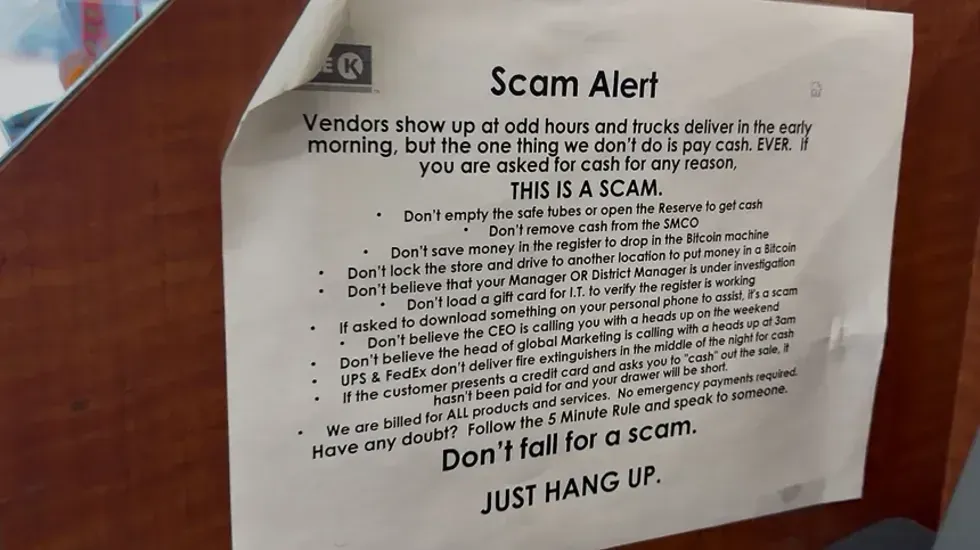
In some cases, law enforcement agencies have placed warning notices or advisories near machines inside stores to caution customers about potential fraud.
Authorities say warning signs often include victims remaining on the phone while depositing large amounts of cash into the machines.
Legal Actions and Court Proceedings
Some victims have attempted to recover losses through civil lawsuits against cryptocurrency ATM companies and retailers hosting the devices.
Court records show that a lawsuit filed by a South Carolina resident against Circle K and Bitcoin Depot was moved into arbitration after a federal judge ruled that the user had accepted the ATM operator’s terms of service.
In another case before the Iowa Supreme Court, the court ruled that Bitcoin Depot was not liable for losses after scammers convinced a victim to bypass platform safeguards.
Bitcoin Depot has said in statements that its machines include fraud warnings, identity verification requirements, and customer support services designed to assist both users and law enforcement.
The company has also stated that financial scams involving self-service terminals are not unique to cryptocurrency ATMs.
Regulatory Response
Growing concerns about cryptocurrency ATM scams have prompted legislative action in several states.
According to public records cited in the investigation, at least 18 U.S. states have enacted regulations since 2023 targeting crypto ATM fraud. These measures include daily transaction limits and refund provisions for victims under certain circumstances.
Additional bills addressing cryptocurrency ATM oversight have been proposed in states including Florida and Texas.
Industry representatives say regulatory changes and compliance requirements may affect where companies deploy future machines.
Background
Cryptocurrency ATMs allow users to convert cash into digital currency, which can then be transferred to digital wallets. Because many transactions are irreversible and may involve overseas accounts, law enforcement officials say recovery of funds is often difficult once a transfer is completed.
Authorities continue to advise consumers to verify requests for payments involving cryptocurrency and to avoid sending funds to unknown parties.