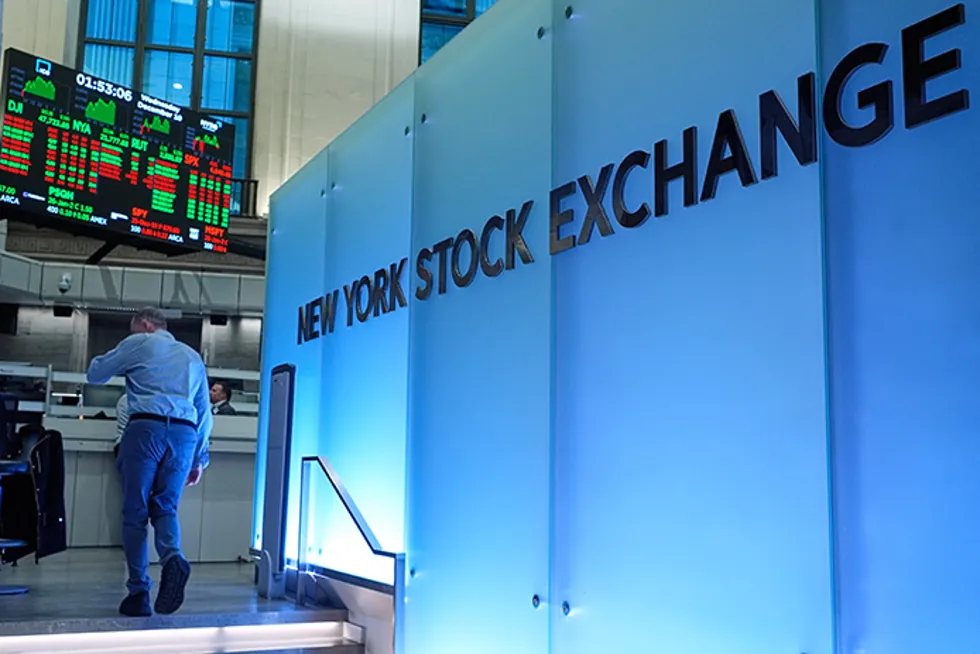
NEW YORK (Journos News) – U.S. equities traded without a clear direction Tuesday as mixed economic indicators complicated expectations for future interest rate decisions by the Federal Reserve.
The benchmark S&P 500 edged down 0.2% to 6,800.26, while the Dow Jones Industrial Average declined 302.30 points, or 0.6%, to 48,114.26. The technology-heavy Nasdaq Composite rose 0.2% to 23,111.46, reflecting gains among select artificial intelligence-related stocks.
Market participants are closely monitoring economic data to assess the central bank’s likely policy path in 2026, with interest rate expectations remaining one of the primary drivers of equity valuations and capital flows.

Labor and Retail Data Send Mixed Signals
Recent economic reports offered conflicting signals about the strength of the U.S. economy.
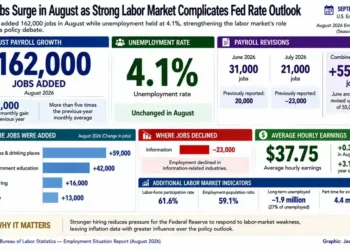
According to economic data cited by Reuters and market reports, the national unemployment rate reached its highest level since 2021. At the same time, employers added more jobs than economists had forecast in the latest monthly payroll data.
Retail activity also showed resilience. An underlying measure of U.S. retail revenue growth increased more than expected in October, suggesting consumer spending remains relatively stable despite tighter financial conditions.
The mixed data provided little clarity for investors attempting to gauge the likely pace of monetary policy easing next year.
Inflation and Pricing Pressures Remain Key Concern
Additional data released during trading hours suggested inflation pressures may persist.
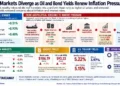

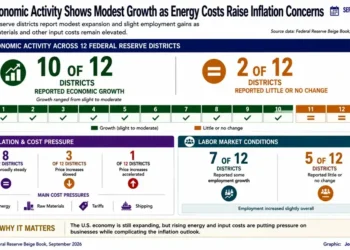
Preliminary business surveys from S&P Global Market Intelligence indicated average selling prices charged by companies rose at one of the fastest rates since mid-2022. The same report showed overall business activity expanded at its slowest pace since June.
“Higher prices are again being widely blamed on tariffs,” said Chris Williamson, chief business economist at S&P Global Market Intelligence. He added that pricing pressures initially affecting manufacturing are increasingly spreading into services.
Economists expect upcoming consumer price data later this week to provide a clearer signal on whether inflation remains above the Federal Reserve’s target range.
Energy Stocks Weaken as Oil Prices Slide
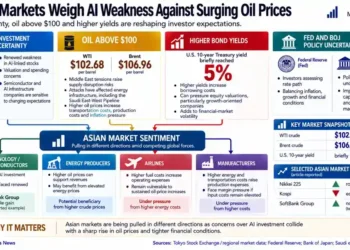
Energy companies led sector declines after crude prices fell to multi-year lows amid expectations that global supply will exceed demand.
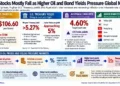
Benchmark U.S. crude settled at $55.27 per barrel, while international benchmark Brent crude closed at $58.92. Both benchmarks reached their lowest levels since 2021.
The drop weighed on shares across the oil sector. APA Corporation fell 5.2%, Marathon Petroleum declined 4.7%, and Halliburton dropped 4.3%.
Industry data cited by Bloomberg indicates that increased production levels and slowing demand growth have pressured global oil markets in recent months.
AI Technology Shares Show Diverging Performance
Technology stocks linked to artificial intelligence produced mixed results following a period of strong market momentum.
Oracle gained 2%, while Broadcom added 0.4%, extending partial recoveries after both companies recently reported quarterly profits that exceeded analyst estimates.
In contrast, CoreWeave, a cloud infrastructure provider specializing in high-performance AI computing, fell 3.9%.
Market analysts have increasingly debated whether the substantial investment currently flowing into AI infrastructure will translate into sustained profitability and productivity gains across the sector.
Corporate Developments Influence Individual Stocks
Several corporate announcements also shaped individual share movements.
Pfizer declined 3.4% after issuing a profit outlook for 2026 that came in below some analyst expectations, although its projected revenue aligned broadly with forecasts.
Meanwhile, Kraft Heinz rose 0.7% after announcing that Steve Cahillane will become chief executive on January 1. The company plans to split into two entities in the second half of 2026, with Cahillane set to lead the business retaining brands including Heinz, Philadelphia and Kraft Mac & Cheese.
Global Markets and Bond Yields
Outside the United States, equity markets broadly declined across Europe and Asia.
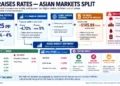
Japan’s Nikkei 225 fell 1.6% ahead of an anticipated interest rate increase by the Bank of Japan. South Korea’s Kospi dropped 2.2%, while major indices in Hong Kong and Shanghai declined 1.5% and 1.1%, respectively.
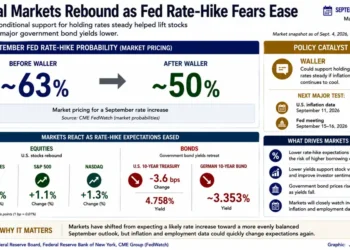
In the bond market, the yield on the U.S. 10-year Treasury note fell to 4.14% from 4.18% a day earlier, reflecting modest demand for government debt as investors reassessed economic risks and interest rate expectations.