More than four years after Russia launched its full-scale invasion of Ukraine, the war has evolved into one of the most protracted and destructive conflicts in Europe since World War II. Despite diplomatic efforts, including a renewed push from Washington for a negotiated settlement, the fighting continues along a vast and heavily militarized front line.
The battlefield dynamics, political objectives and economic pressures on both sides suggest that the obstacles to peace are structural rather than temporary. While mediation efforts have intensified, the gap between Moscow’s and Kyiv’s stated demands remains wide — and in some areas, widening.
A war that outlasted expectations
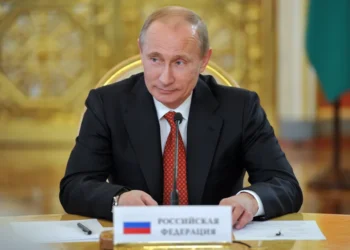
When Russian forces crossed into Ukraine in February 2022 under the direction of President Vladimir Putin, many analysts expected a swift campaign aimed at seizing Kyiv and installing a compliant government. That initial thrust failed. Ukrainian resistance, bolstered by Western military support, forced Russia to retreat from the capital’s outskirts within weeks.

What followed was a transformation of the conflict. Rapid maneuver warfare gave way to entrenched positional fighting across a front stretching roughly 1,200 kilometers. Russian forces concentrated on Ukraine’s east and south, where Moscow had already annexed Crimea in 2014 and supported separatist movements in parts of Donetsk and Luhansk.
After more than four years of war, Russia controls roughly one-fifth of Ukrainian territory. Yet its incremental gains since 2022 have been measured in kilometers rather than sweeping advances. NATO Secretary-General Mark Rutte recently likened the pace of Russian advances to that of “a garden snail,” reflecting the grinding nature of the campaign.
Casualty estimates vary, and neither side publishes comprehensive figures. Independent assessments from research institutions such as the Washington-based Center for Strategic and International Studies suggest that combined Russian and Ukrainian casualties — killed and wounded — could number in the hundreds of thousands or more. Such figures underscore the intensity of the war of attrition.
The logic of attrition
The conflict has increasingly resembled a war of exhaustion. In this model, victory is not defined by rapid territorial conquest but by the gradual depletion of the opponent’s manpower, equipment and morale.
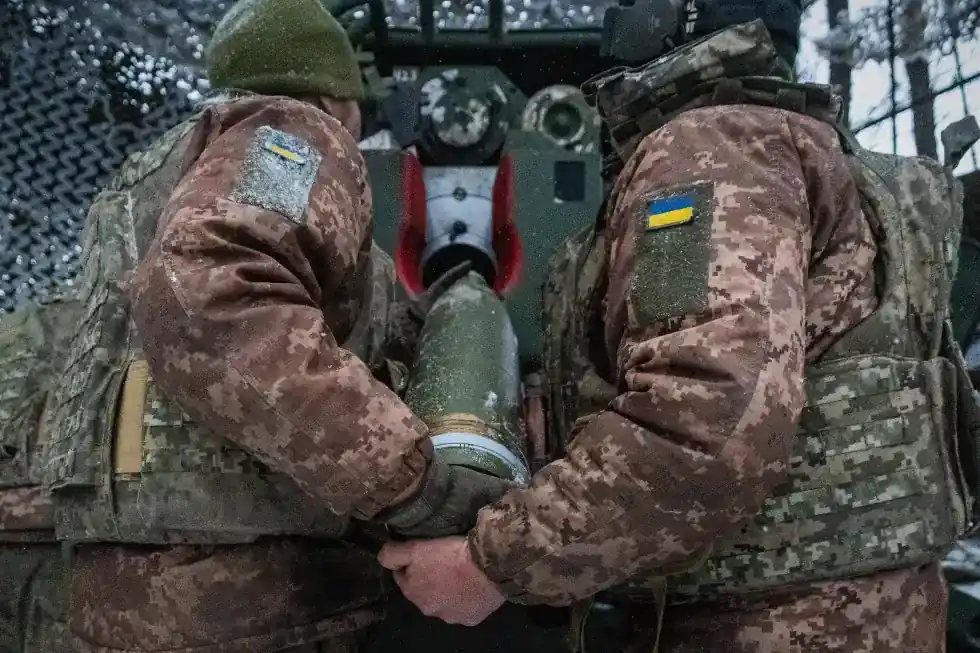
Russian forces have relied heavily on artillery, glide bombs and massed infantry assaults to press forward in eastern Ukraine, particularly in the Donetsk region. Ukrainian troops, facing a larger adversary with deeper reserves, have sought to offset that imbalance through precision strikes and technological adaptation.


For the first time in modern warfare, drones have become central to nearly every aspect of combat. Both sides deploy thousands of small reconnaissance and attack drones daily. These systems monitor troop movements, direct artillery fire and strike vehicles and personnel.
The result is a battlefield where concealment is increasingly difficult. Military analysts note that the proliferation of drones has expanded the “kill zone” well beyond traditional front lines, complicating logistics and making the evacuation of wounded soldiers more dangerous. The mixture of trench systems reminiscent of World War I and high-tech unmanned systems has defined this phase of the war.
This technological transformation suggests that even if territorial lines remain relatively static, the character of warfare in Ukraine is influencing military doctrines globally.
Energy, infrastructure and long-range strikes
Beyond the front lines, both sides have escalated long-range attacks aimed at weakening each other’s strategic resilience.
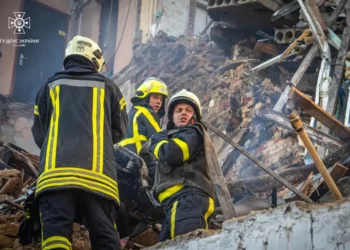
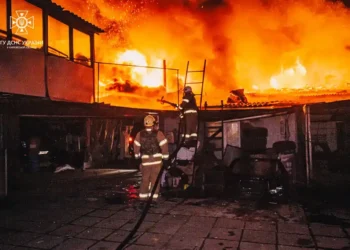
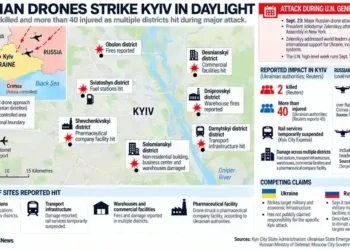
Russia has repeatedly targeted Ukraine’s energy infrastructure, particularly during winter months. Strikes on power plants, substations and transmission lines have caused blackouts and strained the national grid. Ukrainian officials describe the most recent winter campaign as among the most difficult, with efforts focused on fragmenting the grid and disrupting energy transfers between regions.
Ukraine, in turn, has expanded its long-range drone and missile capabilities. Strikes on Russian oil refineries and fuel depots aim to reduce export revenues that help finance Moscow’s war effort. Ukrainian naval drone attacks have also forced Russia’s Black Sea Fleet to reposition key assets away from Crimea.
These exchanges reflect a broader strategic contest: both governments appear intent on demonstrating endurance and imposing costs deep behind enemy lines. Neither has signaled a willingness to halt such operations absent a comprehensive agreement.
Mediation meets incompatible demands
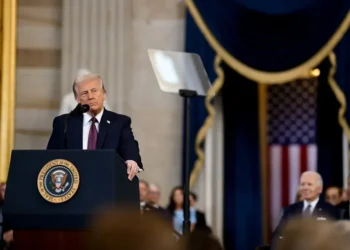
Diplomatic efforts, including mediation attempts encouraged by U.S. President Donald Trump, have struggled against entrenched positions.
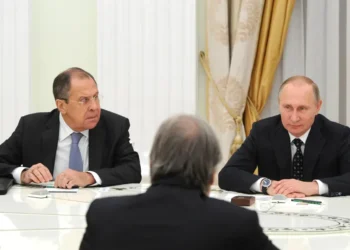
Moscow insists that Ukraine withdraw from territories Russia claims to have annexed — including parts of Donetsk, Luhansk, Zaporizhzhia and Kherson — even where Russian forces lack full control. The Kremlin also demands that Kyiv abandon its ambition to join NATO, limit the size of its armed forces and adopt other political changes that Ukrainian leaders argue would compromise sovereignty.
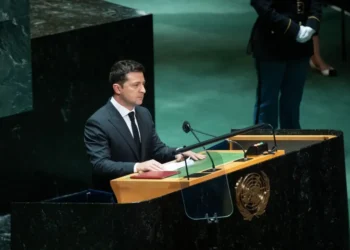
Ukrainian President Volodymyr Zelenskyy has proposed a ceasefire along existing lines of contact as a starting point for negotiations. Moscow has rejected a simple freeze, arguing that only a comprehensive settlement addressing what it calls the “root causes” of the conflict would be acceptable.
These positions are not merely tactical bargaining chips; they reflect fundamentally different visions of Ukraine’s future. Analysts at institutions such as the Carnegie Russia Eurasia Center suggest that the Kremlin’s objectives extend beyond territory to shaping Ukraine’s geopolitical orientation. Kyiv and its European allies interpret these aims as an attempt to reassert a sphere of influence.
The resulting deadlock means that even incremental agreements — for example, on prisoner exchanges or grain exports — have not translated into sustained de-escalation.
Economic pressure and political resilience
Western sanctions have significantly constrained Russia’s economy, targeting its financial system, technology imports and energy exports. Growth has slowed, inflation has persisted and labor shortages have intensified as military mobilization and emigration reduced the workforce.
Yet Russia has adapted in notable ways. Defense production has expanded, and the government has prioritized social payments and wages for military personnel and key industrial workers. Analysts at the Royal United Services Institute argue that while sanctions have made Russia’s economy less efficient and more dependent on the state, they have not yet compelled a strategic shift.
Ukraine faces its own economic and demographic pressures. The war has displaced millions, strained public finances and increased dependence on Western aid. Continued support from the United States and European Union remains central to Kyiv’s ability to sustain both its military operations and civilian infrastructure.
This mutual endurance suggests that economic strain alone may not be sufficient to force concessions in the near term.
Why a quick settlement appears unlikely
Several structural factors complicate a rapid peace agreement.
First, neither side appears convinced that time works decisively against it. Russian officials express confidence that continued pressure will eventually weaken Ukrainian resistance. Ukrainian leaders, by contrast, hope sustained Western backing and tighter sanctions will erode Russia’s capacity and political will.
Second, domestic political considerations matter. Elections, public opinion and elite cohesion influence negotiating space. While both governments publicly praise mediation efforts, neither has prepared its population for major territorial compromise.
Third, security guarantees remain unresolved. Kyiv seeks assurances that any ceasefire would not simply allow Russia to regroup. Moscow opposes foreign peacekeepers or arrangements it views as embedding Western military presence in Ukraine.
Taken together, these factors suggest that diplomacy is constrained by strategic mistrust and incompatible end goals. Even if temporary truces emerge, a comprehensive settlement would require bridging differences that go to the core of sovereignty, alliance alignment and regional security architecture.
A conflict reshaping Europe
Beyond the immediate battlefield, the war has transformed Europe’s security landscape. NATO has expanded and reinforced its eastern flank. Energy trade patterns have shifted. Defense spending across the continent has increased.
The conflict’s duration — now measured in years rather than months — underscores how initial expectations of a swift resolution underestimated both Ukrainian resistance and Russia’s willingness to absorb losses.
Whether U.S.-backed mediation gains traction may depend less on deadlines and more on shifts in battlefield dynamics or political calculations in Moscow and Kyiv. For now, the evidence indicates a conflict sustained by attrition, technological adaptation and entrenched objectives.
That combination has made peace elusive — and suggests that any eventual settlement will require not only negotiation, but a redefinition of the strategic assumptions that have driven the war since 2022.
Source: AP News – After 4 years of war by Russia in Ukraine, peace is still elusive despite a US push for a settlement