The founder of fast-fashion giant Shein resurfaced publicly in Guangdong, pledging major investment in China’s garment industry. The move comes as the company faces mounting geopolitical, regulatory and environmental scrutiny abroad — and suggests a recalibration in how Shein balances its global ambitions with its Chinese manufacturing base.
For years, the public image of Shein has been defined less by its leadership and more by its algorithm-driven fashion engine — a data-heavy retail model capable of turning social media trends into low-cost garments within weeks. Its founder, Xu Yangtian, also known as Sky Xu or Chris Xu, has remained largely out of sight even as the company expanded into more than 160 markets.
That changed this week in Guangdong.

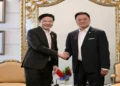
Speaking at a high-profile development forum in Guangzhou, Xu pledged that Shein would invest more than 10 billion yuan (around $1.45 billion) to build what he described as a “high-tech fashion hub” in the province. He praised local officials for fostering a “world-class business environment” and described Guangdong as “fertile ground” for the company’s growth. His remarks, delivered to provincial officials and business leaders, were widely circulated across Chinese media and social platforms.
The appearance was notable not just for what Xu said, but for where and when he said it.
A Global Retailer with Chinese Industrial Roots
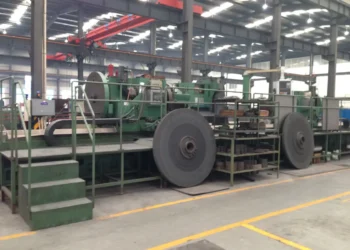
Shein’s rise has been closely tied to the manufacturing ecosystem of Guangdong, one of China’s most important export regions. The province — particularly cities such as Guangzhou — sits at the center of the country’s garment supply chain, offering dense clusters of textile suppliers, small-scale workshops, logistics firms, and skilled labor.
This concentration has enabled Shein’s “on-demand” production model. Instead of producing large seasonal inventories, the company works with thousands of suppliers to manufacture in small batches, scaling up only when consumer demand is confirmed by real-time sales data. Analysts say this reduces unsold inventory risk while compressing production cycles.
Xu credited Guangdong’s “complete industrial ecosystem” for enabling Shein’s rapid scaling. According to his remarks, the company’s operations in the region support more than 600,000 jobs — a figure that reflects both direct suppliers and associated employment.
■ Related News



That framing aligns with Beijing’s broader industrial policy priorities. In recent years, Chinese authorities have emphasized “high-quality development,” digital upgrading of traditional industries, and deeper integration of manufacturing with technology platforms. Xu’s promise to bring more digital services to factories — and to improve efficiency through technology — echoes these themes.
The pledge suggests that, despite Shein’s international expansion, its operational core remains deeply embedded in southern China.
Relocation, Listings and Political Pressures
Shein’s corporate structure has evolved significantly in recent years. The company relocated its headquarters to Singapore and has pursued a potential public listing in both New York and London. The shift was widely interpreted as part of an effort to position Shein as a global — rather than purely Chinese — retailer, particularly amid heightened geopolitical tensions.
Western scrutiny of Chinese technology and e-commerce companies has intensified over the past several years. Trade frictions, regulatory investigations, and debates over supply chain transparency have all shaped the operating environment for firms with Chinese roots but global ambitions.
In the United States, policy changes affecting low-value parcel imports have drawn attention. During the presidency of Donald Trump, measures targeting trade imbalances included the removal of a tax exemption that had benefited exporters shipping low-cost goods directly to American consumers. Such changes affected companies whose business models rely heavily on cross-border e-commerce shipments.
At the same time, European regulators have scrutinized large online marketplaces over digital compliance and consumer protection standards. The European Union has opened investigations into Shein over potential breaches of digital regulations, including issues related to third-party sellers and product listings. The company has said it removed problematic listings and strengthened platform rules.
These developments reflect a broader trend: fast-growing cross-border e-commerce platforms now face regulatory oversight not only in manufacturing countries but also in end markets. For Shein, that means navigating multiple legal and political systems simultaneously.
Xu’s public reaffirmation of Chinese roots may therefore serve several functions. Domestically, it signals alignment with provincial and national development goals. Internationally, it may aim to reassure stakeholders that Shein’s supply base remains stable and integrated, even as its corporate structure evolves.
The Fast-Fashion Debate
Shein’s growth has also intensified scrutiny of the fast-fashion model itself. Environmental groups and researchers have raised concerns about textile waste, carbon emissions, and the lifecycle of low-cost garments. Labor practices within global apparel supply chains — not unique to Shein — have long been a subject of debate across the industry.
The company has said it is investing in supply chain oversight, sustainability initiatives, and digital tracking systems. However, advocacy groups argue that the ultra-fast production cycle characteristic of algorithm-driven fashion presents structural challenges for sustainability.
In Europe, the backlash has occasionally become visible in public demonstrations. When Shein opened a concession in France, protests in Paris highlighted concerns over labor standards and environmental impact. The company is continuing its retail expansion in French cities, after earlier launch delays.
This tension underscores a central paradox: the same supply chain efficiencies that allow rapid, low-cost production are also what attract regulatory and activist scrutiny. The speed and scale of Shein’s operations amplify both its commercial success and its exposure to criticism.
Why Guangdong Matters
Against that backdrop, Guangdong represents more than a manufacturing base. It is a symbol of China’s export-driven industrial model and its evolution toward digital integration.
By pledging to build a “world-class fashion industry cluster,” Xu is effectively situating Shein within China’s broader push to modernize traditional sectors through technology. Provincial governments have increasingly promoted “industrial clusters” that combine manufacturing, research and development, logistics, and digital services within concentrated zones.
The investment figure — more than 10 billion yuan — suggests a long-term commitment to physical infrastructure, digital systems, and potentially training initiatives. While specific project details have yet to be publicly outlined, the emphasis on a “high-tech” hub points toward automation, data integration, and possibly AI-assisted supply chain management.
This aligns with a larger pattern in Chinese industrial policy: strengthening domestic production capabilities while maintaining export competitiveness.
A Calculated Visibility
Xu’s appearance itself may carry strategic weight. For a founder who has largely avoided public exposure, stepping onto a provincial conference stage signals a shift in posture.
Corporate visibility can serve multiple purposes. It can reassure local authorities, demonstrate accountability, and project stability to international investors evaluating a potential public listing. It can also help shape the narrative around a company facing external scrutiny.
Yet uncertainty remains. Regulatory investigations in Europe are ongoing. Trade policy in the United States continues to evolve. Debates about sustainability and labor conditions show no signs of fading.
What Xu’s speech indicates is not a retreat from global markets, but a rebalancing. Shein’s international brand may be increasingly diversified in corporate structure and geography, but its production engine remains anchored in southern China.
In reaffirming that anchor, the company appears to be signaling that global expansion and domestic industrial alignment are not mutually exclusive. Whether that dual strategy can withstand the pressures of geopolitics, regulatory oversight, and shifting consumer expectations is likely to shape the next phase of Shein’s trajectory.
For now, the message from Guangdong was clear: even as Shein operates across continents, it intends to remain rooted where its supply chain first scaled — in the dense manufacturing networks of China’s export heartland.
Source: BBC – Elusive Shein boss hails Chinese roots in rare public appearance