When America’s top leaders gather in one room, one Cabinet member is deliberately kept away. The “designated survivor” system, rooted in Cold War fears of nuclear attack, remains a quiet pillar of U.S. continuity planning.
On nights when the president addresses Congress — whether during a State of the Union or a joint session speech — the visual tableau appears complete: lawmakers, Supreme Court justices, military leaders and Cabinet secretaries assembled under one roof. Yet one figure is conspicuously absent. That absence is intentional.
The designated survivor is a member of the presidential line of succession chosen to remain at a secure, undisclosed location during events where the nation’s leadership is concentrated in a single place. The rationale is straightforward but stark: if a catastrophic attack were to kill or incapacitate everyone else in the line of succession present at the event, someone would remain constitutionally empowered to assume the presidency.

The practice, though dramatized in popular culture, reflects decades of continuity-of-government planning shaped by nuclear anxiety, terrorism threats and constitutional mechanics.
The constitutional logic behind the absence
The U.S. Constitution and subsequent legislation establish a clear order of presidential succession. After the vice president, the line extends to the Speaker of the House, the president pro tempore of the Senate and then Cabinet secretaries in the order their departments were created.
Because many of those officials are present at major national addresses, succession planners ensure that at least one eligible Cabinet member is elsewhere and protected. The chosen official must meet the constitutional qualifications for the presidency — including being a natural-born citizen at least 35 years old and having lived in the United States for 14 years.
The system is less about predicting a specific threat and more about eliminating a single point of failure. Concentration risk — a concept familiar in financial and security planning — applies to governance as well. If too many decision-makers gather in one location, a single catastrophic event could paralyze the executive branch.
Cold War origins and formalization
The idea of preserving leadership in the event of decapitation predates the modern “designated survivor” label, but it was formalized during the late Cold War. According to historical accounts, including research detailed by journalist Garrett M. Graff in “Raven Rock: The Story of the U.S. Government’s Secret Plan to Save Itself — While the Rest of Us Die,” continuity planning intensified during the administrations of Jimmy Carter and Ronald Reagan.
■ Related News



At the time, U.S. defense officials assessed that Soviet submarines positioned off the Atlantic coast could potentially launch nuclear missiles with minimal warning. Washington, as the symbolic and operational center of government, was viewed as a prime target. The prospect of a sudden, leadership-erasing strike forced planners to consider worst-case scenarios in granular detail.
Beginning in 1980, responsibility for certain continuity preparations was coordinated through the White House Military Office, working alongside what is now the Federal Emergency Management Agency (FEMA). The aim was not merely symbolic succession, but operational continuity — ensuring that someone could command the armed forces, communicate with allies and maintain constitutional authority in the immediate aftermath of catastrophe.
After September 11: a changed threat landscape
Before the terrorist attacks of September 11, 2001, designated survivors often retained greater flexibility about where they would wait out a presidential address. Former Cabinet officials have described relatively low-key arrangements, including travel to other U.S. cities during the event.
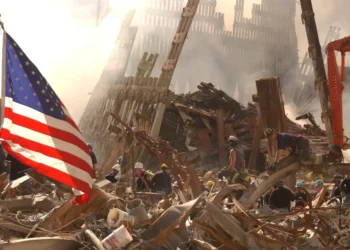
The attacks on New York and Washington reshaped that posture. Continuity planning became more formalized and security-driven, reflecting the reality that mass-casualty attacks were no longer theoretical. Designated survivors are now typically escorted to secure locations, sometimes airborne, accompanied by military aides and representatives from key agencies.
They receive briefings on emergency procedures, constitutional protocols and national security contingencies. While dramatizations suggest instant transformation into a wartime president, former participants have described the experience as more procedural than theatrical — punctuated by moments of sobering reflection.
What the role feels like
Officials who have served as designated survivor often describe a mixture of routine bureaucracy and existential gravity. The day begins much like any other. Then, shortly before a major address, security arrangements intensify.
In some cases, the official is transported by military aircraft. In others, they are taken to a secure facility equipped for crisis command. Accompanying staff may include representatives from defense, intelligence and emergency management agencies, carrying briefing materials outlining lines of authority and decision-making frameworks.
The psychological dimension appears to be the most striking. Former Cabinet members have described the moment when it becomes clear that, in an unthinkable scenario, they would be required to assume the presidency immediately — potentially after a national tragedy that has claimed colleagues and friends.
That realization is compounded when family members attend the event from which the designated survivor is absent. The role, by design, isolates one individual from both the symbolic unity and potential vulnerability of the gathering.
Public awareness and cultural portrayal
The public did not always know which official had been chosen. Early in the 1980s, the identity of the designated survivor was disclosed only after the event concluded. Over time, increased media coverage and live television broadcasts made absences more visible, and news outlets now often identify the official in advance or shortly thereafter.
The concept entered popular culture through novels and television, most prominently the ABC series Designated Survivor starring Kiefer Sutherland. The show imagined a mid-level Cabinet secretary suddenly elevated to the presidency after an attack destroys the Capitol.
While fictional portrayals heighten drama, they reflect genuine public fascination with contingency governance. As historians have noted, the scenario combines two compelling elements: existential threat and democratic resilience. The idea that constitutional order can persist even after devastation speaks to institutional durability.
Continuity beyond symbolism
The designated survivor is only one component of a broader continuity-of-government architecture. Federal agencies maintain relocation sites, redundant communication systems and succession plans within their own leadership ranks. Military exercises routinely simulate catastrophic scenarios, testing command structures under extreme stress.
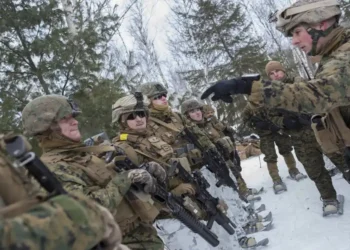
Recent reporting has noted that some military training missions are explicitly tied to continuity objectives. These exercises aim to ensure that the federal government can function even if physical infrastructure in Washington is compromised.
The system’s persistence suggests that U.S. officials view low-probability, high-impact events as requiring constant preparation. The logic mirrors risk management principles used in other sectors: while the likelihood of total leadership loss is remote, the consequences would be so severe that preventative measures are considered essential.
Why it still matters
The existence of a designated survivor underscores an uncomfortable truth: modern governance must plan for scenarios that would once have seemed unimaginable. Nuclear tensions, terrorism, cyber threats and emerging technologies have all shaped continuity planning over decades.
Yet the role is deliberately unglamorous. It involves waiting, briefing books, secure communications and, often, anticlimax. When the president finishes speaking and the assembled leaders exit safely, the designated survivor returns quietly to regular duties.
That anticlimax is the point. The system is designed to be invisible in success and indispensable only in failure.
Whether the threat environment is defined by Cold War nuclear standoffs or contemporary security concerns, the logic remains consistent: democratic systems endure not just through elections and debate, but through contingency planning. The designated survivor is a reminder that constitutional order depends as much on preparation as on ceremony.
In practice, the chosen official almost always resumes the role of Cabinet secretary by the end of the evening. But for a few hours, in a secure and undisclosed location, the full weight of presidential authority rests — hypothetically — on their shoulders.
Source: AP News – From Cabinet secretary to doomsday president: What being the designated survivor is like