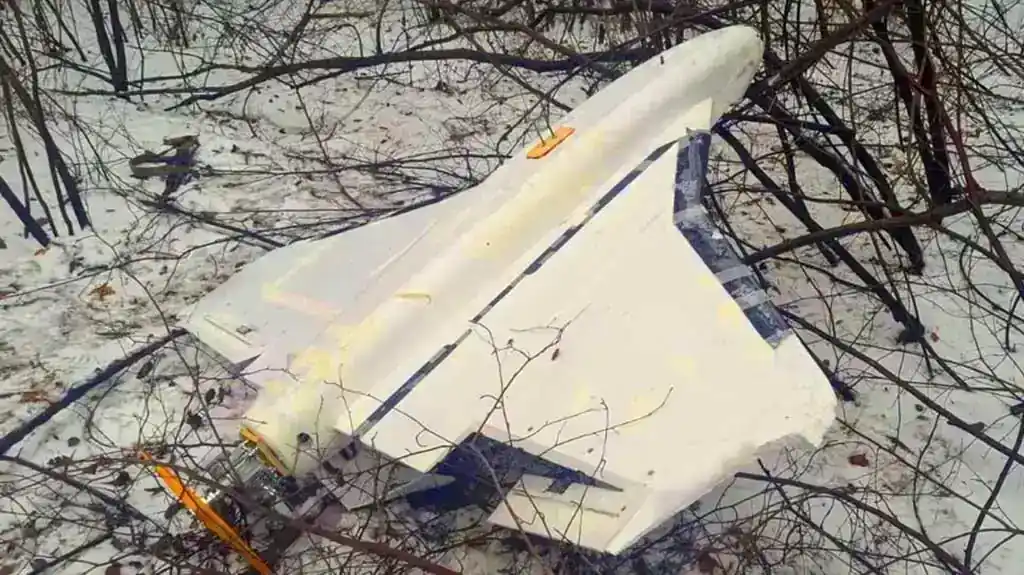
BUCHAREST, Romania – Romania has shot down drones linked to Russia’s war in Ukraine for the first time, marking a significant shift in how the NATO and European Union member responds to repeated airspace violations along its eastern border.
Romanian F-16 fighter pilots intercepted the first of three drones over a three-day period beginning Friday as Russia intensified attacks on areas of Ukraine near the Romanian frontier. After determining the drones were of Russian origin, Romanian authorities summoned Russia’s ambassador in Bucharest and expelled a Russian diplomat on Monday.
The development follows years of drone incursions associated with Russia’s full-scale invasion of Ukraine, which began in February 2022.

Repeated Drone Incursions Prompt Policy Shift
Romanian territory has experienced multiple drone-related incidents since the war began, including in May when a drone crashed into an apartment building in the eastern city of Galați along the Danube River, injuring a woman and her child.
Until recently, Romanian authorities typically responded by scrambling fighter aircraft, recovering drone debris, constructing fallout shelters near border communities and issuing diplomatic protests to Moscow.
Romania also joined neighboring Poland in acquiring the MEROPS counter-drone system, designed to intercept hostile unmanned aircraft, following a series of incursions along NATO’s eastern flank.
According to Romania’s Ministry of National Defence, at least 19 drones have entered Romanian airspace this year. Since the start of the war, authorities have documented 50 incidents involving drones or drone fragments on Romanian territory.
President Nicușor Dan praised the Romanian pilots following the interceptions and accused Russia of violating Romania’s airspace.
■ Related News

“It is unacceptable and intolerable for the Russian Federation to continue violating Romanian airspace,” Dan said.
Officials Cite a Changing Security Environment
Although Romania passed legislation last year authorizing its military to shoot down drones entering national airspace, authorities had previously refrained from using force. The legislation faced opposition from nationalist political parties.
Romanian military analyst Radu Tudor said the May drone strike in Galați may have influenced the government’s decision to adopt a more assertive approach.
“This was somehow a kind of psychological trigger, in order to say: ‘OK, enough is enough,'” Tudor said.
He added that NATO’s broader approach may also be evolving, noting that previous restraint reflected concerns about potential escalation.
Before the latest interceptions over Romania, Romanian pilots participating in NATO’s Baltic Air Policing mission also shot down a stray Ukrainian drone over Estonian airspace while deployed from Lithuania in May.
Tudor said Romania’s latest actions reflected a message similar to one delivered by NATO Secretary-General Mark Rutte during the alliance’s recent summit, signaling that repeated airspace violations would no longer go unanswered.
Romania Expels Russian Diplomat
Romania’s Ministry of Foreign Affairs summoned Russia’s ambassador on Monday and presented drone fragments that officials said confirmed the aircraft originated from Russia. The ministry also expelled a member of the Russian diplomatic mission, giving the diplomat five days to leave the country.
Foreign Minister Oana Toiu said investigations conducted by prosecutors, together with recovered drone debris, established the drones’ Russian origin.
“The Russian side learned what they already knew: the drones downed on Romanian territory belong to them,” Toiu wrote on X.
Russia’s embassy in Bucharest rejected the accusation, stating that Russia “has never directed and does not direct combat drones” into Romanian territory. The embassy described the allegation as “completely unfounded” and said the expulsion of its diplomat “will not go unanswered.”
Military Says New Tactics Improved Air Defenses
Cristian Popovici, head of public relations at Romania’s Ministry of National Defence and a former air defense officer, said the military has developed new operational procedures in response to repeated drone incidents near the Ukrainian border.
“We recorded more than 100 attacks with drones near our border with Ukraine, and many of them resulted in debris or even drones that penetrated our airspace,” Popovici told The Associated Press.
He said lessons learned from intercepting a drone during NATO’s Baltic Air Policing mission helped Romanian forces successfully destroy three drones over Romanian territory within three days.
Despite adopting a more proactive defensive posture, Popovici emphasized that Romania has no intention of becoming directly involved in the war.
“We are in peacetime, we are not involved in this fight,” he said. “If Russia wants to escalate with NATO, it’s up to them. I’m not sure it’s a wise move now.”
This report is based on reporting by The Associated Press.