Israel has rejected a key element of a U.S.-backed plan for Gaza, with Prime Minister Benjamin Netanyahu saying Israeli forces will not withdraw until Hamas is disarmed, while renewed Houthi attacks in Yemen are adding to security tensions across the region.
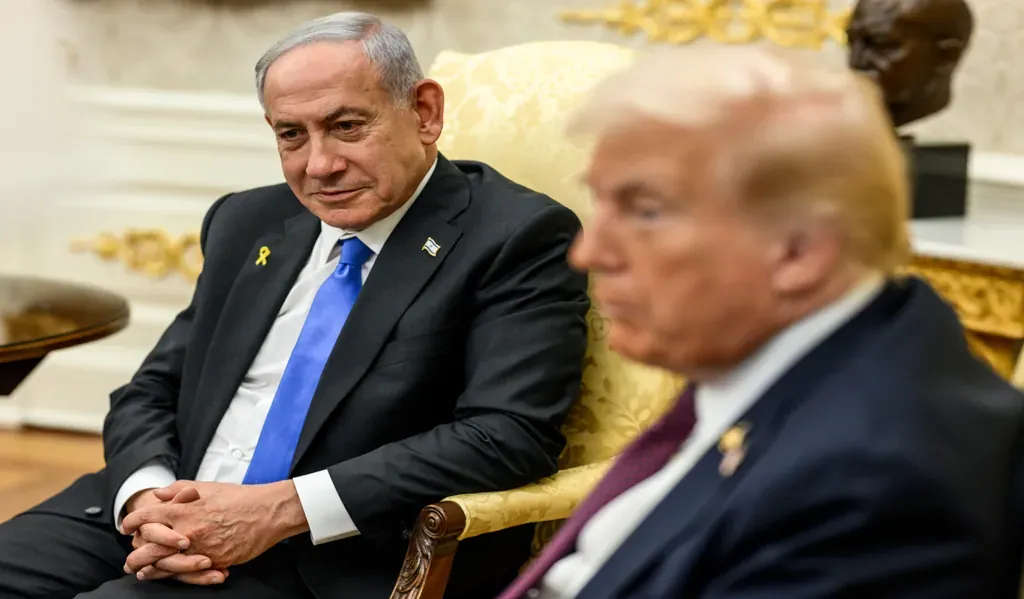
Netanyahu told an Israeli Cabinet meeting that Israel does not accept the proposed sequence in the 15-point plan announced by U.S. President Donald Trump last month. He said discussions with Washington would continue, but maintained that Israeli forces would remain in place until Hamas had been genuinely disarmed.
The disagreement leaves major elements of the proposed Gaza framework unresolved, including the timing of an Israeli withdrawal, Hamas’ disarmament and the future administration of the territory.

Israel challenges Gaza withdrawal framework
Netanyahu said Israel’s military would not withdraw from Gaza before Hamas is disarmed. Israeli forces currently control more than half of the Palestinian territory, where about 2 million people live and where large areas have been destroyed during the war.
The White House did not immediately respond to Netanyahu’s remarks.
Bassem Naim, a member of Hamas’ political bureau, said the group remained committed to the proposed road map and expected mediators and the United States to pressure Israel over Netanyahu’s position.
The Gaza war began after the Hamas-led attack on Israel on Oct. 7, 2023. A ceasefire has since reduced some fighting, but major questions over disarmament, Israeli troop withdrawals and Gaza’s future governance remain unresolved.
Netanyahu is also facing domestic political pressure as his government prepares for Israel’s next scheduled election on Oct. 27.




Houthi attacks increase pressure on Red Sea security
The dispute over the Gaza plan comes as Houthi forces in Yemen continue attacks that are widening security concerns around the Red Sea.
Houthi forces carried out a second attack in less than 24 hours against the government-held Red Sea port city of Mocha late Sunday. A Houthi military source told the group’s Al-Masirah TV that the operation targeted weapons depots and concentrations of Saudi troops.
Yemen’s internationally recognized government said residential areas were instead targeted with ballistic missiles and drones, adding that its air defenses intercepted some of the drones. The competing accounts could not be independently reconciled from the supplied reporting.
The National Resistance Forces, which support the internationally recognized government, said an earlier attack Sunday killed seven people — four troops and three civilians — and wounded 15 civilians.
Fayed al-Noman, an assistant undersecretary at Yemen’s information ministry, said the attack severely damaged port buildings and piers, along with commercial goods and food supplies. Yemen’s military later said missiles landed at several locations, including near a television station.
Mocha is controlled by Yemen’s internationally recognized government and has been renovated to accommodate shipping that avoids the Houthi-controlled port of Hodeida.
Houthi claims attack on Saudi oil facility
The Houthis also said they targeted an Aramco refinery in Jazan, Saudi Arabia, with a drone.
Houthi military spokesman Yahya Saree described the strike as retaliation for what the group said were Saudi drone operations over Yemen’s Hajjah and Saada provinces.
Saudi Arabia’s Energy Ministry reported a fire at a facility belonging to the Aramco refinery but said there were no casualties. The ministry did not identify the cause of the fire.
The latest attacks raise further concerns about renewed escalation in Yemen, where a 2022 truce significantly reduced fighting but did not resolve the country’s underlying political and security conflict.
Gaza and Yemen remain linked to wider regional tensions
The renewed violence in Yemen comes as the Gaza ceasefire remains fragile and Israel and Hamas remain divided over the conditions surrounding a potential Israeli military withdrawal.
The Houthi attacks also extend security risks beyond Yemen’s internal conflict, with strikes affecting a major Red Sea port and a Saudi energy facility.
For now, Netanyahu’s rejection of the proposed withdrawal sequence and continued Houthi attacks leave two important regional security issues unresolved. No agreement has been announced on the Gaza withdrawal framework, while renewed fighting in Yemen threatens to further complicate efforts to reduce tensions across the Middle East.
This report is based on reporting by The Associated Press.