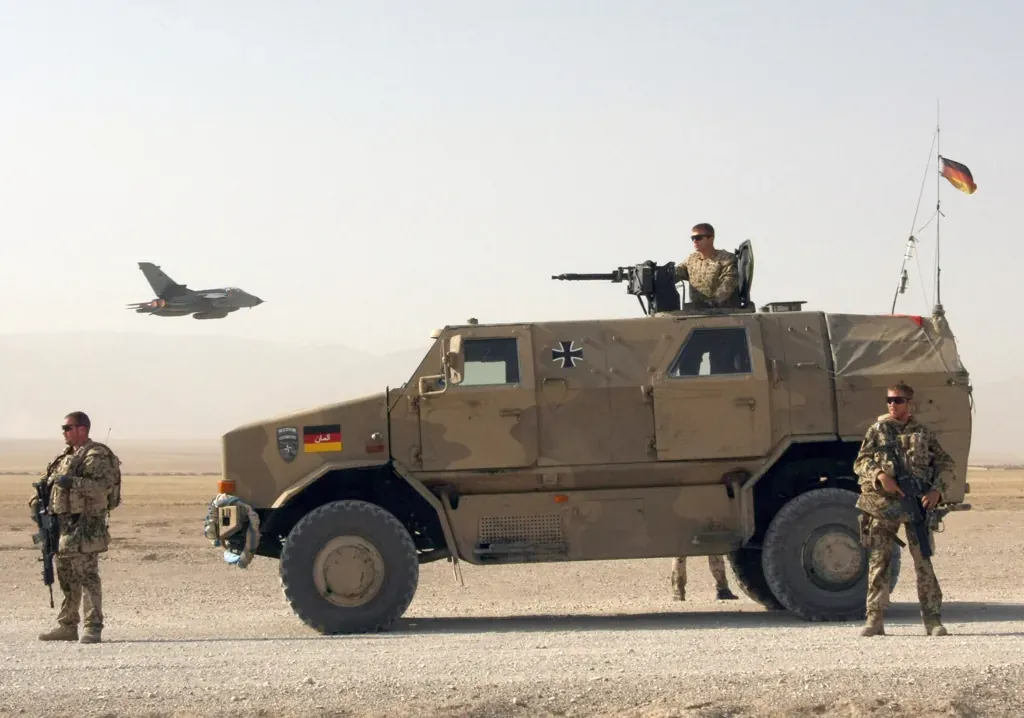
BERLIN, Germany – Germany’s armed forces will gradually withdraw Chinese-made drones from training and certain exercise activities, replacing them with domestically produced or other European systems as the government seeks to strengthen military security and reduce reliance on foreign technology.
The German Defence Ministry confirmed the policy on November 11, saying Chinese-made drones would no longer be procured and existing equipment would be phased out. The decision covers commercially available models previously used for limited purposes, including target practice and basic training.
Defence Ministry confirms gradual withdrawal
At a government press conference on November 11, Defense Ministry spokesman Colonel Mitko Müller said the Bundeswehr had previously allowed local commanders to purchase inexpensive commercial drones for narrowly defined training activities.

The arrangement was introduced when Germany had limited access to suitable drone equipment and wanted to expand soldiers’ familiarity with unmanned aircraft.
Müller said those lower-security systems would no longer be purchased and would gradually leave service as German and European manufacturers expanded their available products. The transition would not happen immediately.
He also clarified that the government had not imposed a blanket prohibition on all technology from particular countries or manufacturers. Instead, the military evaluates equipment according to its intended use and the security risks involved.
Data security drives procurement change
The ministry’s concerns include the possibility that connected drones could collect or transmit information about military facilities, exercises, equipment and operational activities.
Müller said the Bundeswehr had previously restricted commercial drones to activities where security-sensitive information was not exposed. He cited technical checks, including examinations for hidden SIM cards and possible data transmissions, as safeguards used to assess equipment.
■ Related News


For tactical training, operational missions and most reconnaissance activities, the military already uses systems that meet substantially higher security requirements.
The ministry said future purchases would be limited to manufacturers whose products satisfy special security requirements, regardless of the particular task for which the equipment is intended.
Germany seeks greater European drone capacity
The policy change comes as Germany expands its military drone capabilities following the growing importance of unmanned aircraft in the war in Ukraine.
Müller said Germany and other European countries now have a more developed drone industry, giving the Bundeswehr greater opportunities to procure equipment from domestic and regional manufacturers.
The transition is intended to strengthen the military’s self-sufficiency and what the ministry described as technological sovereignty.
The ministry did not disclose how many Chinese-made drones are currently in the Bundeswehr’s inventory or provide a timetable for completing their withdrawal.
Ministry distinguishes drone policy from vehicle restrictions
The same government briefing addressed concerns about connected vehicles manufactured in China. Müller said there was no general ban on vehicles from particular countries or manufacturers entering Bundeswehr facilities.
Instead, local military security officers assess individual sites and determine whether vehicles equipped with cameras, radar, microphones and other sensors could pose a risk to sensitive areas.
Restrictions may apply to designated military security zones, with decisions based on site-specific risk assessments rather than a nationwide manufacturer-based prohibition.
China objects to restrictions on its products
China’s Foreign Ministry criticised Germany’s decision, describing the treatment of Chinese products as discriminatory, according to reporting on its response.
Chinese drone manufacturer DJI has previously rejected allegations that its products pose security risks, saying an independent review had found no evidence of data transmission outside the United States in the context of a separate US review.
The German government has not publicly established that Chinese-made drones used by the Bundeswehr transmitted sensitive military information to Chinese authorities. Its stated justification for the phase-out is the need to protect military, information-technology and data security.
The withdrawal therefore represents a procurement and risk-management decision, rather than a public finding that the drones were used for espionage.
Primary Sources: German Federal Government, “Regierungspressekonferenz vom 11. November 2026,” November 11, 2026, official transcript of the federal press conference containing Defence Ministry spokesman Colonel Mitko Müller’s explanation of the Bundeswehr’s decision to stop procuring Chinese-made drones, gradually withdraw existing systems, apply higher security requirements to future purchases and assess connected vehicles through site-specific military security procedures. The ministry’s original emailed statement on the drone procurement decision was not separately retrieved; the policy details are documented in the official government transcript.