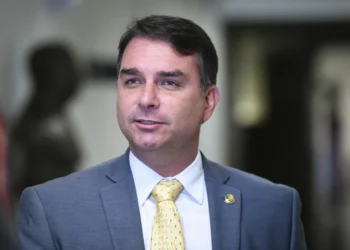

BRASÍLIA, Brazil – Brazilian senator Flávio Bolsonaro’s departure from the country has raised questions about a Supreme Federal Court order requiring him to surrender his passports and barring him from leaving Brazil.
Argentine immigration authorities confirmed that Bolsonaro, his wife and their two daughters entered Argentina late on October 27. The family then boarded a private aircraft with a filed flight plan listing Guayaquil, Ecuador, as its destination.
The journey followed Bolsonaro’s defeat to President Luiz Inácio Lula da Silva in Brazil’s October 25 presidential runoff. Brazil’s Superior Electoral Court confirmed that Lula won 51.79% of valid votes, compared with 48.21% for Bolsonaro.

The travel raises two separate questions: where Bolsonaro has gone, and whether his departure complied with a Brazilian court order. The available records establish parts of the journey, but the complete flight history, his current location and the court’s subsequent actions require further confirmation.
What the travel records show
Argentina’s National Directorate of Migration said Bolsonaro and three family members entered the country at 10:50 p.m. on October 27 through the Tancredo Neves International Bridge, which links Brazil’s Foz do Iguaçu area with Puerto Iguazú in Argentina’s Misiones province.
The authority identified the four travellers as Flávio Nantes Bolsonaro, Fernanda Antunes Figueira Bolsonaro, Carolina Figueira Bolsonaro and Luiza Figueira Bolsonaro. It said they presented valid travel documents and that officials recorded their entry without incident.
At 11:30 p.m., the group boarded a private flight operated by Baires Fly S.A. The flight plan listed Guayaquil as the destination.
The flight plan establishes the declared destination, not the aircraft’s final destination for the entire journey. Later flight-tracking reports indicated that an aircraft associated with the trip reached Guayaquil and was expected to continue towards the Miami area.
■ Related News



However, an aircraft’s registration and route alone do not prove the identity of every passenger. The reporting should distinguish official immigration records, flight-plan information and independent confirmation of Bolsonaro’s presence at each location.
As of the latest information reviewed for this article, his arrival in Miami had not been confirmed through an official U.S. entry record or a direct statement from Bolsonaro or his representatives. The precise route and timing therefore remain subject to verification.
The Supreme Court order
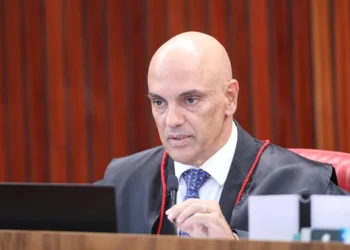
The central legal issue is an order attributed to Supreme Federal Court Justice Alexandre de Moraes. Reports say the order required Bolsonaro to surrender his Brazilian passports within 24 hours and prohibited him from leaving the country.
The deadline reportedly expired on October 27 without publicly confirmed compliance. Subsequent reports said Brazilian authorities had cancelled his passports. The exact terms of the order, its service on Bolsonaro, the deadline and any later judicial decisions must be checked against the original court record before publication.
The distinction between surrendering a passport and being prohibited from leaving the country matters. They are separate restrictions, and the court order must be examined to establish precisely which measures applied, when they took effect and whether any later decision changed them.
Argentina’s migration authority said Bolsonaro and his family had valid travel documents for entry into Argentina. That statement concerns their admission under Argentine procedures. It does not determine whether Bolsonaro complied with a Brazilian judicial order.
The Brazilian Supreme Court is the authoritative source for the order and any enforcement action. Until the full record is available, the article should not make a final legal finding about the status or consequences of the departure.
The investigations and allegations
The reported court action is connected to an investigation involving alleged money laundering and suspected financial links involving lawyer Willer Tomaz. Public reporting has also described inquiries into financial transactions and business relationships.
The precise scope of each investigation, the allegations against Bolsonaro and the procedural status of each case need confirmation from the relevant judicial records. The article must not combine separate inquiries into a single case or imply that an investigation establishes criminal guilt.
Bolsonaro has denied wrongdoing in connection with the reported allegations. Any account of the cases should include his response and distinguish allegations under investigation from charges formally filed and findings made by a court.
The legal position could change as investigators and judges take further action. The latest court docket should therefore be checked immediately before publication.
What Argentina and the United States have confirmed
Argentina’s National Directorate of Migration has publicly confirmed the family’s entry and the private flight’s declared destination. Its statement provides the clearest official record of the cross-border movement so far.
A senior U.S. State Department official has been reported as saying that the United States would grant visas to Bolsonaro and his family. President Donald Trump also expressed support for their entry. These statements indicate a willingness to permit travel, but a visa decision is not the same as confirmation that someone has entered the United States.
No official U.S. arrival confirmation was available in the records reviewed for this article. The State Department and the relevant U.S. authorities should be asked to clarify the visa status and whether they can confirm entry. Any response must respect applicable privacy restrictions.
Ecuador’s authorities should also confirm whether the aircraft arrived in Guayaquil, the passengers’ immigration status there and the subsequent departure. Flight-tracking data can help reconstruct the aircraft’s movements, but it cannot independently establish who was on board at each stage.
Lula’s response and the election result
The departure came three days after Bolsonaro lost the presidential runoff. The Superior Electoral Court announced that Lula had won 64,256,232 votes, or 51.79% of valid votes, while Bolsonaro received 59,826,041 votes, or 48.21%.
Lula criticized Bolsonaro’s decision to leave Brazil, saying he should have remained in the country to prove his innocence. That was the president’s political response, not a judicial finding about Bolsonaro’s conduct.
The election result is confirmed by Brazil’s electoral authority. Any claim that Bolsonaro accepted, formally challenged or rejected the result must be tied to his own public statements or official filings.
The trip could affect Brazil’s political opposition, particularly because Bolsonaro had been expected to remain a prominent figure after the election. But the longer-term political consequences remain uncertain and should not be presented as established fact.
Legal and diplomatic questions remain
The case raises questions about how a domestic court order applies when a person travels across international borders, and what steps Brazilian authorities may take if they believe the order was breached.
Those questions depend on the exact terms of the Brazilian decision, the status of the passports, any subsequent court orders and the legal procedures available to the authorities. A cross-border journey does not, by itself, establish what legal action another country must take.
The diplomatic dimension also requires care. Argentina’s statement says the family entered with valid travel documents and faced no impediment under its entry procedures. That does not resolve the separate question of compliance with a Brazilian court order. Likewise, a U.S. decision to grant visas does not establish that U.S. authorities have assessed or endorsed the legality of the departure.
Brazilian officials, Bolsonaro’s legal team and the relevant foreign governments should be given an opportunity to explain their positions. Any unanswered requests should be recorded accurately.
What remains unconfirmed
The available evidence establishes that Bolsonaro and his family crossed into Argentina and boarded a private aircraft whose filed destination was Guayaquil. Reports of a subsequent journey towards Miami require confirmation of the aircraft’s movements and, separately, Bolsonaro’s presence on board.
The original Supreme Court order and any later decisions are also essential. They will establish the exact restrictions, the deadline, the legal status of his passports and whether the court has taken further action.
Until those records are verified, the article should not state as fact that Bolsonaro landed in Miami, evaded a specific enforcement action or committed a crime. Those conclusions require evidence beyond the confirmed border crossing and flight plan.
The central issue is not simply where Bolsonaro is travelling. It is whether the documented movements comply with the precise terms of a Brazilian court order—and what the relevant authorities establish through their official records.
Reporting Credit: Brazil’s Superior Electoral Court — October 26, 2026, announcement of the final presidential runoff result. Argentina’s National Directorate of Migration — October 28, 2026, statement identifying Flávio Nantes Bolsonaro and three family members as entering Argentina on October 27 and boarding a private flight with a filed destination of Guayaquil, Ecuador. Brazil’s Supreme Federal Court — original order attributed to Justice Alexandre de Moraes requiring passport surrender and restricting departure; the complete order and subsequent docket entries remain to be verified. U.S. Department of State — reported statement on visas for Bolsonaro and his family; direct confirmation of visa status and any U.S. entry remains outstanding. Ecuadorian immigration and aviation authorities — confirmation of arrival, passenger entry records and onward departure remains outstanding.