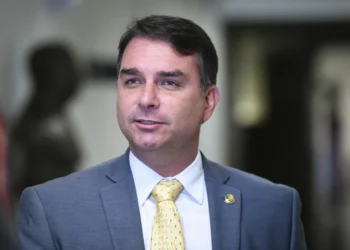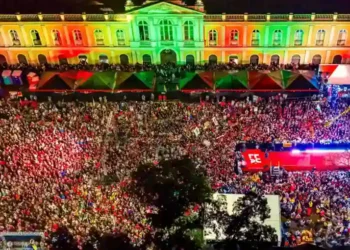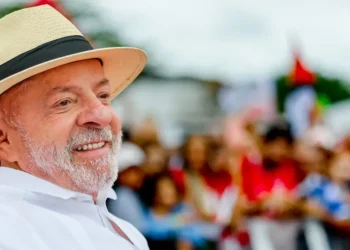
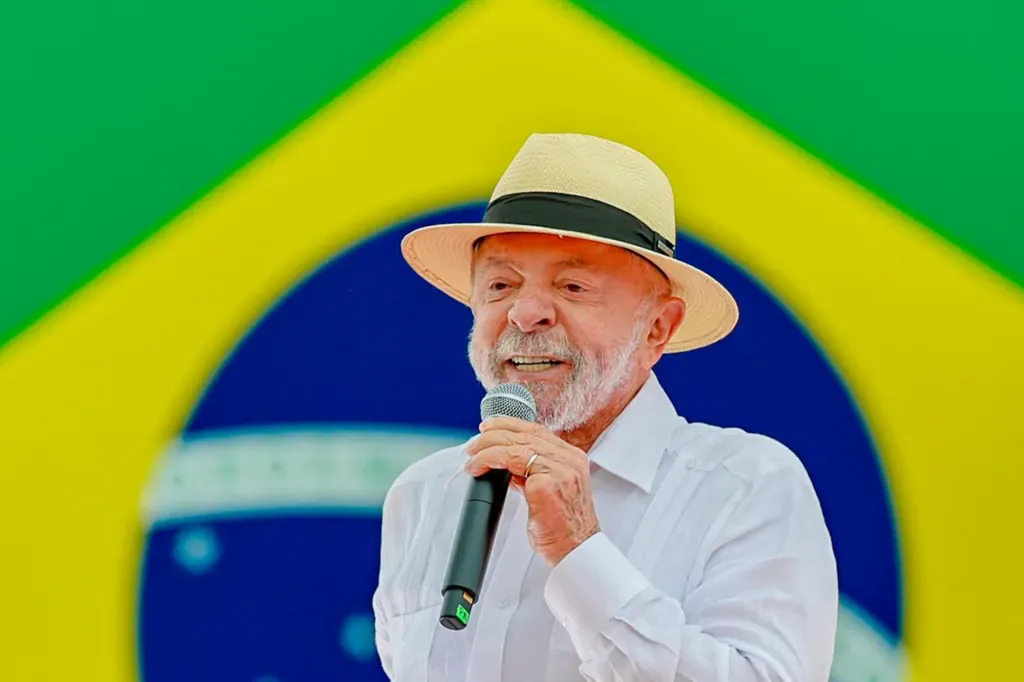
BRASÍLIA, Brazil — Luiz Inácio Lula da Silva has won re-election as Brazil’s president, defeating Senator Flávio Bolsonaro in the October 25, 2026, runoff. The result gives Lula a fourth, non-consecutive presidential term and reverses his first-round deficit. The Superior Electoral Court (TSE) reported that the count had reached an unassailable conclusion, with Lula ahead after all votes were counted. Reuters reported a 51.75% to 48.25% margin as counting neared completion. TSE election results; Reuters, October 25–26.
The result settles who will occupy the presidency. It does not settle how easily the next government can govern.
Lula will return to office with a mandate to continue his programmed on social protection, labor policy, public investment and environmental protection. But the legislature elected alongside the presidential candidates is more conservative than the coalition he needs to pass major laws. Opposition parties and their allies will be able to shape budget negotiations, delay legislation and challenge parts of the administration’s agenda.

The campaign also exposed competing ideas about the role of the state. Lula argued for social programmed, public investment and a more active role for government in reducing inequality. Flávio Bolsonaro promised a faster fiscal adjustment, a smaller administration, lower taxes and tougher public-security policies.
The central question now is not which candidate won the argument on every issue. It is which commitments Lula can turn into law and funded programmed, and which he will have to revise, delay or abandon.
What the first-round result revealed
The runoff followed a close first round on October 4. According to the TSE, Flávio received 47.03% of valid votes and Lula 45.16% in the first round. Neither candidate secured an outright majority, sending the two highest vote-getters into the October 25 contest. TSE first-round announcement.
Flávio’s first-round lead demonstrated the continued strength of the conservative movement associated with his father, former president Jair Bolsonaro. Lula’s eventual victory showed that the first-round result did not determine the final outcome.
That distinction matters. First-round voting includes voters whose preferred candidates did not advance. The runoff forces a direct choice between two finalists and can change turnout, tactical voting and campaign priorities.
■ Related News



Polls provided snapshots of voter preferences during the campaign, not election results. A Datafolha survey published before the runoff, for example, placed the candidates within its stated margin of error. Such surveys can help describe the campaign environment, but they cannot establish why individual voters changed their minds or prove that a particular campaign tactic caused the final result. Datafolha report, October 24.
A deeper explanation of the result requires post-election interviews and regional voting data. The national margin alone cannot reveal how much the outcome reflected economic concerns, social policy, candidate evaluations, political identity, turnout or reactions to the candidates’ final campaign messages.
Lula’s economic program meets the fiscal test
Lula’s program centers on social protection, workers’ rights, public services and investment. His campaign also promoted debt relief, support for small businesses and measures intended to reduce household costs.
Those proposals respond to concerns about purchasing power and economic security. But their effects will depend on their design, funding and timing. A benefit increase can raise disposable income for recipients, while also adding to public spending. A subsidy can reduce a price in the short term, but its fiscal cost depends on how long it lasts and who qualifies. Public investment may support demand and productivity, but projects need budgets, planning and implementation capacity.
The fiscal challenge is particularly important because Brazil’s public debt and interest costs constrain the room available for new spending. Reuters reported during the campaign that gross public debt had risen to around 82% of gross domestic product. It also reported that both campaigns faced pressure to explain how they would stabilise public finances, even though they differed over the speed and method of adjustment.
Lula’s advisers had discussed improving the primary fiscal balance over time. But the campaign’s public commitments and the details needed to achieve them were not always the same. A primary balance measures government revenue against expenditure before interest payments; it is not the same as the overall budget balance or the total change in public debt.
The next administration will need to publish a credible path showing how revenue, spending and economic growth fit together. It will also need to explain which commitments are recurring, which are temporary and which depend on legislation.
The test will be whether the government can preserve its social priorities while containing debt pressures and maintaining confidence in Brazil’s fiscal framework. That cannot be assessed from campaign promises alone.
What Flávio Bolsonaro proposed—and what his defeat leaves unresolved
Flávio’s platform called for a faster fiscal adjustment, administrative cuts, tax reductions and a smaller government structure. During the campaign, he said he would seek a 200 billion-real adjustment in the federal budget without cutting politically sensitive social spending. He pointed to eliminating ministries, improving the management of state-controlled companies and monetizing federal property as possible sources of savings.
Those were proposals, not enacted fiscal measures. Their feasibility depended on the amount of savings available, the legal and operational changes required, and whether the proposed reductions could be achieved without shifting costs elsewhere.
The campaign did not resolve every question about how a rapid adjustment would work in practice. Administrative savings are not automatically equivalent to permanent savings of the size promised. Selling assets can generate one-time revenue but does not necessarily improve the recurring balance. Tax cuts may support private activity, but they can also reduce revenue unless offset by spending reductions, stronger growth or other income.
Flávio’s defeat does not remove these issues from Brazilian politics. His party and conservative allies remain important in Congress, where they can pursue parts of their policy agenda through legislation, budget negotiations and oversight.
The next government may therefore face pressure to consider some measures associated with the opposition even while rejecting others. The legislative process, rather than the campaign’s final result alone, will determine which proposals advance.
Welfare, employment and the cost of labour reform
Lula’s program puts greater emphasis on social protection and workers’ rights. During the campaign, he backed changes to working-time arrangements, debt relief for households and support for lower-income families. His government also promoted measures intended to increase disposable income and encourage domestic demand.
The cost and effect of these measures vary. Direct transfers can provide immediate support to eligible households. Credit and debt-refinancing program can ease repayment pressure, but their impact depends on eligibility, interest rates and whether borrowers can afford the new terms. Public transport subsidies may reduce commuting costs, but they require a funding arrangement and decisions about how costs are shared among federal, state and municipal governments.
Labour reform presents another trade-off. A shorter working week without a pay cut could give workers more time and improve working conditions. Employers, however, may need to reorganize shifts, hire additional staff or absorb higher labor costs. The effect would differ across sectors and depend on productivity, enforcement and the final legal provisions.
The government should publish the implementation timetable, fiscal estimates and monitoring measures for major commitments. It should also distinguish measures already approved by Congress from proposals that still require legislation or regulation.
Without that distinction, campaign announcements can give readers the impression that a promised change is already in force.
Public security and the limits of presidential power
Public security was one of the clearest areas of difference between the candidates.
Lula’s programmed emphasized coordination among security institutions and action against organized crime. Flávio advocated tougher criminal penalties, stronger border operations, expanded prison capacity and measures aimed at criminal factions. He also supported changes to criminal responsibility for some serious offences.
A president can influence federal policing priorities, propose legislation and direct parts of the federal security apparatus. But Brazil’s security system involves state governments, police forces, prosecutors, courts and the legislature. The president cannot unilaterally enact every proposed change to criminal law.
More punitive sentencing and prison expansion also carry costs. Building and operating prisons requires recurring expenditure, while enforcement strategies depend on investigation quality, prosecution capacity and the ability to disrupt criminal networks. Stronger penalties alone do not demonstrate that crime will fall.
Lula’s administration will face pressure to show measurable results, particularly in areas affected by organized crime and violence. Its response will need to explain which responsibilities belong to the federal government and which require cooperation with state authorities.
The most useful measures of progress will be documented changes in violence, clearance rates, organized-crime activity and public safety—not simply the number of operations announced.
The environment: promises need measurable enforcement
Environmental policy was another point of contrast. Lula placed climate policy, environmental protection, clean energy and Brazil’s international climate role among his priorities. Flávio’s programmed linked environmental policy more directly to economic growth, agribusiness, infrastructure and energy, while also stating a goal of ending illegal deforestation by 2029.
The presence of a target in a campaign programmed does not establish that the policies needed to reach it are funded or enforceable. Results depend on monitoring, enforcement capacity, land-use decisions, coordination with state governments and the incentives facing farmers, miners, developers and other land users.
The next administration should identify how it will measure progress against deforestation and other environmental targets. It should also explain how it will address illegal land clearing, fund enforcement and balance conservation with economic activity.
The policy consequences extend beyond Brazil’s borders. The Amazon is central to international climate discussions, and Brazil’s environmental record affects its diplomatic position, trade relationships and ability to attract investment linked to sustainable production.
Those relationships will depend on implementation and verified results rather than the language of the campaign alone.
Jair Bolsonaro’s legacy remains part of the political landscape
Flávio Bolsonaro’s relationship with his father shaped the campaign, but family association is not proof that every policy position or action is identical.
Jair Bolsonaro’s presidency and subsequent legal proceedings are nevertheless relevant to understanding the movement that supported his son. The former president was convicted by Brazil’s Supreme Federal Court in a case concerning an attempt to overturn the 2022 election result and received a 27-year prison sentence, according to contemporaneous reporting.
The case has wider implications for debate about democratic institutions, executive power and accountability. Flávio’s own public statements, legislative record and registered program remain the appropriate evidence for assessing his individual positions.
During the campaign, the Bolsonaro family’s political standing also intersected with questions about the judiciary and possible changes to the legal framework. Those proposals should be assessed on their specific wording and constitutional effects rather than assumed to follow automatically from family ties.
Lula’s re-election does not remove the divisions associated with the Bolsonaro movement. The opposition retains a parliamentary base and a national constituency. The new administration will have to govern in a political environment where disputes over the judiciary, electoral institutions and the limits of executive power remain consequential.
Congress will be the decisive arena for many promises
The most immediate constraint on Lula’s next term is legislative. Reporting after the election indicated that the Liberal Party (PL) won 121 seats in the Chamber of Deputies and 28 seats in the Senate, giving it the largest party delegations in both houses. Lula will need to negotiate with other parties to assemble support for major bills.
Brazil’s fragmented party system means that a presidential election does not automatically produce a stable legislative majority. Even parties that support a president on some issues may oppose other proposals or seek concessions in budget and committee negotiations.
This matters for tax policy, labor reform, spending programmed, public-security legislation and changes to government institutions. Some measures may require ordinary legislation; others may require more demanding procedures or face constitutional challenges.
Congress also has a role in considering certain senior appointments, including nominations to the Supreme Federal Court. The Senate’s composition and leadership can therefore affect the executive’s ability to secure approval for nominations and shape the relationship between branches of government.
The next administration’s negotiating strategy will be as important as its program. Lula will need to determine which commitments are priorities, where compromises are possible and which proposals have sufficient support to move forward.
Opposition parties, meanwhile, will have tools to scrutinize spending and challenge legislation. This is a normal feature of representative government, but a fragmented legislature can make policy slower and less predictable.
Relations with the United States, China and regional partners
Lula’s re-election also carries implications for Brazil’s international position.
His programmed emphasizes multilateral diplomacy, cooperation with China, Brazil’s role in BRICS and regional integration through Mercosur. These priorities reflect an approach that seeks to preserve diplomatic flexibility and expand Brazil’s influence across several international groupings.
Flávio’s programmed placed more emphasis on stronger ties with the United States and other partners, while also describing engagement with China, the European Union and Asian markets in pragmatic terms. It would be inaccurate to infer from that language alone that he intended to sever relations with China or withdraw Brazil from BRICS or Mercosur.
Lula’s victory means his administration can continue its current diplomatic direction, but it does not remove the economic and political constraints on that strategy. China remains a major market for Brazilian exports, while the United States is an important trade and diplomatic partner. Both relationships involve interests that extend beyond presidential preference.
Brazil’s position within BRICS and Mercosur will also depend on negotiations with other member countries. A government can announce priorities, but trade arrangements, regional agreements and diplomatic initiatives require work with partner governments and, where applicable, legislative approval.
The practical measure of continuity will be decisions taken after the election: trade negotiations, investment arrangements, climate commitments, regional agreements and official diplomatic positions.
Disinformation and the credibility of the election
The campaign also took place amid concerns about online misinformation and platform moderation.
Brazil’s electoral authorities have established rules for electoral advertising and have engaged with technology platforms over transparency, equal treatment and the handling of online content. The TSE reported meetings with Meta during the campaign to discuss measures related to electoral propaganda and platform practices. TSE election information.
These actions establish that the authorities addressed online election issues. They do not, by themselves, prove that a foreign government directed a specific interference operation or that either campaign organized particular misleading content.
Those claims require specific evidence, such as documented investigations, platform records, official findings or independently verified technical analysis. The newsroom should distinguish reported false content, alleged coordinated activity, formal investigations and proven foreign interference.
The post-election period is an opportunity to examine the issue more carefully. Relevant questions include whether authorities have opened or concluded investigations, whether platforms disclosed enforcement data, whether campaigns filed formal complaints and whether any findings affected the result.
Neither a candidate’s loss nor a candidate’s victory is evidence, on its own, of electoral manipulation.
The transition: from promises to a governing plan
The immediate transition will show how Lula intends to translate victory into policy. The key indicators will include appointments to economic and political posts, the administration’s fiscal targets, its legislative priorities and the approach it takes to negotiations with congressional leaders.
A credible first-year plan should identify which promises can be implemented through executive action, which require legislation and which depend on funding in the federal budget. It should also explain how the government will measure progress and report costs.
The same standards apply to opposition proposals. If Congress advances tax reductions, changes to criminal law or restrictions on government powers, the public should be able to see the text, fiscal implications and legal analysis rather than relying on campaign descriptions.
Direct interviews with Lula’s transition team, Flávio Bolsonaro’s representatives, independent Brazilian economists, political scientists and election specialists remain important. Their responses can help explain the reasons for the result and assess what is feasible, but they should be presented as attributed views rather than established facts.
A fourth term, with limits
Lula’s re-election secures continuity in the presidency but does not guarantee continuity in every policy area. The government will face pressure to support household incomes and public services while addressing debt, interest costs and the demands of a fragmented Congress.
Flávio Bolsonaro’s defeat does not end the political movement associated with his family. His party’s parliamentary strength means that conservative priorities will continue to influence legislation and public debate.
The outcome therefore creates two simultaneous realities: Lula has won the authority to lead the executive branch for another term, while Congress will constrain how far and how quickly he can pursue his agenda.
The next phase of Brazil’s politics will be determined by the choices made after the election—how the government funds its promises, how parties negotiate, how institutions handle disputes and how Brazil balances domestic priorities with its international relationships.
The ballot has chosen the president. The work of governing begins with the harder questions of money, law, compromise and delivery.
Reporting Credit: Brazil’s Superior Electoral Court (TSE); official registered campaign programmes; congressional records; Brazilian government fiscal and economic data; Supreme Federal Court records.