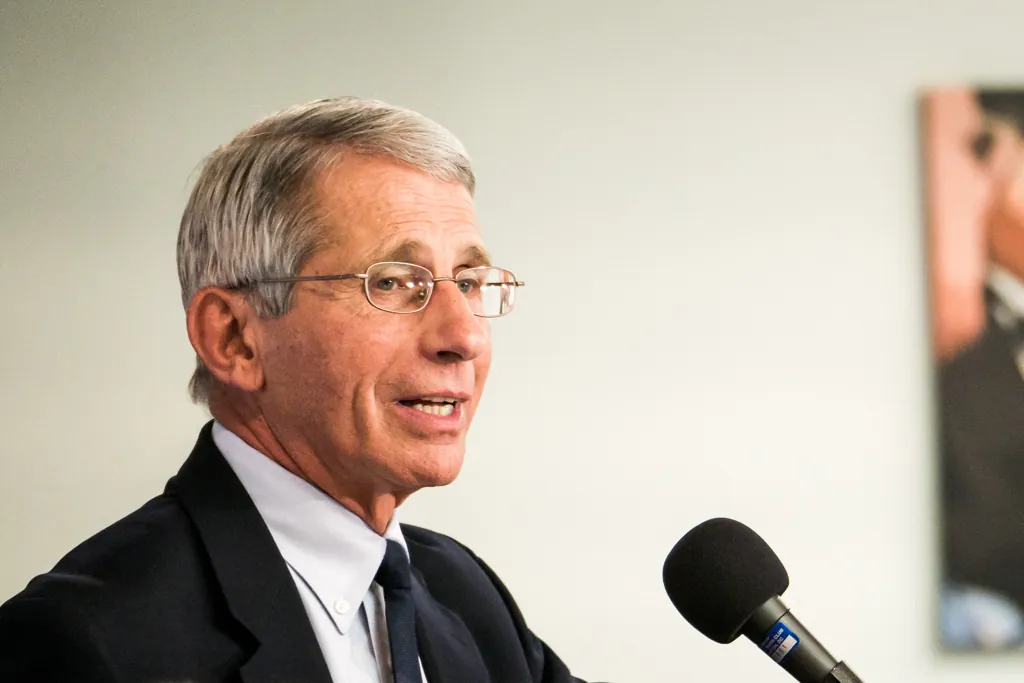
WASHINGTON – Dr. Anthony Fauci invoked the Fifth Amendment on Wednesday and declined to answer questions during a Republican-led Senate committee hearing examining the federal government’s response to the COVID-19 pandemic, escalating a years-long political and congressional dispute over pandemic policy and coronavirus research.
Fauci appeared before lawmakers after being subpoenaed by Sen. Rand Paul, who has repeatedly sought testimony from the former director of the National Institute of Allergy and Infectious Diseases (NIAID) regarding his role in pandemic decision-making and federal support for coronavirus research.
By invoking the constitutional protection against self-incrimination, Fauci declined to answer senators’ questions throughout the hearing. The move also avoided the possibility of perjury allegations arising from his testimony, though it is expected to further deepen longstanding political divisions over the government’s handling of the pandemic.

In his opening statement, Fauci said Paul had an “obvious obsession with calling for my prosecution.”
“The only conclusion I can reach is that the sole reason he is calling me before this Committee is to prompt me to say something, anything, that could vindicate his repeated public pledges that I end up, in his words, ‘behind bars,'” Fauci said, adding that he invoked the Fifth Amendment on the advice of his attorney.
Hearing Focuses on COVID-19 Origins and Research Funding
Paul argued that Fauci approved research involving virus mutations and later attempted to conceal his role in funding decisions.
“Instead of an apology, you have for years avoided responsibility,” Paul said during his opening remarks.
Before the hearing, Paul released more than 1,000 pages from Fauci’s personal diary covering the pandemic years. In posts on X, Paul said the entries revealed differences between Fauci’s private writings and his public statements during the early stages of the COVID-19 outbreak.
■ Related News



Some of the diary material, including notes reflecting uncertainty during the first weeks of the pandemic as scientists sought to understand the newly identified coronavirus, had previously appeared in Fauci’s 2024 memoir and in earlier public interviews.
The hearing also examined whether research funded by the National Institutes of Health (NIH) in China contributed to the emergence of COVID-19.
Republican lawmakers continued to question whether NIH-funded grants supported research commonly described as gain-of-function experiments at a laboratory in Wuhan.
The NIH provided grants over several years to the nonprofit EcoHealth Alliance, which collaborated with a Chinese laboratory studying bat coronaviruses. Fauci has consistently maintained that the work did not meet the definition of especially risky gain-of-function research capable of producing SARS-CoV-2, saying it would have been “molecularly impossible” for those experiments to create the virus responsible for the pandemic.
Democrats Call the Hearing Partisan
Sen. Gary Peters, the committee’s ranking Democrat, characterized the hearing as a partisan effort that revisited past disputes rather than addressing current national security priorities.
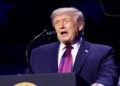
President Donald Trump also commented before the hearing, writing on social media that he had stopped relying on Fauci during the pandemic because he believed Fauci had made poor decisions on mask guidance, shutdowns and other public health measures.
Fauci’s attorney, David Schertler, rejected Paul’s allegations, calling them “false and disgraceful” and saying all available legal options would be considered.
Earlier in the week, Health and Human Services Secretary Robert F. Kennedy Jr. said the department had provided Fauci’s diary entries—created on a government computer—to the Senate committee.
Kennedy also said he believed Fauci could face potential perjury exposure if he testified falsely, despite having received a preemptive pardon from then-President Joe Biden.
Scientists Defend Fauci’s Record
More than 150 infectious disease specialists and other scientists signed a public letter supporting Fauci before the hearing, saying no credible evidence had been presented to substantiate allegations of wrongdoing and urging Congress to end what they described as politically motivated investigations.
Many researchers continue to conclude that the virus most likely emerged naturally before spreading to humans, while laboratory-origin hypotheses remain the subject of scientific study and political debate.
A Republican-led House subcommittee that examined the issue in 2024 did not find evidence linking Fauci to misconduct.
Fauci has consistently said he remains open to evaluating both natural-origin and laboratory-leak hypotheses while maintaining that the available scientific evidence more strongly supports a natural spillover event, similar to previous coronavirus outbreaks including SARS and MERS.
Separately, the Trump administration last year paused certain federally funded gain-of-function research projects. On Tuesday, the administration announced new oversight rules governing such research.
This report is based on reporting by The Associated Press.