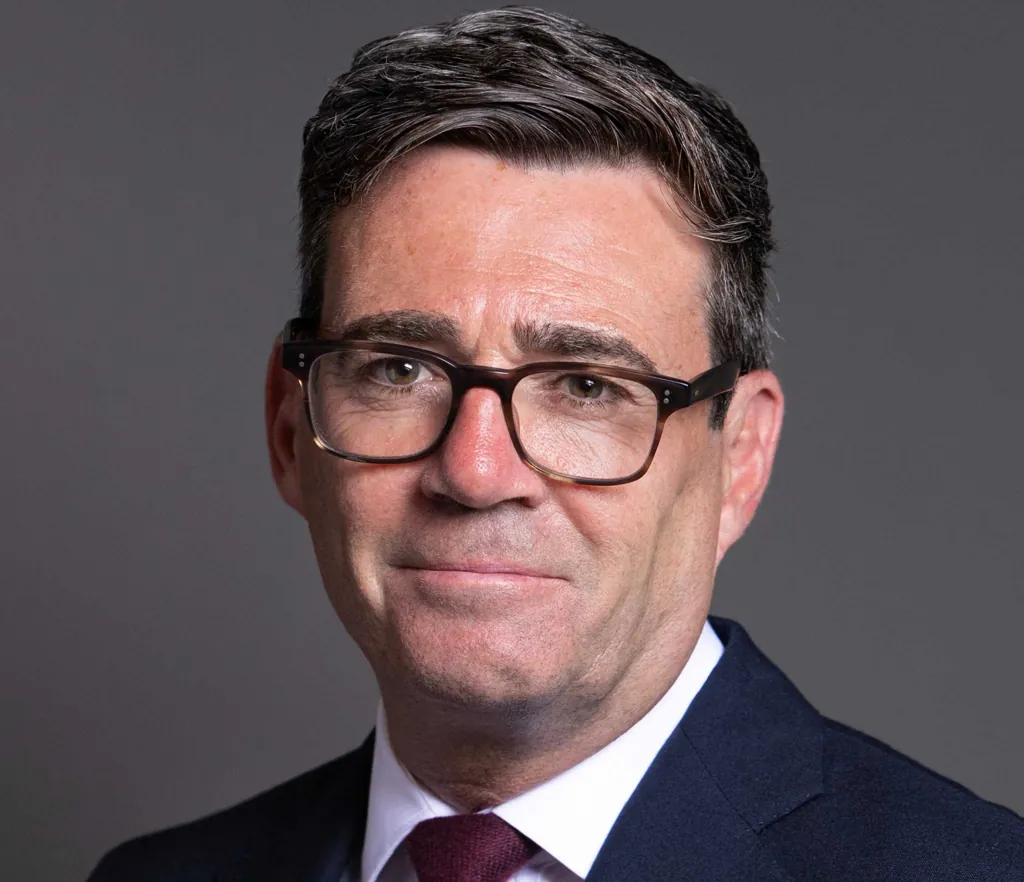
LONDON, United Kingdom – Andy Burnham entered 10 Downing Street on Monday after becoming Britain’s new prime minister, taking office at a time of slowing economic growth, rising geopolitical tensions and mounting pressure to improve public services.
The former mayor of Greater Manchester succeeds Keir Starmer after winning the Labour Party leadership and returning to Parliament through a special election last month. He now leads a country of about 70 million people while confronting a series of domestic and international challenges expected to shape the early months of his premiership.
Among his immediate priorities are reviving the economy, easing cost-of-living pressures, strengthening public services and responding to continuing conflicts in Ukraine and the Middle East.

Economy Tops Domestic Priorities
Burnham is expected to outline his government’s domestic agenda this week, focusing on economic growth, investment and living standards.
After becoming Labour leader, he described the transition as an opportunity to build a fairer economy by spreading investment more evenly across the country and making everyday life more affordable.
His administration inherits an economy that had begun recovering before renewed conflict involving Iran weakened global growth expectations. Economists now expect slower economic expansion alongside higher inflation over the coming year.
A central part of Burnham’s programme is devolving more powers to regional governments. He has proposed giving local authorities greater control over funding, transport and economic development while returning some previously privatized services to public ownership.
The approach, often described as “Manchesterism,” draws on policies developed during his time leading Greater Manchester, where public and private investment were combined to expand transport, housing and infrastructure.



Supporters argue the model could reduce regional inequalities. Critics, however, question whether it can generate the long-term economic growth Britain needs after Brexit and years of weak productivity.
Public finances may also limit the government’s ambitions.
Labour’s previous election manifesto ruled out increases to Britain’s main tax rates, leaving limited room for additional spending unless those commitments change.
Burnham has not ruled out a wealth tax. Speaking on Gary Lineker’s Goalhanger podcast before taking office, he said the government “might be having to ask for a little more.”
Foreign Policy Faces Early Test
Although Burnham has extensive domestic political experience, he enters office with a comparatively limited foreign policy record.
He has pledged to maintain Britain’s support for Ukraine, preserve the country’s nuclear deterrent and continue meeting its commitments to NATO.
Relations with the United States are expected to become one of his first diplomatic challenges.
President Donald Trump initially maintained cordial relations with Starmer before later criticizing Britain’s position on the conflict involving Iran.
Burnham has previously criticized Trump but has said he intends to maintain a respectful working relationship while remaining prepared to disagree when British interests require it.
Defense spending is also expected to remain under scrutiny.
Trump has repeatedly urged NATO allies to increase military spending, placing additional pressure on Britain to expand defense investment beyond plans announced under the previous government.
Current defense plans include a £15 billion ($20 billion) increase in military spending, although critics argue the proposal remains insufficient and lacks long-term funding certainty.
Gaza Policy Remains Politically Sensitive
Burnham has criticized the previous government’s handling of the war between Israel and Hamas, arguing Britain waited too long before calling for a ceasefire.
He has condemned Hamas’ Oct. 7, 2023, attack on southern Israel while also supporting stronger measures against violence by Israeli settlers in the occupied West Bank.
The conflict remains politically sensitive within Labour.
The party spent years addressing allegations of antisemitism before Starmer became leader. At the same time, it relies on support from constituencies with large Muslim populations.
Burnham has faced criticism from Jewish organizations over some of his comments while also drawing criticism from pro-Palestinian campaigners for declining to describe Israel’s military campaign in Gaza as genocide.
Migration Continues to Shape Politics
Immigration is expected to remain one of the defining domestic issues facing the new government.
Although Burnham devoted little attention to the subject during his leadership victory speech, he has largely supported Labour’s existing migration policies.
Britain continues to experience migration driven by conflict, political instability, economic hardship and humanitarian crises overseas.
Public concern over migrants crossing the English Channel in small boats has contributed to growing support for Reform UK, whose gains in recent local and regional elections intensified pressure on Labour’s leadership.
Government figures indicate net migration fell from more than 900,000 in 2023 to about 171,000 last year.
Crossings of the English Channel have also declined compared with the same period in 2025.
Burnham has said his government will continue efforts to reduce net migration while expanding legal migration pathways and strengthening measures to curb unauthorized Channel crossings.
A Difficult Start to a New Premiership
Burnham begins his premiership at a time when economic uncertainty, geopolitical instability and domestic political pressures are converging.
His ability to translate his regional governing record into national leadership is likely to shape not only Labour’s political future but also Britain’s economic direction and international role in the years ahead.
This report is based on reporting by The Associated Press.
Article Topics: Andy Burnham | Labour Party | UK Economy | Foreign Policy | Migration | Gaza War | NATO