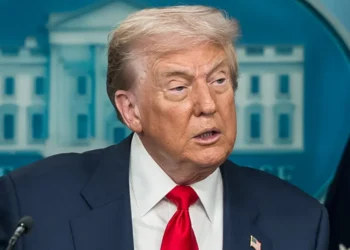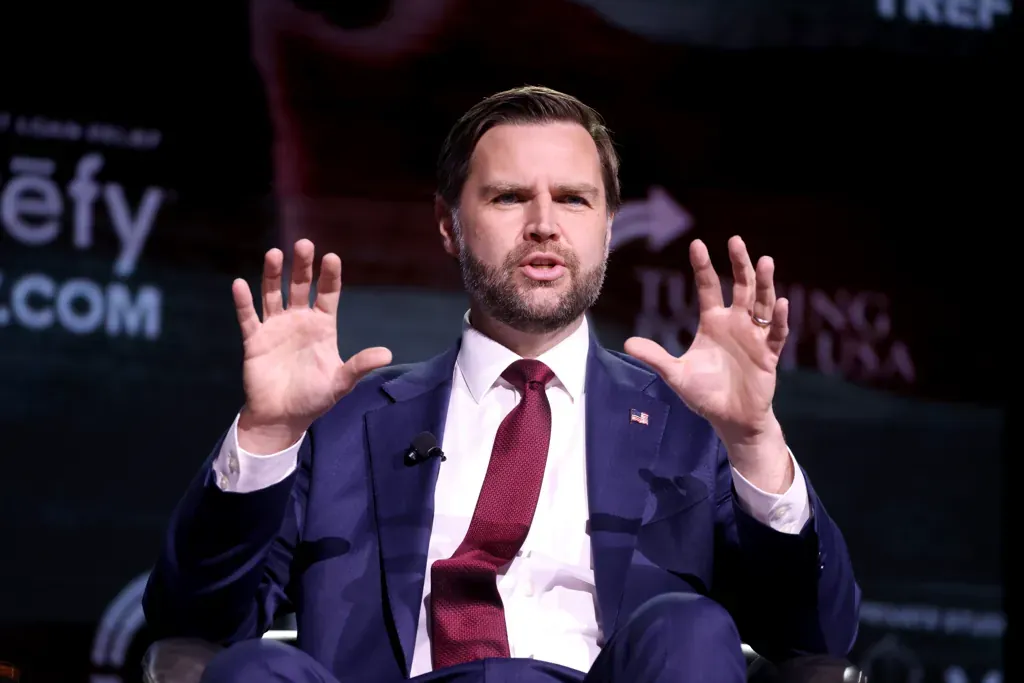
WASHINGTON, United States – US President Donald Trump has directed Vice President JD Vance to move his attention away from efforts to negotiate an end to the conflict with Iran and instead lead a domestic campaign against what Trump described as widespread corruption and crime in Democratic-controlled cities and states.
In a November 12 post on Truth Social, Trump said he had asked Vance to give his “complete and total attention” to alleged criminal activity in Democratic-led jurisdictions, specifically naming Minnesota, California and Illinois.
Trump also declared that the United States no longer needed an agreement with Iran, saying Washington had already secured substantial financial leverage and control over the strategically important Strait of Hormuz.

Trump shifts Vance’s responsibilities
The announcement marked a change in the administration’s approach to the Iran conflict, where Vance had played a central role in diplomatic efforts.
Trump’s directive followed reports that Vance was considering renewed direct discussions with a senior Iranian official. The potential meeting had not been independently confirmed by Reuters, and the White House did not publicly confirm that negotiations had been arranged.
Vance had previously led US negotiations with Iranian representatives in Pakistan. Those discussions produced a memorandum intended to pause the conflict, but the arrangement broke down within weeks, according to reporting on the diplomatic process.
Iran diplomacy faces renewed uncertainty
Trump’s statement came after several weeks of shifting signals about whether Washington would pursue a negotiated settlement or maintain pressure on Tehran.
The president had recently described military operations against Iran as effectively over and indicated that further large-scale action might not be necessary. His November 12 declaration that the United States did not need an agreement nevertheless raised questions about the future of diplomatic efforts.
■ Related News



The Washington Post+1
The United States has maintained pressure on Iran through a naval blockade and economic sanctions. The Strait of Hormuz remains central to the dispute because of its importance to international oil and gas shipments.
Trump’s claim that Washington has control of the strait reflects his position; it does not establish that maritime security or the broader conflict has been fully resolved.
Reuters+1
Vance had questioned the cost of the war
The reassignment also followed Vance’s public comments about the political and economic consequences of the conflict.
After Republicans suffered major losses in the November 3 midterm elections, Vance said the war had contributed to the party’s defeat. He questioned whether the cost of the conflict had been justified and described his earlier recommendation to end it as sound advice.
ABC News+2
Trump, however, continued to defend the military campaign, arguing that it was necessary to prevent Iran from obtaining a nuclear weapon.
Domestic anti-fraud campaign faces scrutiny
Trump said addressing alleged crime and corruption in Democratic-run jurisdictions could help balance the federal budget. He did not provide supporting evidence in the post for his broad allegations against Democratic leaders.
The directive places Vance at the centre of a domestic initiative that could involve scrutiny of public spending, fraud investigations and the conduct of local and state administrations. The precise scope, investigative authority and implementation arrangements were not detailed in the announcement.
The White House highlighted Trump’s position that an agreement with Iran was unnecessary, while Vance’s office did not immediately respond to requests for comment.
The extent to which the directive ends Vance’s involvement in Iran diplomacy remains unclear. Trump’s statement changes the vice president’s stated priority, but it does not by itself establish that all diplomatic channels between Washington and Tehran have been formally closed.
Primary Sources: Donald Trump, Truth Social post, November 12, 2026, directing Vice President JD Vance to focus on alleged corruption and crime in Democratic-led cities and states and declaring that the United States did not need a deal with Iran; the original post was not independently retrieved for this report, and its wording and date were corroborated through contemporaneous reporting. The White House Press Office, response to a media inquiry reported November 12, 2026, reiterating the president’s position that the United States did not need to negotiate an agreement with Iran. The complete original post and any formal written directive assigning Vance the domestic anti-fraud role were not independently obtained.