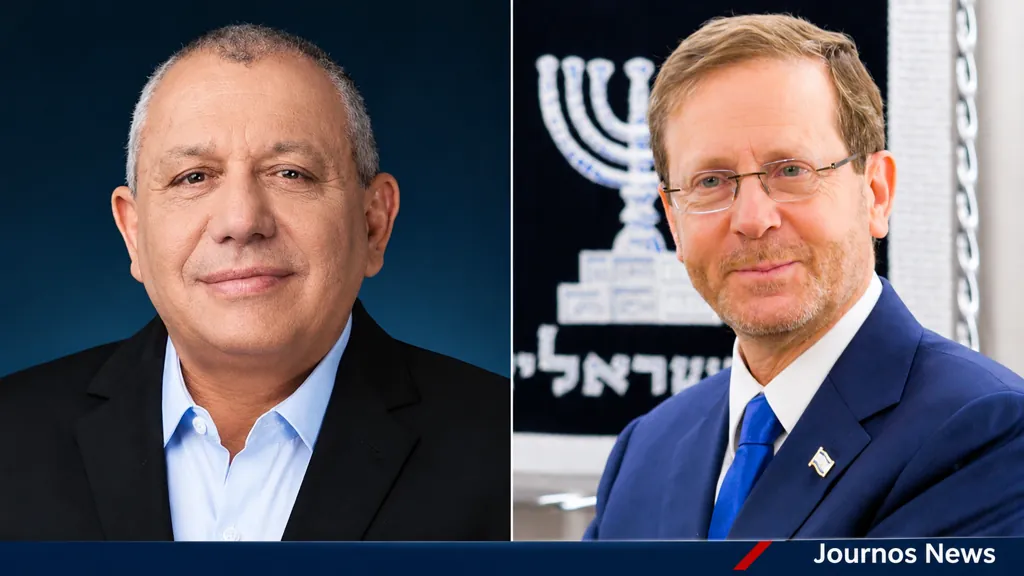
JERUSALEM, Israel – Israeli President Isaac Herzog has given opposition leader Gadi Eisenkot the first opportunity to form the country’s next government, opening a new phase of coalition negotiations after the October 27 parliamentary election left no political bloc with a majority.
Herzog formally tasked Eisenkot with forming a government on Sunday, November 8, following consultations with representatives of parties elected to the 26th Knesset, Israel’s parliament.
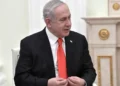
The decision represents a setback for Prime Minister Benjamin Netanyahu, whose Likud party won the largest number of seats but whose political bloc failed to secure enough parliamentary support to govern independently.

According to the Israeli presidency, representatives of factions holding 67 Knesset seats recommended Eisenkot for the task. Representatives of factions holding 46 seats backed Netanyahu, while a faction representing seven lawmakers declined to recommend either candidate.
Election leaves parliament divided
The October 27 election produced a fragmented parliament, with neither of the two main political camps securing the 61 seats required for a governing majority in the 120-member Knesset.
Official election results gave Netanyahu’s Likud 27 seats, making it the largest single party. Eisenkot’s Yashar party won 21 seats, while other parties entered parliament with smaller parliamentary delegations.
The election also strengthened Arab-led political parties, which together secured 19 seats through the Joint List and the United Arab List, also known as Ra’am.
Their parliamentary support could become important in determining whether Eisenkot can assemble a government, although cooperation with these parties presents political difficulties for some of his potential partners.
■ Related News

The negotiations will require Eisenkot to reconcile competing political interests, including disagreements over national security, military service obligations and the role of Arab-led parties in government.
Coalition negotiations pose major challenge
Eisenkot’s appointment does not guarantee that he will become Israel’s next prime minister. He must secure sufficient parliamentary support to establish a governing coalition within the period permitted by law.
Under Israel’s Basic Law: The Government, a member of Knesset designated to form a government receives 28 days to complete the task. The president may grant an extension of up to 14 additional days.
Potential cooperation with Arab-led parties could help Eisenkot reach the parliamentary majority, but such an arrangement risks creating divisions within his own opposition alliance.
Another challenge involves the ultra-Orthodox parties, whose demands for exemptions from compulsory military service conflict with Eisenkot’s position on more equal national service obligations.
A broad unity arrangement involving Netanyahu’s Likud is another possible political route, although it would require compromises between leaders who campaigned against each other.
Netanyahu remains prime minister during negotiations
Netanyahu will remain in office while coalition negotiations continue. The presidential appointment changes who has the first opportunity to form a government, not who currently holds the premiership.
If Eisenkot fails to secure an agreement within the permitted period, Herzog could give another member of Knesset the opportunity to form a government, potentially including Netanyahu.
The negotiations will determine whether Israel enters a new governing arrangement or faces another period of political uncertainty following an election that exposed deep divisions among its political parties.
For Eisenkot, the immediate challenge is to turn the parliamentary support expressed during the presidential consultations into a workable coalition capable of governing the country.
Herzog’s decision therefore gives the opposition its first opportunity to replace Netanyahu’s government, but the outcome will depend on whether Eisenkot can overcome the political disagreements separating the parties that could support his leadership.
Primary Sources: Office of the President of Israel — President Herzog Concludes Consultations and Announces He Will Task Gadi Eisenkot With Forming a Government. Published November 7, 2026. Establishes the presidential decision, parliamentary recommendations and legal timeframe. The Knesset — Elections Results for the 26th Knesset. Official election results establishing party seat allocations. Office of the President of Israel — President Herzog Concludes Round of Consultations With Knesset Factions. November 5, 2026. Presidential account of consultations and recommendations.