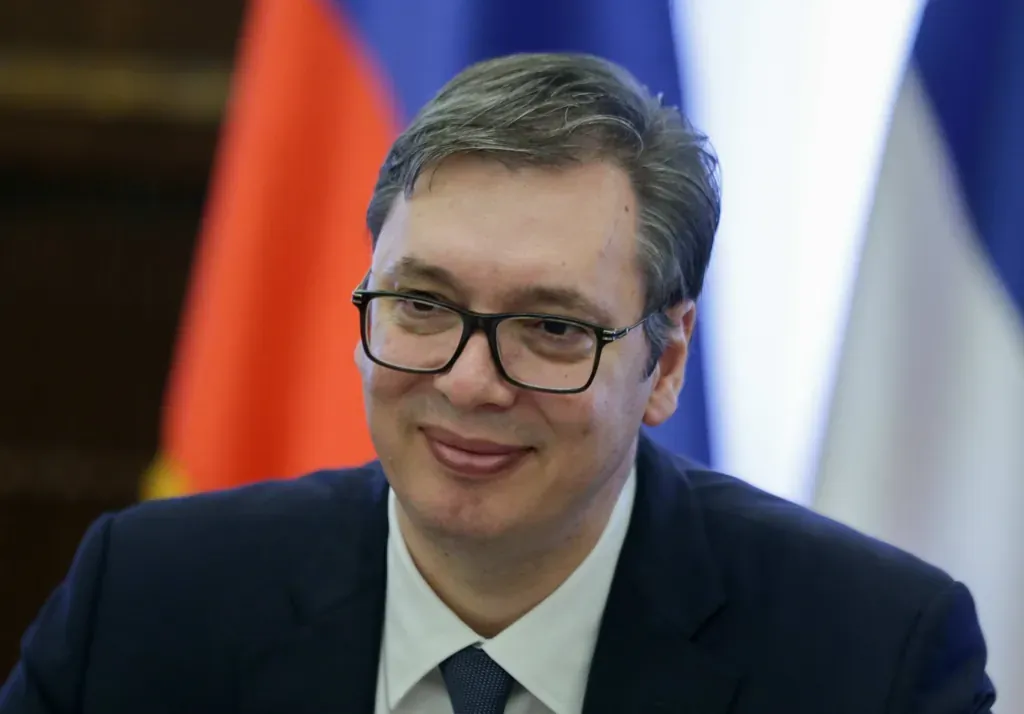
BELGRADE, Serbia – Serbia’s student-backed opposition movement has won a projected majority in the October 25 parliamentary election, prompting Aleksandar Vučić to concede defeat and opening a new chapter in the country’s political future.
Vučić acknowledged the result on Sunday, saying preliminary figures showed that the Student List would win between 135 and 140 seats in the 250-member National Assembly. His political camp, running as the “Aleksandar Vučić – United Serbia” list, was projected to win about 105 seats.
The estimates came before the Republic Electoral Commission (RIK) completed its official count and certified the results. A projection by IPSOS and the Centre for Free Elections and Democracy (CeSID) put the Student List at about 138 seats and Vučić’s coalition at 104. These figures are projections, not the final legally certified allocation.

The election was a parliamentary vote, not a direct presidential election. Vučić had resigned as president in September to take part in the campaign. Ana Brnabić, the speaker of parliament, assumed presidential duties on an acting basis. A separate presidential election is required under Serbian law.
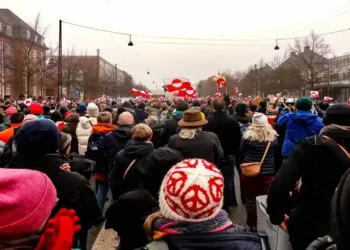
The result follows nearly two years of student-led demonstrations against alleged corruption and demands for accountability after the November 2024 collapse of a railway-station canopy in Novi Sad killed 16 people. The protests expanded into a wider challenge to the government and the institutions responsible for public oversight.
The Student List’s projected victory gives the movement an opportunity to turn those demands into policy. But its candidates must now navigate government formation, parliamentary scrutiny, unresolved investigations and a political system that has been dominated by Vučić’s Serbian Progressive Party (SNS) and its allies.
The election result remains provisional
The Republic Electoral Commission reported turnout of 64.89% by 6 p.m. on October 25, excluding Kosovo and Metohija. That was an interim figure, not the final national turnout. By election night, preliminary projections indicated that the Student List had secured enough seats to command a majority in the 250-member parliament.
The commission had proclaimed the electoral list “Student List – Students Win” in September. Its ballot list contained 250 candidates, allowing voters to support the movement’s parliamentary slate rather than electing a single leader.
■ Related News



The distinction between a projection and an official result remains important. The commission must complete the count, resolve complaints and establish the final allocation of seats. Until then, the exact vote totals, turnout and distribution of seats should be treated as provisional.
The preliminary figures nevertheless point to a major political shift. The Student List is projected to surpass the 126 seats needed for a majority in the National Assembly. If the final result confirms that outcome, it could form a government or negotiate with other parliamentary groups to secure support for one.
Vučić resigned before the parliamentary election
Vučić called the early parliamentary election on September 9, after the government proposed dissolving the parliament elected in December 2023. He then resigned as president on September 27, saying he wanted to participate in the election as an ordinary citizen. Brnabić took over presidential duties the following day.
The sequence matters because Serbia’s president and parliament have different constitutional roles. The October 25 election selected members of the National Assembly. It did not elect a new president or automatically transfer the presidency to the leader of the winning parliamentary list.
The acting president is required to perform the duties of the office until a successor is elected, within the time limits set by Serbian law. The parliamentary result therefore does not, by itself, complete the transition to a new government.
Under Serbia’s constitutional process, the president proposes a candidate for prime minister after consultations with parliamentary groups. The National Assembly then elects the government. A majority in the 250-seat chamber gives the Student List a strong position, but it must still identify a prime ministerial candidate and secure the necessary parliamentary support.
The movement’s immediate challenge is to turn an electoral list built around protest demands into a governing team capable of managing ministries, budgets and public services.
How the student movement emerged
The movement grew out of demonstrations following the collapse of a concrete canopy at the railway station in Novi Sad on November 1, 2024. The disaster killed 16 people and triggered questions about construction oversight, public procurement, renovation work and government accountability.
Students began blocking university faculties and organizing demonstrations. Their demands centred on releasing relevant documentation, holding those responsible to account, investigating attacks on protesters and addressing alleged misuse of public power.
The protests gradually expanded beyond universities. Teachers, lawyers, farmers, artists, workers and other groups joined rallies or expressed support. Demonstrators called for institutional accountability rather than simply a change of political leadership.
The movement did not initially operate like a conventional party. University assemblies and student groups coordinated actions, and organisers emphasized decentralised decision-making. Its political message drew support from people who disagreed on other issues but shared concerns about corruption, public institutions and the handling of the Novi Sad disaster.
That broad coalition became an electoral force when the movement backed a list of 250 candidates for the parliamentary election. The candidates included university lecturers, professionals, activists and people without previous high-level political roles. The list was designed to represent the movement’s demands without relying on a single dominant political leader. <Cite refs={[“turn541115search6″,”turn561149news35”]}/>
The Students’ List is not a conventional party
The Student List’s organizational model is central to understanding what may happen next. It emerged from a student-led protest movement and selected parliamentary candidates through a process involving university assemblies and wider coordination. The list’s leading candidate, cardiologist Ilija Srdanović, has resisted being described as the movement’s leader.
This structure helped the movement appeal to people dissatisfied with established political parties. It also creates questions about how decisions will be made if its candidates enter government.
A parliamentary list can share a common election platform while containing candidates with different views on economic policy, foreign affairs, social issues and the pace of institutional reform. Student activists, elected representatives and supporters outside parliament may not always agree on priorities.
The movement’s challenge is therefore twofold: preserve the participation that helped it grow while creating a clear process for making policy and resolving disagreements.
Its published framework has emphasized anti-corruption measures, the independence of public institutions, fair election conditions and accountability. It has also proposed specific social measures, including free school textbooks and lower medicine prices. But a broad set of demands is not the same as a detailed governing programmed with budgets, timetables and legislation.
The next test will be whether the movement can translate those priorities into a coordinated legislative agenda and identify candidates who can manage government departments.
Election observers reported concerns about the campaign
The result must also be considered alongside the conditions in which the election took place.
Serbia’s independent election-monitoring group CRTA reported concerns about pressure on voters, unequal campaign conditions, media coverage favoring the governing list and restrictions affecting election observers. In its preliminary campaign report, CRTA said the election process had been affected by problems with the voter register, the handling of complaints and allegations of unlawful conduct in the candidate-registration process. These are the monitor’s findings and assessments, not judicial determinations that every alleged violation occurred.
On election day, CRTA observers reported widespread practices that could undermine ballot secrecy, including voters photographing ballots and cases of voting without valid identification. The organization also reported suspected pressure on voters. Its observers said they could not establish in every case whether ballot photography was voluntary or the result of coercion.
CeSID separately reported more than 120 irregularities at 750 polling stations by 11 a.m. on election day. The reported incidents included problems with ballot secrecy, voter identification, group voting and access for observers.
The Republic Electoral Commission, by contrast, said voting was generally proceeding in an orderly manner and that polling boards were resolving minor irregularities. It also reported an incident at a gerontology centre where unidentified people claiming to be observers exerted improper pressure on residents; the commission said police were notified.
The competing accounts underline why the final assessment requires more than a concession speech or preliminary projection. The official count, complaints process and reports from domestic and international observers will help establish whether irregularities affected the process or the final result.
The OSCE Office for Democratic Institutions and Human Rights deployed an election observation mission and scheduled a statement of preliminary findings for October 26. Its final report is expected later.
The Novi Sad disaster remains at the centre of the movement
The railway-station canopy collapse became the turning point for a protest movement that had already raised concerns about government accountability.
On November 1, 2024, the canopy at Novi Sad’s main railway station collapsed, killing 16 people. The station had undergone renovation work, and the disaster prompted demands for documents related to the project, construction supervision and public contracts.
The protests grew as students and other demonstrators questioned whether the public had received a full account of what happened and whether officials and contractors would be held responsible.
The collapse itself is an established fact. Responsibility for it, including any criminal liability, must be determined through the relevant investigations and court proceedings. Allegations of corruption or negligence should not be treated as convictions.
Reports before the first anniversary said several investigations had been opened, while the status of the criminal cases remained contested and unresolved. A full update for publication requires checking current prosecution announcements, confirmed indictments and court records rather than relying on older accounts.
For the Student List, the disaster has become a symbol of the broader demand that public institutions should explain their decisions and act independently. For the new parliament, it will be a test of whether the political change leads to transparent investigations and accountability without interfering with judicial independence.
What a new government would need to do
If the preliminary seat projections are confirmed, the Student List would have enough parliamentary support to form a government without relying on a large coalition. That would not automatically allow it to implement every proposal.
Anti-corruption measures could require changes to investigative powers, public procurement rules, asset declarations and the independence of oversight bodies. Judicial reform would need to respect constitutional safeguards and the separation of powers. Media reform could involve appointments, funding, regulatory oversight and protections for journalists.
Each area requires detailed legislation and institutional cooperation. A majority can pass laws, but the effectiveness of reform depends on implementation, budgets, qualified personnel and safeguards against political interference.
The movement has also promised social measures, including free school textbooks and lower medicine costs. Those commitments would require financial planning and decisions about how costs would be covered. The public will need to see the proposed measures, their funding sources and the timeline for implementation before their likely effects can be assessed.
A further challenge is managing expectations. The movement’s support comes from a broad coalition of voters, and not all supporters will share the same views on economic policy or foreign affairs. The new parliamentary group will have to decide which reforms to pursue first and how to explain compromises.
Serbia’s European path and its ties with Russia
The election could also affect Serbia’s relations with the European Union and Russia, but the movement’s future policy should not be assumed from the identity of the outgoing government.
Serbia is an EU candidate country. Progress toward membership depends on reforms involving the rule of law, democratic institutions, media freedom and alignment with EU requirements. The European Commission has repeatedly identified election integrity and institutional independence as important issues for Serbia’s accession process.
The Student List’s emphasis on accountability and institutional reform may create opportunities for closer engagement with European institutions. But concrete effects will depend on the new government’s programme, its decisions on judicial and media reforms, and its approach to EU accession negotiations.
Serbia also maintains important economic, energy and political relationships with Russia. The Student List’s broad anti-corruption platform does not, by itself, establish whether it will change Serbia’s foreign-policy position, its relations with Moscow or its cooperation with Western security institutions.
Those questions require direct statements from the candidates and a review of their published policies. The movement’s internal diversity means it would be premature to assume that every candidate shares one position on Russia, the EU or Serbia’s wider international relationships.
The next steps are constitutional and political
Vučić’s concession is a significant development, but it does not complete the transfer of power.
The Republic Electoral Commission must publish the final result and resolve the outstanding electoral process. The newly elected National Assembly must then convene, and the constitutional process for forming a government must proceed. Serbia must also hold a separate presidential election following Vučić’s resignation.
The Student List will need to agree on a governing team, define legislative priorities and show how it intends to implement its promises. The outgoing political camp will remain part of the process through its parliamentary representation and its response to the transition.
The election has given a student-backed movement the chance to move from protest to government. Whether it can turn that opportunity into durable institutional reform will depend on the final result, the government-formation process and the details of the policies it puts forward.
For now, the projected majority marks a major electoral setback for Vučić’s political camp. The more consequential test will be whether the new parliament can deliver transparent investigations, stronger public accountability and reforms that withstand political pressure.
Reporting Credit: Republic Electoral Commission of Serbia — October 25, 2026, parliamentary election notices, turnout statements and official counting updates. Government of Serbia — September 9, 2026, announcement of the early parliamentary election; September 27–28, 2026, statements on Aleksandar Vučić’s resignation and the transfer of presidential duties. Centre for Free Elections and Democracy (CeSID) and IPSOS — preliminary election-night vote and seat projections. CRTA — 2026 election campaign and election-day observation findings. OSCE Office for Democratic Institutions and Human Rights — October 2026 election observation mission and preliminary findings. Reuters — October 25, 2026, reporting on Vučić’s concession and the preliminary election projections.