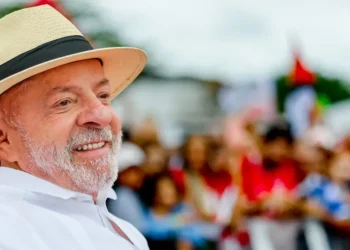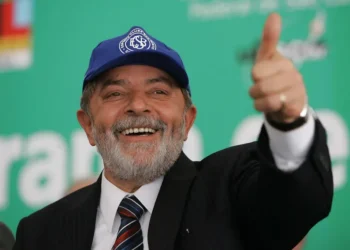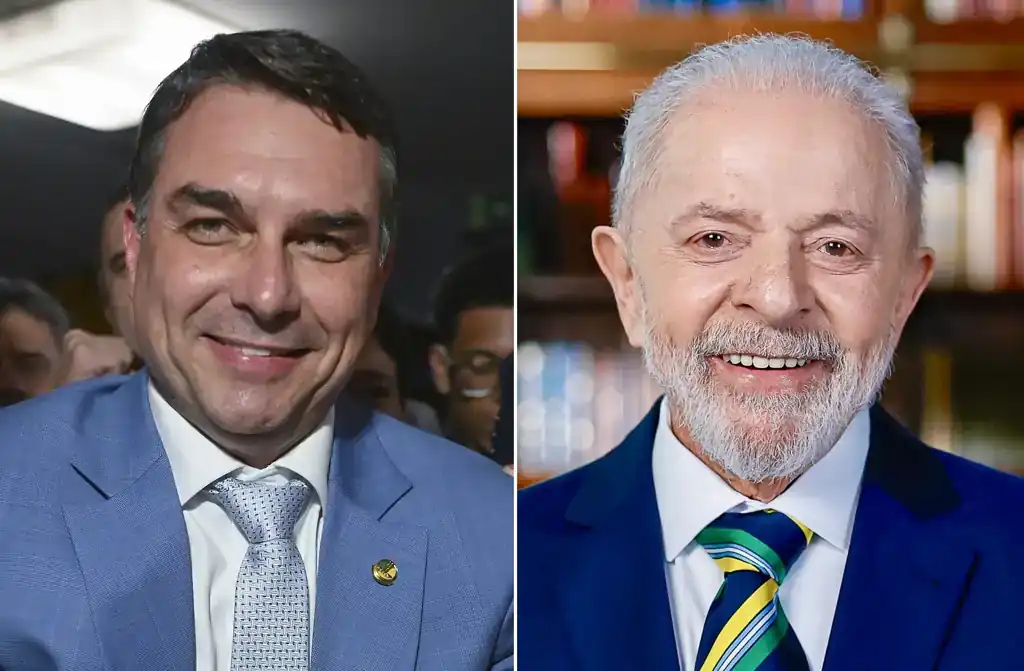
Brazilian voters return to the polls on Sunday, October 25, to choose between President Luiz Inácio Lula da Silva and Senator Flávio Bolsonaro in a presidential runoff that will help determine the direction of Latin America’s largest economy for the next four years.
The two candidates advanced from the October 4 first round, when neither secured more than half of the valid votes. Brazil’s Superior Electoral Court (TSE) confirmed that Flávio Bolsonaro finished first with 47.03% of valid votes, while Lula received 45.16%.
The result left the incumbent facing a challenger who has made his family name, conservative political identity and promise of a smaller government central to his campaign.

Lula, the Workers’ Party (PT) candidate, is seeking another presidential term after previously governing Brazil from 2003 to 2010 and returning to office in 2023. His campaign emphasizes social programs, public investment, workers’ rights, environmental protection and an active role for Brazil in international diplomacy.
Flávio Bolsonaro, of the Liberal Party (PL), offers a different approach. His program calls for deep cuts to government administration, changes to fiscal policy, tougher criminal penalties, a greater role for private investment and closer relations with the United States.
These differences extend beyond economic ideology. The candidates disagree over how the federal government should tackle organized crime, how much it should spend on social and development programs, and how Brazil should balance its relationships with Washington, Beijing and other international partners.
The election also carries institutional consequences. Congress elected in October will begin its new term in 2027, and its composition will influence which campaign promises can become law.
The central question is therefore not only which candidate voters prefer. It is also which policies the next president can implement, how much they will cost and how Brazil’s institutions will shape the outcome.
■ Related News



What the first-round results establish—and what they do not
The TSE’s published results show a competitive contest, with Flávio Bolsonaro holding a narrow lead over Lula in the first round. Neither candidate won outright, so the runoff will determine the presidency.
The distinction between the two rounds matters. First-round votes establish which candidates advanced; they do not determine the winner of the runoff.
Opinion polls provide another snapshot of the contest, but they measure voter intentions at the time researchers conduct interviews. They cannot establish the final result.
A Datafolha survey published on October 22, for example, placed the candidates close to one another in its runoff measure. The survey interviewed 2,520 people between October 20 and 22 and reported a margin of error of two percentage points. The figures showed a close race rather than a dependable prediction of the outcome.
Polls from different organizations can also produce different results because they use different samples, field dates, interview methods and weighting procedures. Readers should examine those details before comparing estimates.
As of October 24, the election remained unresolved. Only the official vote count can establish the winner.
The economy: public investment versus a smaller state
Economic policy is one of the clearest dividing lines between the candidates.
Lula’s government plan seeks to maintain Brazil’s current fiscal framework while using public investment and government-backed financing to support growth. It proposes further infrastructure spending, industrial development, improvements to transport networks and continued investment through the Growth Acceleration Program, known as Novo PAC.
His platform also calls for implementing the consumption-tax reform and maintaining social policies alongside efforts to control public spending.
Flávio Bolsonaro’s plan places greater emphasis on reducing government expenditure and limiting the state’s role in the economy.
Under what his campaign calls a tesouraço, or deep round of cuts, he proposes eliminating at least 10 ministries, reducing appointed positions and administrative expenses, reforming fiscal rules and reviving the National Privatization Program.
He also proposes expanding infrastructure investment through concessions and public-private partnerships, shifting more responsibility for financing projects to private investors.
The difference is not simply whether the government should spend more or less. It concerns how the state should encourage economic growth.
Lula’s approach relies more heavily on public investment to expand infrastructure, support industry and encourage private investment. Flávio’s plan seeks to reduce administrative costs, change incentives and attract private capital.
Both approaches face practical constraints.
Lula’s proposals require funding and careful management of public finances. Infrastructure projects may take years to complete, and spending does not guarantee higher productivity or faster growth.
Flávio’s proposed cuts would also require detailed planning. Closing ministries or reducing administrative expenses does not automatically produce savings equal to the cuts announced during a campaign. Some responsibilities would need to move elsewhere, and the government would have to distinguish administrative savings from reductions that could affect public services.
Neither platform, by itself, establishes the final economic outcome.
Fiscal policy: the promises must fit the budget
Brazil’s public finances will be a major test for the next administration.
Lula proposes retaining the existing fiscal framework while pursuing economic growth and social programs. Flávio proposes new fiscal rules designed to control spending and reduce public debt.
Their plans differ in emphasis, but both must operate within the limits of federal revenue, existing obligations and the legal budget process.
Flávio’s plan to cut at least 10 ministries raises questions about how much the changes would save and how quickly the government could implement them. A credible estimate would need to identify the ministries affected, the costs that could actually be eliminated and the expenses that would continue under a different structure.
His proposal to revise the consumption-tax reform also raises questions about revenue. Lowering the tax burden could benefit some businesses and consumers, but the effect on government income would depend on the design of the changes and the rules adopted.
Lula’s investment plans face their own funding questions. Infrastructure projects, expanded public services and social commitments must compete with other budget priorities. The government would need to identify available resources, establish spending priorities and comply with fiscal rules.
Campaign documents do not automatically provide the detailed cost estimates needed to determine whether every promise is financially sustainable.
A responsible assessment must distinguish between a proposed policy, a law already in force, a budget allocation and a program that has actually delivered results. Those categories are not interchangeable.
Welfare, employment and the cost of living
Social policy is another important difference between the candidates.
Lula’s platform emphasizes the continuation of social programs, the protection of workers and the expansion of public services. It also proposes reducing the standard working week to 40 hours without cutting wages and ending the six-day-on, one-day-off work schedule known as the 6×1 scale.
The employment proposals could affect millions of workers, but implementation would require legislative and regulatory decisions. Policymakers would need to examine the effects on wages, working hours, productivity, business costs and employment across different sectors.
The impact would also depend on how any new rules treat collective agreements, overtime, small businesses and industries that require continuous staffing.
Flávio’s economic program places greater emphasis on reducing administrative burdens, encouraging private investment and changing the tax environment for businesses. His campaign argues that a smaller state and a more favorable business climate can support economic activity.
That approach does not guarantee that new investment will produce enough jobs or improve wages for all workers. The outcome would depend on business confidence, demand, access to financing and broader economic conditions.
Both candidates also propose measures affecting household finances. Flávio’s program includes a proposal known as Ganha-Ganha, which would reward responsible payment behavior and course completion with benefits such as lower interest rates or cashback. His platform also proposes a mechanism to buy family debts and temporarily suspend payments.
Those measures would require detailed rules, funding arrangements and safeguards. The government would need to explain who qualifies, who bears the cost and how the programs would interact with existing credit and debt arrangements.
For voters, the central issue is whether each proposal can deliver measurable benefits without creating costs that undermine its stated purpose.
Public security: prevention and coordination versus tougher penalties
Public security is another major point of disagreement.
Lula proposes creating a Ministry of Public Security after approval of a constitutional amendment on the subject. His plan emphasizes cooperation among federal, state and local authorities, intelligence work, action against organized crime and efforts to weaken criminal groups financially.
The program also addresses cybercrime, financial crime, violence against women and violence affecting young people.
Flávio Bolsonaro proposes a tougher approach to criminal enforcement. His program calls for classifying major criminal factions as narcoterrorist organizations, expanding maximum-security prison capacity, reducing the age of criminal responsibility to 16 and introducing chemical castration for certain sex offenders.
He also proposes a nationwide network of more than one million smart cameras and broader use of facial recognition technology.
These proposals raise different questions about effectiveness, legality and cost.
A larger surveillance network would require procurement, maintenance, data protection rules and safeguards against wrongful identification. More prison capacity would require construction funding, staffing and long-term operating costs.
Changes to the age of criminal responsibility and penalties would also involve constitutional and legislative questions. A president cannot implement every such change through executive action alone.
Lula’s approach would likewise depend on institutional cooperation. Creating a ministry would not automatically resolve disputes between federal and state authorities or guarantee that intelligence is shared effectively.
Both programs seek to improve public safety, but they propose different methods. Their results would depend on implementation, funding, legal constraints and evidence of effectiveness.
Climate and the environment: a difference in emphasis
Environmental policy could shape Brazil’s international standing and the future of industries linked to agriculture, energy and natural resources.
Lula’s plan treats climate change as an urgent concern. It proposes stronger climate policies, restoration of river basins, improved water security, disaster prevention, sustainable urban drainage and measures to reduce emissions and combat desertification.
Flávio Bolsonaro’s plan gives less prominence to climate change. Its environmental proposals emphasize the economic value of conservation and investment in water infrastructure, including reservoirs, drainage works and systems designed to prepare for extreme weather.
The two approaches are not entirely opposed. Both recognize a role for water infrastructure and preparation for climate-related events. But Lula’s platform gives climate policy a broader role across government planning, while Flávio’s focuses more on infrastructure and economic opportunity.
The practical test will be funding and delivery. Climate adaptation requires long-term investment in drainage, water systems, disaster warnings and resilient infrastructure. Environmental protection also depends on enforcement, monitoring and coordination among federal and state authorities.
For Brazil, these decisions have implications beyond domestic policy. The country is home to the Amazon rainforest and plays an important role in international climate negotiations. Its environmental choices can affect trade, investment and relations with other countries.
The scale of those effects will depend on the measures each administration adopts and whether it can implement them.
Jair Bolsonaro’s legal history and the political meaning of his son’s candidacy
Flávio Bolsonaro’s relationship with his father, former president Jair Bolsonaro, is a central part of the political context surrounding the election. But family ties alone do not establish that the two men hold identical positions on every issue.
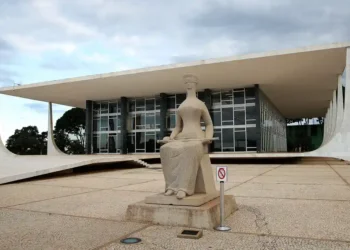
Jair Bolsonaro was convicted by Brazil’s Supreme Court in September 2025 for his role in a plot to remain in power after losing the 2022 election. Reuters reported that the court imposed a prison sentence of 27 years and three months. Bolsonaro and his lawyers challenged the ruling and said they would appeal.
The case became a major test of Brazil’s democratic institutions and the limits of political power after an election.
Flávio Bolsonaro has built his campaign around a conservative platform and his father’s political movement. His candidacy therefore carries significance for voters who supported Jair Bolsonaro, as well as for those concerned about the former president’s legacy and the relationship between the executive branch and the courts.
Flávio has also advocated changes to criminal justice and government policy that overlap with themes associated with his father’s political base.
However, the campaign must be assessed on its own evidence. The appropriate basis for comparing the two men is their public statements, registered proposals, voting records and documented actions—not their family relationship alone.
The same principle applies to criticism of the candidates. Allegations, court findings and political interpretations should be identified separately, with the relevant evidence and responses presented where available.
Congress will determine how much of the winning platform becomes law
The next president will not govern alone. Brazil’s National Congress will have a new composition when the next legislative term begins in February 2027.
The Liberal Party won 121 seats in the Chamber of Deputies, the largest single-party delegation. The PT-PCdoB-PV federation secured 88 seats.
The Senate will also change. Following the first-round election, the PL was projected to hold 28 seats in the 81-member chamber, making it the largest party group. The PT was projected to have nine senators. The Senate’s composition could still change in some respects as a result of senators elected to other offices and the appointment of substitutes.
These results create an important constraint for either presidential candidate.
A large party delegation can help a president organize support, but it does not guarantee a stable majority. Brazilian presidents routinely need to negotiate with parties whose interests differ from those of the governing coalition.
Lula would need congressional support to advance legislation on labor rules, public security, spending and other major commitments. Flávio would face the same requirement for fiscal reform, changes to criminal responsibility and other proposals requiring statutory or constitutional amendments.
Some measures may be possible through executive administration, depending on existing law and budget authority. Others require approval by Congress. Constitutional amendments face a higher voting threshold than ordinary legislation.
The Senate also has a role in approving certain presidential nominations, including appointments to the Supreme Federal Court. Relations between the executive, Congress and judiciary could therefore affect not only legislation but also the broader operation of government.
Neither candidate can assume that an election victory will translate directly into legislative control.
Foreign policy: the United States, China, BRICS and Mercosur
The election could also change Brazil’s approach to international relations.
Lula’s foreign policy emphasizes multilateral diplomacy, stronger engagement with China and BRICS, and regional integration through Mercosur. His program supports cooperation with emerging economies and greater use of local currencies in trade among BRICS members.
Flávio Bolsonaro has signaled a stronger preference for relations with the United States, including closer cooperation on security. He has also questioned whether Brazil should remain in BRICS, arguing that the group can serve ideological purposes and challenge the international role of the US dollar.
In a June 2026 interview cited by Folha, Flávio said he would review Brazil’s continued membership in the bloc. His campaign has also called for more flexibility within Mercosur so Brazil can pursue bilateral agreements, including with the United States.
There is an important distinction between these public positions and the formal government programs. Flávio’s registered plan does not explicitly mention BRICS or Mercosur, according to Folha’s review. His statements and other policy submissions therefore provide additional context, but they should not be misrepresented as detailed commitments contained in the registered platform. <Cite refs={[“turn628896search3″,”turn628896search12”]}/>
The economic stakes are significant. China is one of Brazil’s most important trading partners, while the United States remains a major economic and diplomatic partner. Mercosur also shapes Brazil’s regional trade relationships.
A shift in diplomatic priorities could affect negotiations, investment and cooperation on security, technology and climate policy. But leaving an international bloc or changing trade arrangements would involve diplomatic, economic and legal considerations that extend beyond a presidential announcement.
The next administration would need to weigh its political priorities against Brazil’s existing commercial relationships and strategic interests.
Disinformation and election integrity require evidence, not assumptions
The campaign has unfolded amid wider concerns about online misinformation, political content and the influence of digital platforms.
Brazil’s electoral authorities have developed rules and procedures to protect the voting process and respond to false or misleading information. The TSE’s official election portal provides information on voting, election security and the administration of the 2026 contest. <Cite refs={[“turn628896search5″,”turn628896search9”]}/>
However, claims about disinformation or foreign interference require specific evidence. The presence of misleading content online does not, by itself, prove that a campaign directed it or that a foreign government coordinated it.
A sound assessment should identify the content in question, establish its origin where possible, examine the relevant platform’s response and seek comment from the parties or individuals involved. It should also distinguish documented activity from allegations that remain unverified.
The same standard applies to claims about platform moderation. Researchers and election officials may document the removal of content, changes in platform policies or enforcement decisions. Those facts do not automatically establish political bias or coordinated interference.
The available material reviewed for this report does not establish a specific foreign-directed operation that can responsibly be attributed to either presidential campaign. Any further claims should be supported by official findings, verifiable technical evidence or credible independent investigations.
Protecting election integrity requires transparency and consistent standards—not assumptions based on political affiliation.
What voters are deciding
The runoff presents Brazil with two distinct policy directions.
Lula offers continuity in public investment, social programs, labor protections, climate policy and a foreign policy that emphasizes multilateral engagement. Flávio Bolsonaro proposes a smaller federal administration, new fiscal rules, a more punitive approach to crime and closer ties with the United States.
Neither platform can be judged solely by its promises. The next administration will face budget constraints, a Congress with its own political interests, legal limits on executive power and an international environment that may complicate domestic plans.
The cost of each proposal, the laws required to implement it and the institutions responsible for delivery will determine how much of either platform becomes reality.
As Brazilians prepare to vote on October 25, the outcome remains undecided. The official result will determine who becomes president, but the work of governing will depend on what the winner can finance, negotiate and deliver.
Reporting Credit: Journos News — Original research and editorial analysis based on Brazil’s Superior Electoral Court (TSE), registered presidential government plans, official congressional election results, Brazilian government and court records.