JERUSALEM, Israel – Israelis will vote on October 27 in a parliamentary election that could decide whether Prime Minister Benjamin Netanyahu remains in power. His Likud party faces a broad field of rivals, including former military chief Gadi Eisenkot, former prime ministers Naftali Bennett and Yair Lapid, and parties representing Arab citizens.
The election comes three years after the Hamas-led attack on October 7, 2023, and the wars that followed. National security remains a central issue. So do questions about the government’s handling of the attack, military-service obligations, the cost of living and the state of public services.
But this is not a direct contest between two candidates for prime minister. Israeli voters choose party lists for the 120-seat Knesset, the country’s parliament. Parties then negotiate to form a government that can command parliamentary support.

No single party has ever won a majority of the Knesset’s 120 seats. A government needs support from at least 61 lawmakers, which gives smaller parties significant influence over coalition negotiations. Parties must also win at least 3.25% of valid votes to enter parliament.
How Israel’s election system works
Israel uses a nationwide system of proportional representation. Voters choose a party list rather than a local candidate or a prime minister directly. A list’s share of the vote determines how many seats it receives, provided it clears the electoral threshold.
After the election, the president consults party representatives and assigns a lawmaker the task of forming a government. That lawmaker must assemble a coalition or otherwise secure sufficient support in the Knesset.
A party can win the most seats without being able to form a government. Conversely, several parties with different ideologies may join forces if they agree on a common governing arrangement.
The 3.25% threshold also creates a risk for smaller parties. A list that falls short receives no seats, and votes for it do not count in the allocation of parliamentary seats. Parties may therefore merge or run on joint lists to improve their chances.
■ Related News



The Central Elections Committee approved 38 lists for the October 27 election, according to an election guide updated in October. The main parties are competing for influence, but the eventual government will depend on the seat distribution and the willingness of other parties to cooperate.
Likud and Netanyahu’s governing allies
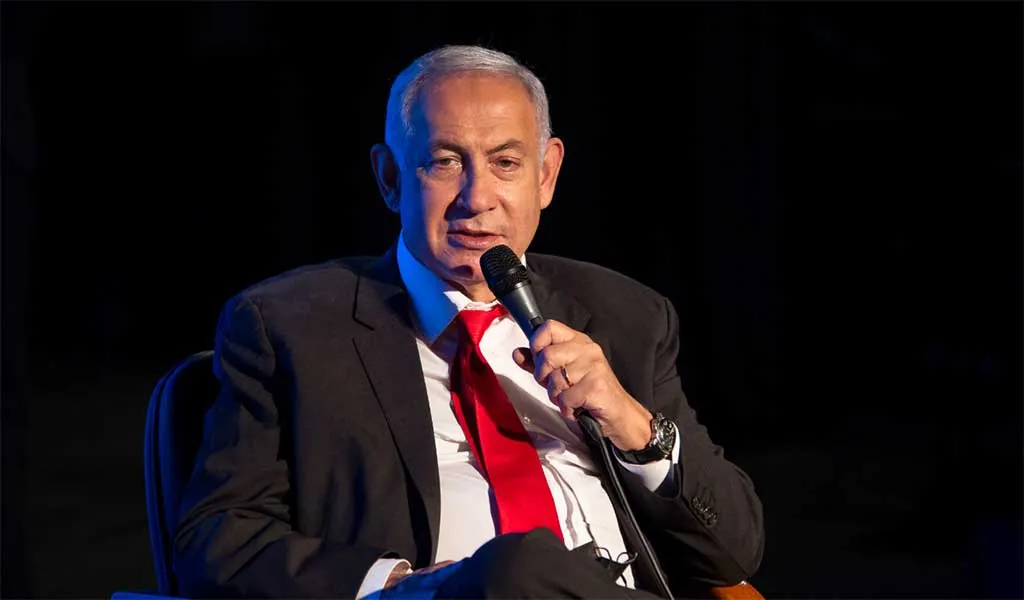
Likud — Benjamin Netanyahu
Likud is Israel’s main right-wing party and the political base of Netanyahu, the country’s longest-serving prime minister. Its platform combines Jewish nationalism, a strong security posture and market-oriented economic policies.
Netanyahu’s campaign is closely tied to his record since October 7, 2023. His supporters argue that his government has pursued Israel’s security interests during a period of regional conflict. His critics blame his leadership for security failures and say he has avoided full political accountability for the attack.
The election is the first national vote since October 7. It gives voters an opportunity to judge Netanyahu’s leadership, although the result will also reflect concerns about the economy, public services, religion and state, and military service.
A verified, comprehensive 2026 Likud manifesto was not identified in the material reviewed. The party’s positions should therefore be assessed through its established political record, current statements and the policies of the government it has led, rather than through an assumed new platform.
Otzma Yehudit — Itamar Ben-Gvir
Otzma Yehudit, or Jewish Power, is a far-right nationalist party led by National Security Minister Itamar Ben-Gvir. It supports a hard-line security approach and stronger measures against Palestinians accused of attacks on Israelis.
Ben-Gvir has also pushed for a more forceful policing and security agenda. His party has been a key partner in Netanyahu’s governing coalition and has influenced the government’s approach to security and the occupied West Bank.
Its future role will depend on its share of the vote and whether Netanyahu can assemble a majority with his existing allies. <
Shas — Aryeh Deri
Shas represents many ultra-Orthodox Jewish voters, particularly Jews with family roots in North Africa and the Middle East. The party places strong emphasis on religious education, welfare support and public services for its community.
Shas has long been an important coalition partner for Netanyahu. Like other ultra-Orthodox parties, it has opposed changes that would force more students in religious seminaries to enter military service.
The question of military exemptions has become more politically difficult as Israel’s armed forces face the demands of prolonged conflict. Shas will have to weigh its community’s interests against pressure for a more equal distribution of national service.
United Torah Judaism
United Torah Judaism is an alliance of ultra-Orthodox parties. It focuses on religious education, community funding and preserving the status of religious institutions.
Its leaders have pressed for legal protection for exemptions from military service for ultra-Orthodox men studying in yeshivas. The issue has strained relations with other right-wing parties and with Israelis who believe the burden of military service should be shared more equally.
The party’s support could be important if Netanyahu seeks to rebuild a coalition with religious and nationalist partners. However, disputes over conscription could complicate negotiations with parties that demand wider service requirements.
Religious Zionism and Zehut — Bezalel Smotrich and allied figures
The Religious Zionist Party, led by Finance Minister Bezalel Smotrich, supports a hard-line security policy and a stronger Israeli presence in the occupied West Bank. It has also backed settlement expansion.
For the 2026 election, Religious Zionism is running with the Zehut faction. Its prospects matter to Netanyahu’s camp because smaller right-wing lists could affect whether the bloc reaches a parliamentary majority.
Smotrich’s role as finance minister also connects the party to debates over public spending, economic policy and funding for settlements. Its coalition demands could shape negotiations over security, budgets and the future of the West Bank.
Yashar!: Eisenkot’s challenge to Netanyahu
Yashar! — Gadi Eisenkot
Yashar! is a centrist party led by Gadi Eisenkot, a former chief of staff of the Israel Defense Forces. He has emerged as a leading challenger to Netanyahu.
The party focuses on national security, public education, the cost of living and reform of state institutions. It also calls for a state commission of inquiry into the October 7 attack, a central demand among critics who want an independent examination of the government’s and security agencies’ failures.
Yashar! supports a “Service for All” framework. Under its proposal, citizens would have to perform military or civilian-national service under rules set by law. The plan would address long-running disputes over exemptions for ultra-Orthodox men and the obligations of other groups.
Eisenkot has presented himself as an alternative to Netanyahu’s leadership, but his political approach does not represent a complete break with Israel’s traditional security establishment. He has a military background and emphasizes national security, while also promising changes to governance and public institutions.
A key question is whether his party can attract enough support to lead a coalition. Recent reporting suggests that a government opposed to Netanyahu may need support from Arab-led parties, either inside a coalition or from outside parliament’s governing bloc. Eisenkot has publicly rejected an alliance with those parties, making the path to a majority more difficult.
Beyachad brings Bennett and Lapid together
Beyachad — Naftali Bennett and Yair Lapid
Beyachad, meaning “Together,” combines the political forces of former prime ministers Naftali Bennett and Yair Lapid. The joint list seeks to unite voters who want a change of government but do not necessarily share the same views on every issue.
Bennett comes from the right and is religiously observant, while Lapid leads the centrist Yesh Atid party. Their cooperation brings together different political traditions around an effort to replace Netanyahu’s government.
Beyachad’s message focuses on restoring public trust, strengthening governance and addressing domestic concerns. Its support could be crucial if the opposition tries to assemble a majority after the election.
The partnership does not remove all differences between Bennett and Lapid. Their ability to negotiate with other parties and agree on a governing programme will matter as much as the number of seats they win.
The Democrats focus on public institutions and social policy
The Democrats — Yair Golan
The Democrats emerged from a merger between the Labor Party and Meretz. Led by Yair Golan, the party describes itself as Zionist, liberal and democratic.
Its programme emphasizes the rule of law, judicial independence, public education and stronger social services. It also supports wider military service and opposes annexation in the West Bank.
The party wants an official inquiry into the October 7 attack and has criticized the government’s handling of national security and state institutions. Golan has also supported bringing Arab-led parties into a governing arrangement, setting him apart from some other opposition leaders.
The Democrats appeal to voters who want a change in government alongside reforms to the judiciary, public services and relations between religion and state. However, their influence will depend on their seat total and the compromises required to form a coalition.
Yisrael Beiteinu takes a hard line on security
Yisrael Beiteinu — Avigdor Liberman
Yisrael Beiteinu, or Israel Our Home, is led by Avigdor Liberman. The party has historically appealed to immigrants from the former Soviet Union and supports a strong national-security policy.
It also advocates economic competition and reforms intended to reduce the cost of living. Its platform emphasizes education, employment and social welfare, while Liberman has repeatedly criticized Netanyahu’s leadership.
Liberman has said he will not join a coalition led by Netanyahu. That position makes Yisrael Beiteinu a potential partner for an alternative government, although its security and economic views may differ from those of centrist and left-wing parties.
Smaller parties could affect the balance
Smaller lists may determine whether either main political grouping can reach 61 seats.
The Reservists-Economic Party, led by Yoaz Hendel, combines demands for wider military service with a focus on household costs. It has promoted an alternative that would bring together Netanyahu and Eisenkot without ultra-Orthodox or Arab parties. Such an arrangement would require the leaders to overcome their existing political differences.
Amcha Yisrael, founded by retired general Ofer Winter, seeks to attract right-wing voters dissatisfied with Netanyahu’s handling of the wars. Its position is important because smaller right-wing parties can affect the total number of seats available to Netanyahu’s bloc.
Other smaller lists include Blue and White and parties aligned with religious-nationalist movements. Their ability to enter the Knesset depends on whether they clear the 3.25% threshold. A list that falls short could change the overall balance by leaving its votes out of the seat allocation.
Ra’am seeks practical gains for Arab communities
Ra’am — Mansour Abbas
Ra’am, the United Arab List, is led by Mansour Abbas. It is an Islamist conservative party that has focused on practical issues affecting Arab citizens, including crime, housing, economic opportunity and public services.
Abbas has also supported the establishment of a Palestinian state, while placing a strong emphasis on domestic concerns in his campaign. In 2021, Ra’am became the first Arab-led party to join an Israeli governing coalition.
That experience underpins Abbas’s argument that Arab parties can influence policy by participating in government rather than remaining permanently outside it. He has urged Arab citizens to vote in large numbers and said he hopes to help bring about a change in government.
Netanyahu and Eisenkot have both ruled out forming a coalition with Arab-led parties, citing political and ideological differences. That stance creates a challenge for Abbas, whose party could still matter if the election leaves the Knesset divided.
Ra’am could potentially support a government from outside the coalition or seek an agreement on specific policy priorities. However, its role would depend on negotiations after the vote and on whether other parties change their positions.
The Joint List seeks political change and equal rights
Joint List — Hadash, Ta’al and Balad
The Joint List brings together three Arab-led political components: Hadash, Ta’al and Balad. It has a different political outlook from Ra’am and takes a more critical position on Israel’s treatment of Palestinians and the war in Gaza.
Its leaders have called for political change, greater equality for Arab citizens and an end to policies they oppose in the occupied West Bank. They have also highlighted concerns about crime, public safety and the treatment of Arab communities.
Joint List figures have said the alliance could support a government from outside the coalition if it takes action on shared priorities. Ahmad Tibi has said the list would support an initiative to establish a state commission of inquiry into the October 7 attack. The group has also emphasized opposition to Netanyahu’s far-right partners.
The Joint List does not necessarily need to join a government to influence parliamentary votes. It could offer external support for specific measures or help prevent Netanyahu’s bloc from reaching a majority. Yet major Jewish-led parties remain reluctant to rely on Arab-led parties, leaving the possibility of cooperation uncertain.
October 7 and military service shape the debate
The October 7, 2023, Hamas-led attack and the wars that followed have shaped the election campaign. Parties differ over who should be held accountable, how Israel should respond to security threats and how the country should balance military action with diplomatic efforts.
Yashar! and The Democrats have called for a state commission of inquiry into the attack. Their supporters argue that an independent process is necessary to establish what happened and examine the decisions made before and after the assault.
Netanyahu’s critics argue that his government failed to prevent the attack and has avoided sufficient accountability. His supporters point to the security challenges facing Israel and defend his approach to the wars. These are competing political arguments, and the election itself will not settle questions of legal or official responsibility.
Military-service exemptions are another major issue. Ultra-Orthodox parties want to protect religious students from compulsory service, while Yashar!, The Democrats and the Reservists-Economic Party support broader obligations. The disagreement could become a central test in coalition talks.
Economic pressures also matter. Parties have proposed different approaches to living costs, public education, housing, welfare and the funding of public services. However, the material reviewed does not establish a single, fully comparable set of costed proposals across all major parties. Voters will need to assess both the pledges and the practical ability of a future coalition to implement them.
Arab voter turnout could influence coalition talks
Arab citizens make up about one-fifth of Israel’s population. Their turnout could affect the number of seats won by Ra’am and the Joint List, and therefore the balance between political blocs.
Reuters reported on October 19 that Arab political leaders were urging higher turnout in an effort to replace Netanyahu’s government. The report also noted that Eisenkot had ruled out an alliance with Arab parties, even though his bloc could need their support to form a government.
Ra’am and the Joint List have different priorities and approaches. Abbas has emphasized practical gains for Arab communities and remains open to political participation. Joint List leaders have stressed equality, opposition to the far right and support for an inquiry into October 7.
Their influence could take several forms. They might support a minority government from outside, negotiate support for particular legislation or remain in opposition. None of these arrangements is guaranteed.
If no bloc can secure enough support to form a government, Israel could face prolonged negotiations or another election. The existing government could remain in a caretaker role during a period of political deadlock.
What happens after October 27?
The election will determine the composition of the 26th Knesset, but it will not automatically decide who becomes prime minister. The outcome depends on both the seat count and the negotiations that follow.
Likud may remain the largest individual party without securing a majority. Likewise, an opposition grouping may win more seats collectively but still struggle to agree on a government. Differences over security, military service, religion and state, and cooperation with Arab-led parties could complicate either path.
The 3.25% threshold adds another layer of uncertainty. Smaller parties that win seats may hold the balance of power, while those that fall short could alter the final distribution of seats.
The election is therefore a test of Netanyahu’s leadership, but it is also a test of Israel’s ability to form a stable government after years of conflict and political division. The outcome will depend not only on which parties voters choose, but also on what those parties are prepared to accept in coalition negotiations.
Reporting Credit: The Associated Press and Reuters for reporting on the principal parties, election issues and coalition positions; the Israel Democracy Institute for the electoral system and party information; and official party materials from Yashar!, The Democrats and Yisrael Beiteinu for their stated policy priorities.