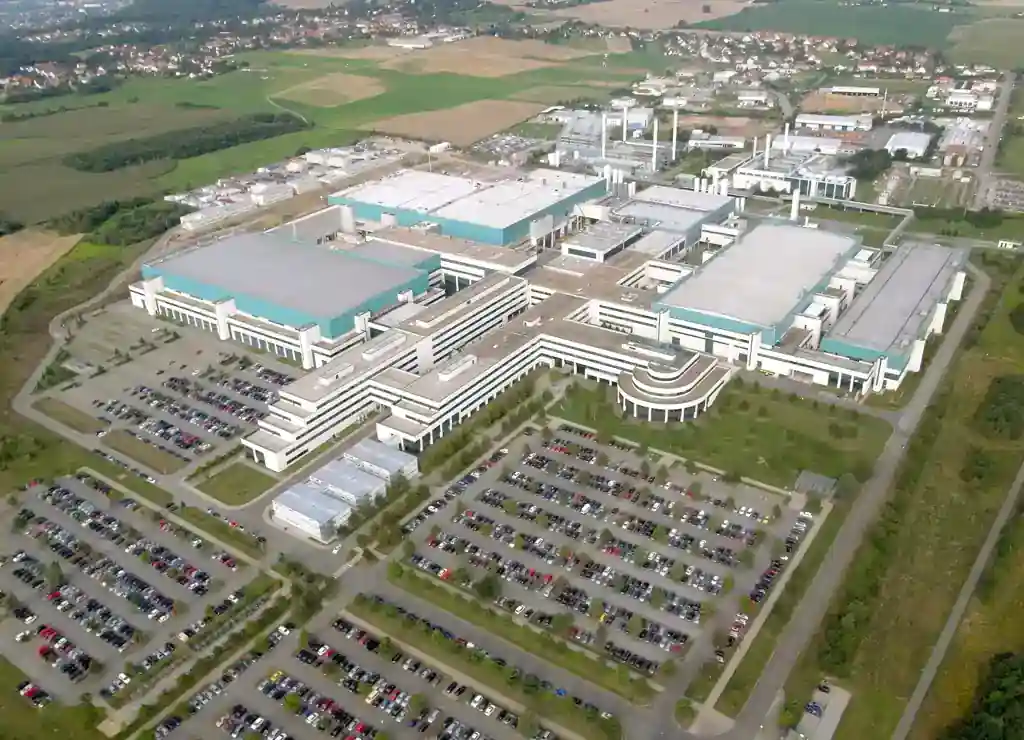
MALTA, United States – Japan will provide up to $21 billion to support two proposed semiconductor manufacturing facilities operated by GlobalFoundries in Malta, New York, under a US-Japan investment initiative, the company announced on October 14.
The plan would expand US production of semiconductors used in automotive systems, industrial equipment and connected infrastructure. But the investment is phased: approximately $10 billion is planned for the first factory, while a second facility would require additional investment and a later decision.
GlobalFoundries said it had been selected as the technology provider and operator for both facilities. Japan would supply the investment, while the company would contribute its manufacturing technology, operational expertise and existing industrial infrastructure.

The announcement forms part of a broader US-Japan trade and investment arrangement under which Japan pledged $550 billion toward investment in the United States.
First factory targets 2029 production
GlobalFoundries expects to begin construction on the first new factory at its Malta site later in 2026, with production targeted for 2029. The facility is expected to add approximately 900,000 300-millimeter wafers of annual manufacturing capacity when fully operational.
The company said the first phase would receive approximately $10 billion in investment. The proposed second factory would add another 900,000 wafers of annual capacity, bringing the combined potential addition to approximately 1.8 million wafers a year.
The second facility is not yet an unconditional construction commitment. Its funding and development remain subject to a subsequent investment decision, with Reuters reporting that the decision is expected by the end of 2028.
The company estimates that the overall project could generate about 27,000 construction and ecosystem jobs and more than 1,000 high-skilled manufacturing jobs in New York’s Capital Region. These are projections, not jobs already created, and the broader estimate includes activity beyond direct factory employment.



Federal semiconductor funding will be redirected
The investment announcement also changes how some existing US semiconductor funding will be used.
GlobalFoundries said it had agreed with the US Department of Commerce to amend its existing award under the CHIPS and Science Act, reallocating $955 million toward investments in silicon photonics, silicon-germanium technology and advanced packaging at facilities in Malta and Burlington, Vermont.
These technologies support applications including communications infrastructure and data centers. Silicon photonics uses light to transmit information, while silicon-germanium technologies are used in high-frequency and other specialized electronic systems. Advanced packaging integrates semiconductor components into more capable systems.
The company said the revised allocation would accelerate these investments. The announcement does not establish that the $955 million has already been disbursed under the amended terms or that all required administrative steps have been completed.
The change also should not be interpreted as the cancellation of all federal support for GlobalFoundries. It concerns a specified portion of the company’s existing award, with the new Japanese-backed facilities forming a separate investment arrangement.
US government equity terms need clarification
The arrangement also includes a separate equity agreement involving the US Department of Commerce. GlobalFoundries said the department would receive an approximately 4% equity interest in the company, allowing the American public to participate in its growth.
However, the company’s announcement does not clearly establish the resulting total government ownership percentage or fully explain how the new interest relates to any existing US government stake. Those details should not be inferred from the approximate figure alone.
The distinction matters because equity ownership is different from a grant. An equity interest can give the holder a financial stake in the company’s performance, while a grant is public funding provided under specified award conditions.
The final financial exposure, governance arrangements and potential returns to the US government depend on the transaction’s terms. The available announcement does not provide enough detail to establish those outcomes independently.
Customers and supply-chain implications
GlobalFoundries said the planned capacity builds on existing relationships with customers and partners in the United States and Japan.
Renesas Electronics said it was planning around the company’s new capacity as an extension of its own production footprint. Apple said its partnership with GlobalFoundries supports production of essential chips for Apple products in the United States. Cirrus Logic and General Motors also welcomed the proposed expansion, citing domestic manufacturing capability and supply-chain resilience.
These statements establish the companies’ publicly expressed interest in the expanded manufacturing ecosystem. They do not, by themselves, disclose binding purchase volumes or guarantee that all planned production will be taken up by those customers.
The proposed factories are intended to support established markets, including automotive electronics, industrial systems and connected infrastructure. Their eventual commercial impact will depend on construction, manufacturing qualification, customer demand and the facilities’ ability to operate at planned capacity.
The expansion also builds on New York’s existing semiconductor manufacturing base. GlobalFoundries already operates a major manufacturing site in Malta, where infrastructure and an established workforce could help support the proposed development.
A major investment, with milestones still ahead
The project would deepen US-Japan cooperation in semiconductor manufacturing while expanding GlobalFoundries’ capacity in a strategically important industry. It also illustrates how trade agreements, public investment and private-sector manufacturing expertise are being combined to support domestic production.
But the headline figure of up to $21 billion represents the scale of the announced initiative, not confirmation that the full amount has been transferred or spent. The first factory still has to move through construction and production milestones, while the second remains dependent on a future investment decision.
The planned capacity and employment gains therefore remain conditional on execution. The next important indicators will be the first facility’s construction progress, clarification of the investment and equity terms, and a decision on whether to proceed with the second factory.
Reporting Credit: GlobalFoundries, US Department of Commerce, New York State