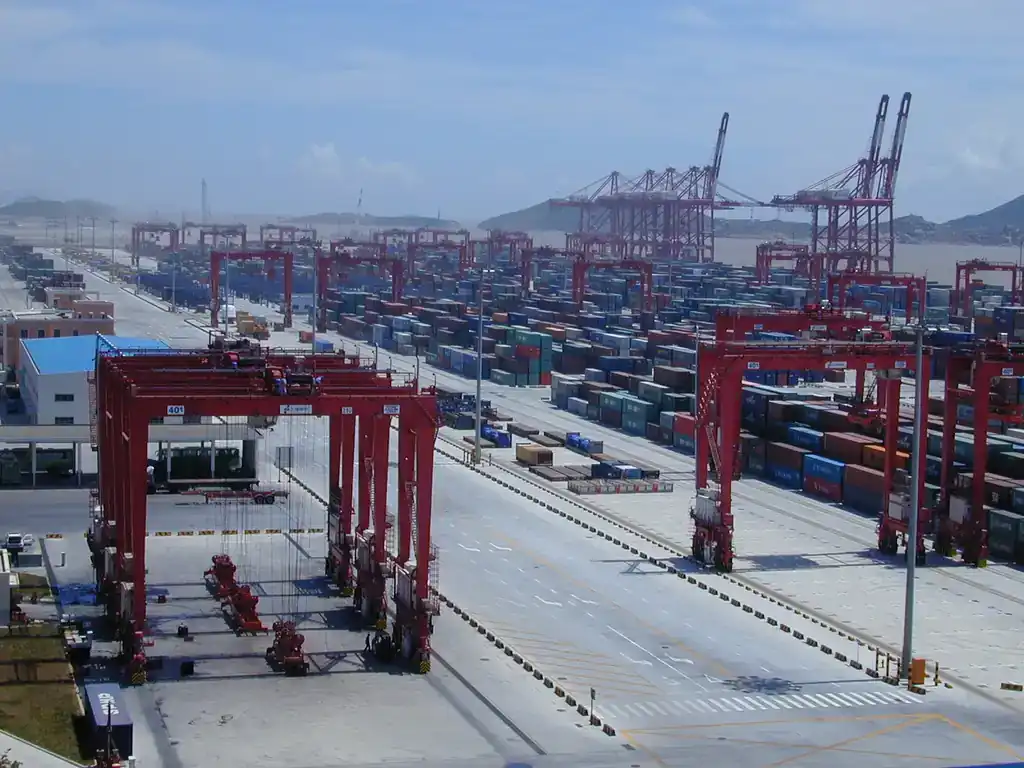
BEIJING, China – China’s goods-trade surplus reached $938.11 billion in the first nine months of 2026 after exports surged 36.3% year on year in September, putting the country on course to exceed its record annual surplus from last year.
Exports rose to approximately $447.18 billion in September, accelerating from 25% growth in August. Imports also strengthened, increasing 31% year on year to about $313.65 billion, according to figures released by China’s customs authorities and reported on October 14.
The monthly surplus widened to $133.53 billion, up from $119.1 billion in August. The figures show that imports grew substantially, but export growth remained faster, widening the gap between the value of goods China sold abroad and the value it purchased.

The export-led growth pattern is increasingly important to China’s economy as domestic consumption and investment remain subdued. It is also intensifying concerns in Washington and Brussels about the effects of Chinese manufacturing strength on competing industries and bilateral trade balances.
Semiconductors and computing equipment lead export growth
High-technology products were among the strongest performers in the first nine months of the year. Reported customs figures show semiconductor exports rose 108.1% year on year in value terms, while exports of automatic data-processing equipment and parts increased 54.6%.
Vehicle exports rose 54.3% over the same period. These increases indicate that China’s export strength extends beyond traditional consumer goods into electronics, computing equipment and automotive manufacturing.
Demand associated with artificial-intelligence infrastructure has supported shipments of chips and computing equipment. Chinese manufacturers also benefit from extensive industrial supply chains and production capacity built up over years of investment.
However, the growth rates do not mean that every sector expanded at the same pace or that rising export values necessarily represent equivalent increases in physical shipments. The semiconductor figure, in particular, measures export value rather than unit volume.

The data also cannot establish how much of the overall increase resulted from stronger overseas demand, changes in product prices, exchange-rate movements or shifts in supply chains. Those factors can affect export values in different ways.
Imports rise, but the surplus continues to widen
September’s 31% import growth was faster than the 28.2% increase recorded in August. The acceleration suggests stronger demand for imported goods and materials, although the aggregate figure does not establish a broad recovery in Chinese household spending.
The distinction matters because a trade surplus is the difference between exports and imports over a specified period. It is not a direct measure of household welfare, manufacturing employment or the overall health of an economy.
For January through September, China’s surplus reached $938.11 billion, close to the $1.189 trillion recorded for the whole of 2025. That previous annual figure remains the relevant comparison, but the 2026 total covers only nine months.
If exports remain strong and continue to grow faster than imports, China could exceed the previous record before the end of the year. That outcome is not guaranteed: trade flows can change as demand shifts, prices move and governments introduce new measures.
Why the trade imbalance is drawing pressure
A large surplus with the world does not mean China has a surplus with every trading partner. Bilateral balances depend on trade with individual economies and can differ substantially from the country’s overall position.
The European Union has pressed Beijing to address its trade deficit with China, arguing that the scale and composition of imports are creating challenges for European producers. The United States has also raised concerns about Chinese industrial capacity, trade practices and the effects of manufacturing competition.
Those concerns overlap, but they are not identical. A trade deficit is an accounting measure; industrial overcapacity concerns whether production capacity exceeds sustainable demand; and allegations of subsidies or dumping require evidence specific to the relevant industries and trade rules.
China’s export performance can reflect several factors, including manufacturing capability, product competitiveness, overseas demand and the structure of domestic spending. The size of the surplus alone does not establish that exports are unfairly priced or that all affected industries receive prohibited subsidies.
EU hybrid-car understanding remains a framework
China and the European Union announced a shared understanding in October intended to moderate Chinese hybrid and plug-in hybrid vehicle exports to the bloc. European Trade Commissioner Maroš Šefčovič described the arrangement as a step toward rebalancing trade relations.
The understanding was reported to involve a reduction of several million vehicle exports over four years. However, the detailed implementation arrangements were not fully specified in the public statements available for this report.
The agreement should therefore not be described as a fully implemented import restriction or as proof that vehicle shipments have already fallen. Its eventual effect will depend on the final terms, product coverage, implementation timetable and responses from manufacturers and buyers.
The two sides also discussed improved access for certain European products in China and the processing of export licences for rare earths and permanent magnets. Those discussions indicate that negotiations cover several areas of market access, rather than vehicle trade alone.
Even if the hybrid-vehicle arrangement reduces shipments, its effect on China’s overall surplus will depend on the scale of the change and whether exporters redirect vehicles to other markets. Importers could also turn to alternative suppliers, while affected producers may adjust prices, investment or production.
US-China trade truce eases immediate pressure
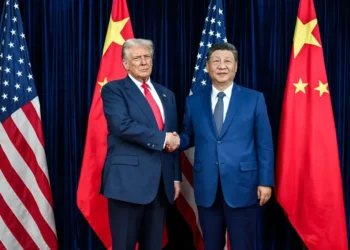
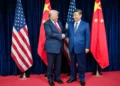
Washington and Beijing have also taken steps to limit immediate trade tensions. In a September 28 statement, China’s Ministry of Commerce said the two sides had agreed to extend the Kuala Lumpur economic and trade arrangement, which suspends certain tariff and non-tariff measures, until January 10, 2027.
The two governments also reached a consensus on a reciprocal tariff-reduction arrangement covering approximately $30 billion worth of products imported from each side. The Chinese ministry said implementation would follow the completion of procedures under each country’s domestic laws, with further details to be announced.
The extension gives businesses more time to plan while negotiations continue. It does not eliminate the wider trade dispute or settle all disagreements over industrial policy and market access.
For China, stable access to major overseas markets remains important because exports are helping sustain growth. For the United States, any assessment of the relationship also involves the composition of imports, the competitiveness of domestic industries and concerns about supply-chain dependence.
The terms of the current arrangement should not be confused with a comprehensive trade settlement. The measures cover specified issues and products, and their effects will depend on implementation and any further negotiations.
Domestic demand remains a key economic question
Strong exports have supported China’s economic activity, but they do not resolve the country’s domestic demand challenges. Weak consumption, subdued investment and the prolonged property-sector downturn continue to weigh on the broader outlook.
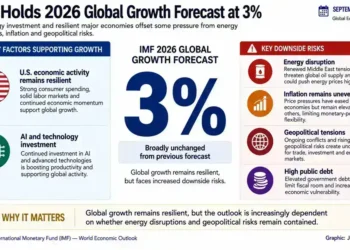
The International Monetary Fund’s October 2026 World Economic Outlook projects China’s economy will grow by 4.5% in 2026. That forecast provides a broader benchmark for assessing export strength, but it does not mean that the trade surplus itself determines the growth rate.
A more durable rebalancing would involve stronger domestic demand alongside sustainable production and trade. Greater household spending could increase demand for imported goods and reduce the economy’s reliance on external buyers, although the size and timing of that effect would depend on how spending and investment change.
Currency movements are another factor. A weaker yuan can make Chinese goods less expensive for foreign buyers, but exchange rates are influenced by multiple forces. Currency weakness alone does not prove deliberate manipulation or explain the entire surplus.
Trade restrictions could reduce imports from China in targeted sectors, but they may also redirect shipments to other markets, raise costs for importers or prompt retaliation. Their wider impact depends on the measures adopted, how businesses adapt and whether alternative suppliers can meet demand.
The next test is whether trade growth can remain sustainable
China’s September figures demonstrate the continuing strength of its export sector, particularly in high-technology products and vehicles. They also show that imports are rising, even as exports continue to outpace them.
The diplomatic response is developing on parallel tracks: negotiations with the European Union over market access and vehicle shipments, and a temporary easing of selected trade measures with the United States. Neither process has yet resolved the broader disagreements over trade imbalances and industrial policy.
The next test will be whether China can maintain export momentum without becoming more exposed to foreign restrictions, while strengthening domestic demand enough to support a more balanced recovery. For its trading partners, the challenge is to respond to genuine concerns about competition and market access without assuming that a large surplus, by itself, proves unfair trade.
Reporting Credit: European Commission; Ministry of Commerce of the People’s Republic of China; International Monetary Fund.