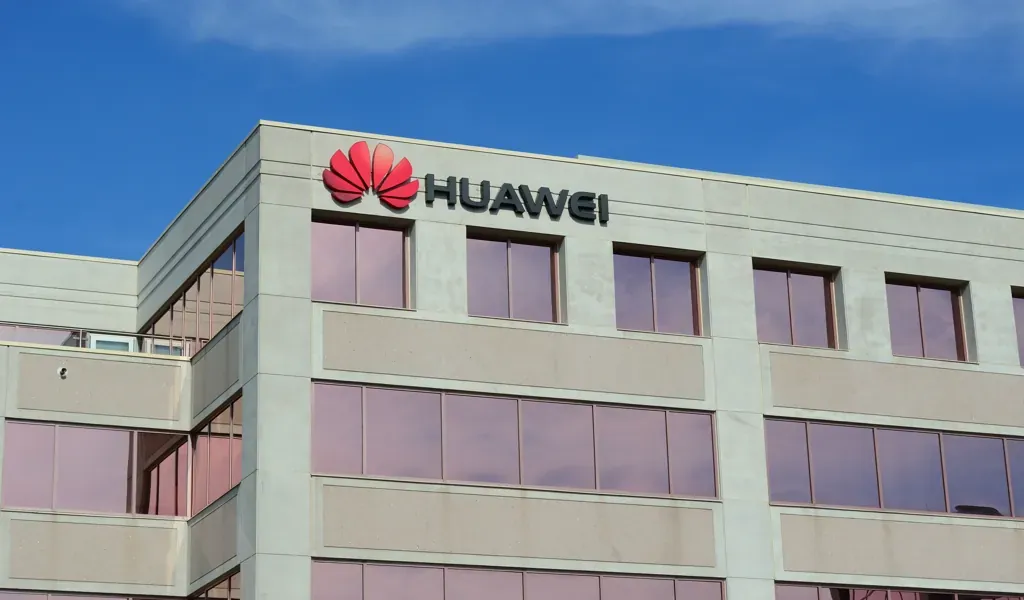
NEW YORK, United States — Huawei Technologies has gone on trial in a Brooklyn federal court in a long-running U.S. criminal case that accuses the Chinese telecommunications giant of operating a racketeering enterprise, stealing American technology and using deceptive practices to circumvent U.S. sanctions.
The trial, which began this week after nearly eight years of legal proceedings, places one of China’s most important technology companies at the center of a major U.S. prosecution with implications for intellectual property, export controls and Washington’s broader technology conflict with Beijing.
U.S. prosecutors told jurors in opening statements that Huawei engaged in a pattern of criminal conduct spanning roughly two decades. They allege the company and related entities sought confidential technology from American competitors and used the resulting information to strengthen Huawei’s global telecommunications business.

The government’s case includes allegations involving Cisco Systems, T-Mobile and other U.S. technology companies. Prosecutors say the allegedly misappropriated material included router source code, cellular technology and robotics-related technology.
Prosecutors portray a long-running corporate strategy
The case is built around a superseding indictment filed in 2020 that charged Huawei and several subsidiaries with racketeering conspiracy and conspiracy to steal trade secrets, alongside fraud, sanctions and obstruction-related offenses.
According to the Justice Department, Huawei allegedly used a range of methods to obtain proprietary technology, including recruiting employees from competitors, violating confidentiality agreements and using intermediaries to obtain information. Prosecutors also alleged that Huawei established incentives for employees who obtained valuable confidential material from competitors.
The government further alleges that Huawei and affiliated entities conducted business connected to countries under U.S. sanctions, including Iran and North Korea, while concealing aspects of those activities from financial institutions and U.S. authorities.
One major component involves Skycom, a company that U.S. prosecutors alleged was controlled by Huawei and used in connection with its Iranian operations. The government has said Huawei misrepresented its relationship with Skycom and the nature of its Iranian business to financial institutions.
■ Related News




The racketeering allegations encompass conduct that prosecutors say generated or supported commercial benefits for Huawei. The indictment alleges that proceeds associated with the alleged activity were reinvested into the company’s wider operations.
Huawei rejects the government’s characterization
Huawei’s defense has presented the case very differently.
Defense lawyers told jurors that the company’s growth resulted from engineering, investment and competition rather than a coordinated criminal enterprise. They argued that prosecutors are presenting isolated actions by individual employees as evidence of a companywide conspiracy.
The defense has also challenged the government’s reliance on incidents involving rival technology companies, arguing that employees responsible for improper conduct were disciplined and that such episodes do not establish a corporate policy to steal technology.
Huawei has previously denied the allegations and maintained that innovation and respect for intellectual property were central to its business. Its lawyers have also challenged the breadth of the U.S. prosecution and sought to exclude evidence gathered during the government’s investigation. A federal judge rejected a Huawei motion to suppress several pieces of evidence in June 2026.
The Iran allegations remain central to the case
The prosecution also reaches beyond intellectual property.
In 2021, Huawei Chief Financial Officer Meng Wanzhou entered a deferred prosecution agreement with U.S. authorities and admitted to making material misrepresentations to a financial institution concerning Huawei’s operations in Iran. The agreement resolved the criminal charges against Meng while allowing the government’s case against Huawei to continue.
The U.S. government alleged that Huawei concealed its relationship with Skycom and that transactions connected to Huawei’s Iranian business passed through the U.S. financial system.
Meng’s admissions are expected to form part of the evidence presented against Huawei, although she is not a defendant at the current trial.
The original case also became a major diplomatic dispute after Meng was arrested in Canada in 2018 on a U.S. extradition request. She returned to China in 2021 after the deferred prosecution agreement, while the United States withdrew its extradition request.
A case with broader technology implications
The Huawei prosecution comes as Washington and Beijing remain locked in a wider contest over advanced technology, trade and national security.
Huawei has been subjected to extensive U.S. export restrictions, limiting its access to American technology and components. Those restrictions have contributed to the company’s shift toward domestic semiconductor development and other technologies, including chips used in artificial intelligence applications.
The trial therefore goes beyond the individual allegations against Huawei. A conviction could reinforce the U.S. government’s broader argument that technology theft, sanctions evasion and the misuse of international financial systems represent interconnected national-security risks.
At the same time, the defense’s success in persuading jurors that the prosecution has assembled unrelated incidents into a single conspiracy could have significant implications for the government’s ability to pursue similarly broad cases against multinational technology companies.
The trial is expected to last about three months. Huawei remains presumed innocent unless prosecutors prove the charges beyond a reasonable doubt.
Reporting Credit: U.S. Department of Justice, Eastern District of New York — criminal charges, superseding indictment and prosecution history; U.S. District Court for the Eastern District of New York – current trial proceedings and courtroom developments.