WASHINGTON, United States – The United States and China have released reciprocal lists of about $30 billion in goods from each country that could receive more favorable tariff treatment, putting specific products behind a broader effort to ease trade tensions between the world’s two largest economies.
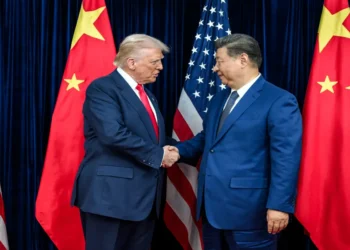
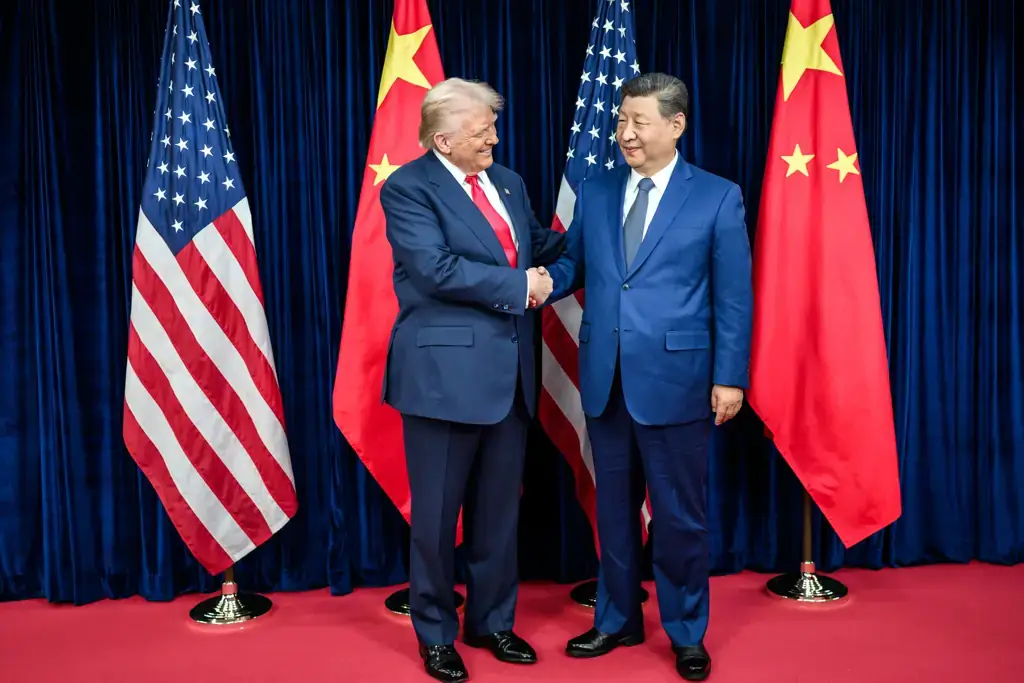
The lists were released after U.S. President Donald Trump and Chinese President Xi Jinping met in Washington last week during Xi’s state visit. The agreement was developed through the newly established U.S.-China Board of Trade, which was created to address trade in nonsensitive products.
The United States Trade Representative said the two sides had reached consensus on recommendations covering $30 billion of trade in each direction. The White House described the products as nonsensitive goods that could receive more favorable treatment.

The arrangement covers a broad range of ordinary commercial products rather than some of the industries at the center of the countries’ strategic competition.
What China will consider for lower tariffs
The U.S. list includes more than 1,600 categories of American goods entering China, according to the published details.
They include agricultural commodities, fish and seafood, logs and wood products, cosmetics and medical devices. Coal is also included among the U.S. goods covered by the arrangement.
Agricultural products form an important part of the list.
China is set to reduce tariffs on a range of American farm products including corn, wheat, sorghum, meat and dairy products. Vegetable oils and meals are also included.
■ Related News



Soybeans, however, were excluded from the tariff-reduction list, despite their importance in U.S.-China agricultural trade.
That exclusion leaves one of the most commercially significant agricultural commodities outside the latest tariff arrangement.
What Washington will cut
The U.S. list covers 77 categories of Chinese products.
Among them are small household appliances, tableware, glass products, wooden Christmas ornaments, toys, sporting goods, holiday decorations and children’s products. Children’s car seats are also included.
The composition of the U.S. list means the immediate effects are concentrated largely in consumer goods rather than the advanced technologies that have become central to the wider U.S.-China economic rivalry.
Semiconductors, electric vehicles and batteries were not included in the arrangement.
That distinction limits the scope of the tariff agreement even as the total value of the affected trade reaches roughly $60 billion.
Most covered goods would move toward normal tariff treatment
China’s Commerce Ministry said tariffs on more than 90% of the products covered by the arrangement would be subject to most-favored-nation tariff rates, meaning the additional country-specific tariffs would effectively be removed for those products.
The U.S. side has described the arrangement as recommendations for more favorable treatment rather than announcing a single tariff rate applying to every product.
U.S. Trade Representative Jamieson Greer said the framework could improve market access for American farmers, manufacturers, businesses and workers while providing U.S. consumers with greater access to Chinese household goods and toys.
The precise effect will therefore vary by product and by the tariff treatment already in place.
The agreement follows a broader trade truce
The product lists are part of a larger effort to prevent the trade relationship from returning to the sharp escalation seen during the previous year.
U.S. tariffs on Chinese imports had at one point reached as high as 145% during the escalation, before the two countries subsequently reduced some of those measures.
Washington and Beijing have now also extended their broader trade truce by two months, giving negotiators additional time to work on unresolved economic issues. The extension runs through Jan. 10, 2027.
The two governments also agreed to establish an agricultural working group under the Board of Trade to address market-access and regulatory issues affecting agricultural commerce.
Strategic industries remain outside the deal
The latest arrangement does not resolve some of the most difficult economic disputes between Washington and Beijing.
Advanced semiconductors and other strategic technologies remain subject to separate U.S. export controls and Chinese industrial policies.
Electric vehicles and batteries were also excluded from the product lists. Rare-earth supply issues likewise remain under discussion rather than being resolved through the tariff package.
That leaves the two countries’ broader industrial and technology competition largely intact.
The agreement instead concentrates on goods where both governments have identified opportunities for increased trade without directly addressing their most sensitive strategic disputes.
Trade flows remain heavily imbalanced
The $30 billion figure has different significance for each side because the two countries trade at very different overall volumes.
U.S. exports to China totaled roughly $68 billion during the first seven months of 2026, while Chinese exports to the United States were around $270 billion during the first eight months, according to data cited in current reporting.
That means the $30 billion framework represents a considerably larger share of U.S. exports to China than of Chinese exports to the United States.
The difference does not by itself determine the eventual economic effect, because the value of goods covered by the lists does not necessarily equal the value of additional trade that will result.
Actual effects will depend on tariff rates, demand, exchange rates, production capacity and whether businesses take advantage of the improved access.
Companies get more predictable conditions, but uncertainty remains
The agreement gives businesses a clearer list of products that may receive more favorable treatment, but it does not end the broader uncertainty surrounding U.S.-China trade.
Both governments have retained significant economic and national-security tools that can affect bilateral commerce.
The U.S. is continuing a Section 301 investigation into Chinese industrial capacity involving China and other trading partners. The investigation could potentially lead to additional trade measures after its conclusion.
At the same time, Washington and Beijing are continuing discussions over artificial intelligence, critical minerals and other areas where economic and national-security concerns overlap.
The tariff lists therefore represent one part of a much larger relationship.
For exporters, however, the immediate significance is more concrete.
U.S. farmers and manufacturers may gain improved access to Chinese buyers for products included on Beijing’s list, while Chinese producers of consumer goods covered by the U.S. list may face lower tariff barriers when selling into the American market.
Whether those changes produce a substantial increase in two-way trade will depend on how the recommendations are implemented and how companies respond.
For now, the lists mark a shift from broad tariff confrontation toward targeted reductions on selected goods.
They do not resolve the deeper economic competition between Washington and Beijing, but they create a defined area in which the two governments are attempting to expand trade while leaving their most sensitive industries outside the agreement.
Reporting Credit: U.S. Trade Representative — U.S.-China Board of Trade recommendations and U.S. product list; The White House — September 25, 2026 U.S.-China trade framework and product categories; China’s Ministry of Commerce — reciprocal tariff-reduction arrangement and Chinese product list; U.S. Census Bureau/Chinese customs authorities — bilateral trade data where applicable.