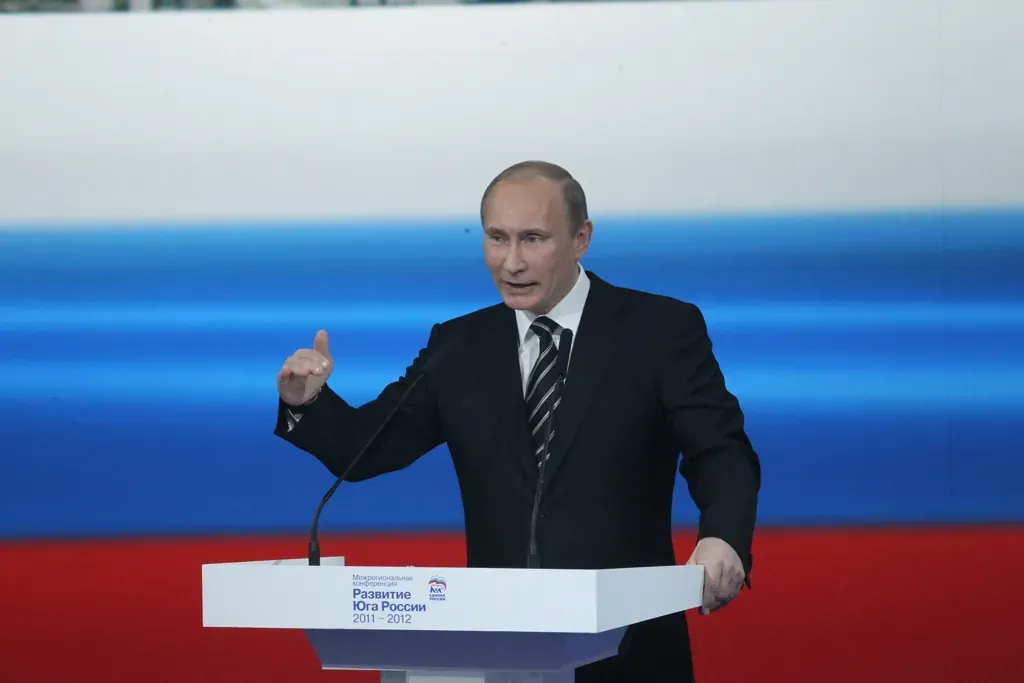
MOSCOW, Russia – President Vladimir Putin’s United Russia party was leading Russia’s parliamentary election as preliminary results emerged Monday, with the Kremlin-backed party ahead in both the federal party-list vote and most single-member districts.
Russia’s Central Election Commission reported United Russia with 57.19% of the party-list vote after 36.87% of precinct tally sheets had been processed. The party was also leading in 161 of the 225 single-member constituencies, according to the commission.
The results remain preliminary. Russia’s State Duma has 450 seats, with half elected through the federal party-list system and the other half through single-member constituencies.

The three-day election, which ended Sunday, was the first parliamentary vote held in Russia since the country launched its full-scale invasion of Ukraine in February 2022.
United Russia holds a wide early lead
United Russia was well ahead of the other parties in the preliminary party-list count.
The Communist Party was second with 13.85%, followed by the Liberal Democratic Party of Russia with 9.16% and New People with 8.01%. A Just Russia had 5.23%, putting five parties above the 5% threshold in the results reported after more than one-third of precincts had been processed.
United Russia had won 324 of the State Duma’s 450 seats in the previous parliamentary election in 2021.
The current vote therefore began with the party seeking to retain its parliamentary dominance while the Kremlin has presented the election as an important test of support for its policies.
■ Related News
Putin himself was not a candidate. United Russia has nevertheless campaigned as the principal parliamentary vehicle supporting the president and his government.
Vote held under wartime conditions
The election took place against the backdrop of the continuing war in Ukraine and intensified attacks inside Russia.
Ukrainian forces launched a large drone attack toward Moscow and other Russian regions as voting entered its final day. Russian officials said the attacks were intended to disrupt the election, while Ukrainian officials did not accept Russia’s characterization of the vote or its claims concerning the purpose of the attacks. At least five people were reported killed across Moscow-region and Russian-controlled areas of Ukraine during the attacks.
Russian authorities also reported cyberattacks against election-related infrastructure during the three-day vote.
The Central Election Commission said turnout reached 56.66% when polls closed Sunday. More than 111 million voters were eligible to participate.
Opposition faced restrictions
The election was held in a political environment in which major anti-war opposition forces had limited access to the ballot.
The Yabloko party, which has opposed the war, was excluded from the federal party-list ballot after a Russian court ruling, although some of its candidates participated in individual constituencies. Other opposition politicians have been imprisoned, barred from political activity or living outside Russia.
The Communist Party and other parties remaining on the ballot criticized aspects of the election, although they continue to operate within Russia’s established parliamentary system.
The restricted political environment has become an important part of how outside observers assess the significance of the preliminary results.
Voting extended into occupied Ukrainian territories
Russia also conducted voting in areas of Ukraine that it controls militarily and claims to have annexed.
Ballots were cast in parts of Donetsk, Luhansk, Zaporizhzhia and Kherson, as well as Crimea, which Russia annexed in 2014.
Ukraine rejects Russia’s sovereignty claims over those territories and has described the voting there as illegal. The European Union has also rejected Russia’s conduct of elections in the occupied Ukrainian territories, describing the action as contrary to international law.
The inclusion of those territories affects both the geographic scope of the election and the political dispute surrounding its legitimacy.
Results remain subject to the full count
The preliminary numbers do not yet establish the final distribution of seats.
The party-list component accounts for only 225 of the 450 State Duma seats. The remaining 225 seats depend on the results in individual constituencies, where United Russia was leading in most districts in the early count.
The early figures nevertheless show United Russia with a substantial lead over the other participating parties.
The final parliamentary balance will depend on the completed count and the allocation of the single-member seats.
For the Kremlin, the election provides an opportunity to demonstrate continued parliamentary support during the fourth year of the full-scale war. For opponents and outside observers, the restricted political environment and the exclusion of significant anti-war forces remain central to assessments of what the vote can demonstrate about public opinion.
The preliminary count will continue as election authorities process the remaining ballots.
Reporting Credit: Russian Central Election Commission — preliminary party-list results, single-member district standings and turnout; Russian State Duma — parliamentary structure and 450-seat electoral system; Russian government/election authorities — official election administration and security statements.