LOME, Togo – Nearly a decade after Ebola exposed some of West Africa’s most serious weaknesses in epidemic preparedness, scientists in the region are warning that the systems built after that crisis cannot be allowed to weaken between emergencies.
The warning, delivered by laboratory scientists gathered in Lomé this week, is not that West Africa is currently facing another Ebola-scale epidemic. It is that the ability to detect the next dangerous pathogen depends on infrastructure, trained personnel and surveillance systems being maintained before an outbreak begins.
That distinction matters.

A health system can have laboratories, emergency operations centers and surveillance plans on paper and still struggle to identify and contain an outbreak when a disease appears in a remote community, crosses a border or produces symptoms that resemble more common illnesses.
Recent research covering all 15 West African countries found evidence of precisely that gap. Researchers comparing formal preparedness assessments with what actually happened during outbreaks found that preparedness scores sometimes overstated operational capacity, particularly in real-time surveillance, risk communication and cross-border coordination.
The question facing the region is therefore less whether it has built capacity since Ebola. It has.
The harder question is whether that capacity will still work quickly enough when the next unfamiliar disease appears.
The warning from Lomé
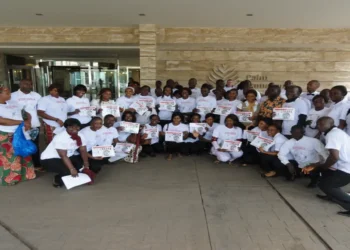
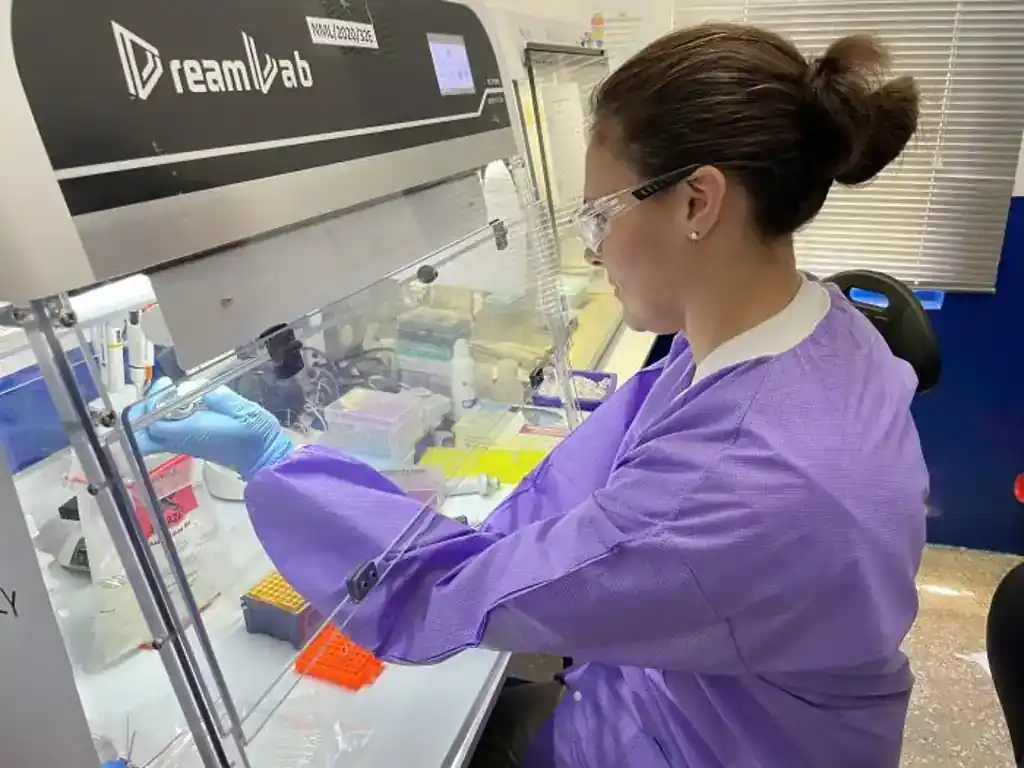
At the regional congress in Togo, laboratory specialists called for stronger disease-detection capacity and greater cooperation among West African governments.


Kossi Kabo, head of the Association of Medical Biologists of Togo and a co-chair of the congress, said countries should anticipate outbreaks rather than wait until an epidemic is already developing.
The scientists pointed to lessons from both the 2014–2016 Ebola epidemic and the COVID-19 pandemic. They argued that governments need to continue investing in diagnostic systems and the people who operate them even when there is no immediate crisis demanding emergency spending.
That concern is supported by evidence from the region.
A 2026 analysis of preparedness assessments and after-action reviews found that 35% of the technical-area comparisons examined showed formal Joint External Evaluation scores overestimating actual preparedness. The biggest discrepancies were in risk communication, real-time surveillance and cross-border coordination.
The findings do not mean that preparedness assessments are useless. Rather, they show why a system’s ability to function during an emergency can differ from its performance on a structured assessment conducted under normal conditions.
Ebola changed the region — but did not solve the problem
The Ebola epidemic that struck Guinea, Liberia and Sierra Leone in 2014 became a defining test of West Africa’s public-health infrastructure.
At least 11,000 people died across the region during the epidemic. The crisis exposed shortages in laboratories, treatment capacity, trained personnel and emergency coordination, while weak surveillance delayed recognition of transmission in some communities.
The response also produced major institutional changes.
Countries established or strengthened Public Health Emergency Operations Centres and national rapid-response structures. Regional organizations expanded surveillance and laboratory networks. Ebola vaccination became an important part of the response toolkit.
A regional review published this year found that West Africa has made meaningful progress since the epidemic, including expanded surveillance and laboratory networks and stronger emergency-response structures.
But the same review identified continuing problems: limited laboratory capacity outside major centers, inadequate treatment facilities, weak cross-border coordination and dependence on external financing.
The legacy of Ebola is therefore mixed.
The region is substantially better equipped than it was in 2014.
It is not uniformly equipped.
The laboratory is where an outbreak becomes visible
Early detection ultimately depends on obtaining reliable information from patients and communities and converting it into a confirmed diagnosis.
That makes laboratories one of the most consequential parts of epidemic preparedness.
Africa CDC says effective public-health laboratory systems are necessary to detect, characterize and trace disease transmission and to provide timely evidence for confirming suspected pathogens.
But laboratories do not all have the same capabilities.
A centralized laboratory may possess sophisticated diagnostic equipment while being hundreds of kilometers from the community where the first suspected cases occur. Transporting samples, maintaining cold chains, processing specimens and returning results can consume valuable time.
Africa CDC’s 2026 guidelines explicitly identify decentralization as a critical preparedness strategy. The agency says overly centralized systems can delay confirmation and intervention, particularly in rural and hard-to-reach areas.
That is an important shift in how preparedness is understood.
The issue is not simply whether a country has a laboratory capable of identifying a pathogen.
It is whether the diagnostic system can identify it quickly, close enough to the outbreak and reliably enough for health authorities to act.
Surveillance must connect the pieces
Laboratory testing is only one part of early warning.
Health authorities also need systems that notice unusual clusters of illness, collect information from clinics and communities, identify signals in animal populations and move information rapidly between local and national authorities.
This is where the region’s preparedness becomes more complicated.
A 2026 review of surveillance in West Africa found that health information systems can remain divided into separate sectors and institutions. Researchers examining avian-influenza preparedness warned that surveillance silos can delay recognition of threats that cross between animals and humans. They identified interoperable information systems, shared governance, sustainable financing and cross-border cooperation as key requirements for effective early warning.
The principle is commonly described as One Health.
Human health authorities cannot always identify the first warning of an emerging disease by watching hospitals alone. A pathogen may circulate in animals before humans become sick. Environmental changes may alter exposure patterns. Agricultural and wildlife surveillance may therefore provide information that clinical systems miss.
For West Africa, where infectious diseases can move across porous borders and between densely connected communities, connecting those sources of information can be as important as increasing the number of laboratory machines.
A regional network already exists
West Africa is not starting from scratch.
Africa CDC’s Regional Integrated Surveillance and Laboratory Network, or RISLNET, was established to connect public-health laboratories, surveillance systems, emergency-response assets, national public-health institutes, universities and other partners.
The network includes a Western Africa component and is designed to support prevention, rapid detection and response to emerging public-health threats.
Africa CDC describes the laboratory component as a mechanism for sharing expertise and developing a regional approach to preparedness and response.
In principle, that architecture addresses one of the central weaknesses revealed by previous outbreaks: no country can reliably manage a cross-border epidemic using isolated national systems.
But a regional network is only as effective as the national systems feeding information into it.
If a rural clinic cannot recognize a suspicious case, if a sample cannot reach a laboratory quickly, if a result cannot be communicated to the responsible health authority, or if neighboring countries do not share information promptly, regional coordination begins too late.
The cross-border problem is harder than the laboratory problem
Viruses do not require passports.
People, livestock, food products and goods move between West African countries every day. That makes border surveillance and information-sharing important components of epidemic response.
The 2026 analysis of West African preparedness found recurring operational problems in cross-border coordination despite countries having established preparedness structures. After-action reviews identified weak information-sharing and coordination as recurring challenges.
The practical difficulty is straightforward.
An outbreak detected in one country can become another country’s problem before authorities have agreed on how to share information, conduct a joint investigation or coordinate restrictions.
The solution is not necessarily more border controls.
It is faster communication between the health authorities on both sides of a border, shared definitions of suspected cases, compatible reporting systems and the ability to deploy personnel and diagnostic resources across jurisdictions when necessary.
That requires political cooperation as much as medical expertise.
The workforce may be as important as the equipment
Laboratory infrastructure attracts attention because it is visible: buildings, machines, testing platforms and specialized facilities.
But the scientists meeting in Lomé emphasized another constraint — people.
Arthur Bodurie Calvin Garber, president of the Sierra Leone Association of Medical Laboratory Scientists, said governments need to invest in health workers as well as physical infrastructure.
That concern is reflected in the wider evidence.
The West African preparedness study identified workforce shortages alongside inadequate laboratory capacity, poor risk communication and delays in emergency response as recurring challenges documented in after-action reviews.
A laboratory cannot operate at full capacity simply because a diagnostic machine is installed.
Personnel must be trained to collect specimens, conduct testing, interpret results, maintain equipment, follow biosafety procedures and communicate findings. Those skills also have to be retained when the emergency ends.
This creates a familiar problem in public health: capacity can disappear quietly.
A laboratory may remain physically intact while experienced staff leave, maintenance budgets shrink, supplies expire or testing volumes fall enough that technical expertise becomes difficult to maintain.
The danger of building only for the last outbreak
One of the most important lessons from recent African outbreaks is that preparedness cannot be designed around a single pathogen.
Ebola, mpox, cholera, Marburg, meningitis and other diseases require different combinations of surveillance, diagnostics, clinical care and community response.
A 2026 review of African outbreaks between 2022 and 2025 concluded that effective responses depended heavily on routine investments maintained between outbreaks. The review highlighted decentralized laboratories, digital surveillance, community structures and clinical-trial readiness among the capabilities that need to be institutionalized rather than assembled only during emergencies.
That matters because the next epidemic may not resemble Ebola.
It may initially appear as an unexplained cluster of respiratory illness. It may involve animals. It may be transmitted by mosquitoes. It may produce neurological symptoms. Or it may be caused by a pathogen that current diagnostic systems are not designed to recognize.
Preparedness therefore has to be flexible enough to detect something that authorities did not specifically expect.
Africa is also confronting outbreaks now
The warning from West Africa is arriving while another major Ebola-related emergency is unfolding elsewhere on the continent.
Africa CDC and the World Health Organization launched a joint six-month continental preparedness and response plan in June 2026 for the ongoing Bundibugyo virus outbreak in the Democratic Republic of Congo. The plan calls for $518 million to support surveillance, laboratory testing, infection prevention, clinical care, logistics and other response measures through November.
The Congo outbreak is not a West African outbreak, and it should not be used as evidence that West Africa is currently experiencing a comparable emergency.
It does, however, demonstrate why regional preparedness remains an active continental concern.
The AP reported this week that Africa CDC believes official case and death figures in the Congo outbreak may substantially underestimate the true toll and that the virus circulated without detection for weeks.
That is precisely the type of delay that preparedness systems are designed to prevent.
Can West Africa detect the next epidemic in time?
There is no single regional answer.
Preparedness varies among countries, and the evidence does not support describing West Africa’s health systems as uniformly weak.
The region has gained important capabilities since the Ebola crisis: emergency operations centers, laboratory networks, national public-health institutions, regional coordination mechanisms, improved surveillance and experience deploying vaccines and other countermeasures.
The problem is that those gains coexist with operational weaknesses.
Formal preparedness assessments can overstate how systems perform during real emergencies. Rural diagnostic capacity remains uneven. Workforce shortages persist. Cross-border coordination can fail under pressure. Supply chains can become bottlenecks. Risk communication can break down.
Those weaknesses do not mean the next epidemic will inevitably become a catastrophe.
They mean that the margin for delay may remain narrower than preparedness plans suggest.
The measure that matters is time
The most useful test of epidemic preparedness is ultimately not how many laboratories a country has or how highly it scores on a preparedness assessment.
It is how quickly the system can move from the first unusual signal to a verified diagnosis and an effective response.
That chain contains many links:
A clinician must recognize that an illness is unusual.
A surveillance system must register the signal.
A specimen must be collected safely.
The specimen must reach an appropriate laboratory.
The laboratory must identify or characterize the pathogen.
The result must reach decision-makers.
Authorities must investigate contacts and possible sources.
Communities must receive credible information.
Neighboring countries may need to be alerted.
Medical supplies and trained personnel must be deployed.
Any failure can add time.
And in an infectious-disease outbreak, time can determine how many opportunities a pathogen has to spread before authorities understand what they are facing.
The post-Ebola test is whether preparedness survives the quiet years
The scientists meeting in Lomé are effectively raising a maintenance question.
West Africa learned during Ebola that emergency capacity cannot be created quickly enough once widespread transmission is already underway.
The region responded by building institutions and networks intended to prevent a repeat.
The evidence now suggests that those investments have produced real gains, but also that some of the systems remain vulnerable when measured under the pressure of an actual outbreak.
The challenge is therefore not simply to build more.
It is to sustain what has been built, extend it beyond capital cities, retain the workforce, connect human and animal surveillance, make information-sharing routine and ensure that neighboring countries can respond together.
That is a less visible task than declaring an emergency or opening a new laboratory.
It is also the part of preparedness that has to work before the emergency begins.
West Africa cannot know what the next epidemic will look like.
Its best defense is a system capable of recognizing that something is wrong before the pathogen has had time to show exactly what it can do.
Reporting Credit: Africa Centres for Disease Control and Prevention — regional surveillance and laboratory networks, laboratory decentralization guidance and continental outbreak-response planning; West African Health Organization — regional preparedness and lessons from the Ebola response; Association of Medical Biologists of Togo — September 2026 laboratory-scientists’ congress and preparedness warning; Sierra Leone Association of Medical Laboratory Scientists — workforce and laboratory-capacity concerns; World Health Organization — continental Ebola preparedness and response planning; peer-reviewed research published in Dialogue for Health and The Lancet Global Health — analysis of West African preparedness assessments, outbreak after-action reviews and lessons from African outbreaks.