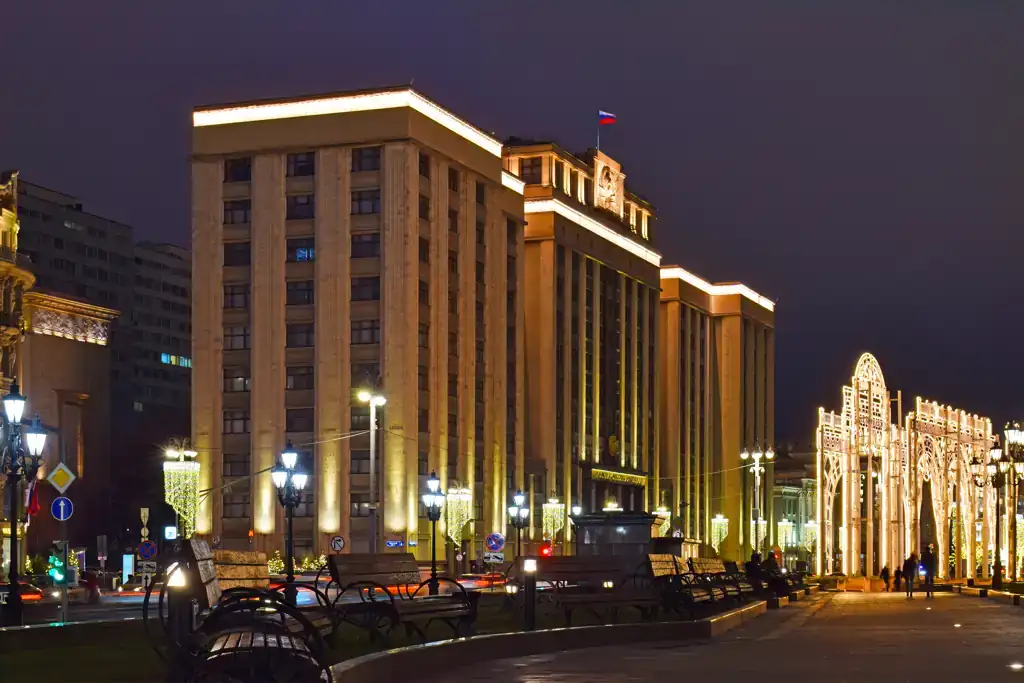
MOSCOW, Russia – Russia is holding parliamentary elections in Russian-controlled parts of four Ukrainian regions for the first time since its full-scale invasion of Ukraine, incorporating the territories into the Sept. 18–20 vote for the State Duma.
Voting is taking place in Russian-controlled areas of Donetsk, Luhansk, Zaporizhzhia and Kherson, regions that Moscow declared annexed in September 2022 but does not fully control. The international community does not recognize the annexations, and Ukraine regards the territories as sovereign Ukrainian land under Russian occupation.
The election also includes Crimea, which Russia annexed in 2014 and incorporated into its electoral system earlier.

Russia extends its federal election into occupied territory
The 2026 election is the first Russian parliamentary vote since the full-scale invasion began in February 2022.
All 450 seats in the State Duma, the lower house of Russia’s parliament, are being contested. Voting is taking place nationwide over three days, with electronic and early voting arrangements used in areas where authorities cite security concerns.
In the four Ukrainian regions claimed by Moscow in 2022, voting began before the nationwide election period. Russian authorities said the extended voting arrangements were necessary because of security conditions.
Portable ballot boxes have also been used in some areas, with election officials accompanied by armed Russian personnel, according to reporting from occupied territory.
Russian officials describe the territories as part of the Russian Federation and refer to residents there as Russian voters.
■ Related News

Kyiv rejects that status.
Ukraine rejects the vote as illegal
Ukrainian authorities have called on residents of the occupied territories not to participate and have said the organization of Russian elections there violates Ukrainian law.
Ukraine’s Security Service said the Kremlin was attempting to use the elections to reinforce its claims over the occupied territories and warned that organizing or publicly promoting the vote could carry criminal penalties under Ukrainian law.
Ukraine’s position is that Russia cannot lawfully conduct elections on Ukrainian territory without Kyiv’s consent.
The European Union has likewise rejected the Russian vote in the occupied regions. European Commission spokesperson Christian Wigand said the bloc would not recognize the elections or their results in those territories.
The International Foundation for Electoral Systems said the vote in occupied Ukrainian territory has no legal force under international law and urged governments not to recognize it.
Russia says residents are voting as Russian citizens
Russian President Vladimir Putin has publicly emphasized participation in the territories Moscow claims to have incorporated.
In remarks before the election, Putin said residents of the regions would be voting for the State Duma for the first time since what Moscow describes as their “reunification” with Russia. Russian authorities also say more than 3.5 million voters are registered across the four regions.
Those figures and Russia’s legal characterization of the territories are not accepted by Ukraine or most of the international community.
The competing positions reflect the central issue surrounding the vote: Russia is administering the territories as part of its electoral system, while Ukraine and the international community continue to regard them as Ukrainian territory under occupation.
Reports raise questions about voter pressure
The conditions under which voting is taking place have also prompted allegations of coercion.
Human-rights activists working with residents of occupied Ukrainian territory have reported cases in which Russian election officials and security personnel visited homes with portable ballot boxes.
Violeta Artemchuk of the Donbas SOS human-rights group told The Associated Press that some residents faced pressure connected to employment, pensions or social assistance if they did not participate. Those allegations could not be independently verified in every reported case.
Russian authorities have not accepted the characterization of the election as coercive and maintain that the voting process is being conducted under Russian law.
The use of armed personnel around some voting operations has nevertheless made the security environment visibly different from ordinary peacetime elections.
The election takes place under tight political controls
The vote is also taking place in Russia itself under a highly restricted political environment.
The election is the first parliamentary contest since the invasion, and major opposition figures and anti-war candidates have been excluded, imprisoned, exiled or otherwise prevented from competing. The liberal Yabloko party, which has criticized the war, was barred from the nationwide party-list ballot.
Russia’s Central Election Commission and government have rejected criticism of the electoral system, saying the election is being conducted according to Russian law.
International election observers from the Organization for Security and Co-operation in Europe are not monitoring the vote. The OSCE has previously criticized restrictions placed on its election-observation activities in Russia.
The absence of internationally recognized monitoring is another source of dispute over the credibility of the process.
Moscow is using the election to integrate claimed territories
The inclusion of the four Ukrainian regions has a significance beyond the selection of lawmakers.
By placing residents of Russian-controlled Ukrainian territory inside the same federal electoral process as voters in Russia, Moscow is further integrating those areas into its political and administrative system.
The process follows earlier Russian-organized elections in the occupied territories, including regional and local elections held in 2023. Ukraine has rejected those votes as unlawful.
The parliamentary election extends that integration to Russia’s national legislature.
Moscow has also issued Russian passports and established Russian administrative institutions in occupied areas, while Ukraine and its international partners continue to reject the underlying annexation claims.
The vote does not settle the sovereignty dispute
Holding a Russian election in the territories does not change their status under international law.
Russia claims sovereignty over the four regions based on its 2022 annexation declarations. Ukraine maintains sovereignty over all four, and the United Nations and most governments do not recognize Russia’s territorial claims.
The discrepancy means that any State Duma representation produced by the election for residents of those areas will be recognized by Moscow but rejected by Kyiv and countries that do not recognize the annexations.
The election therefore creates a parallel set of political claims rather than resolving the territorial dispute.
A wartime election with broader implications
Russia’s parliamentary election is taking place while the war with Ukraine continues and while Moscow maintains control over only portions of the four regions it claims to have annexed.
The inclusion of those territories demonstrates the extent to which Russia has incorporated its territorial claims into its domestic political system.
For Ukraine, the vote is another attempt by Moscow to normalize its presence in territory Kyiv considers occupied.
For Russia, it is presented as an exercise of federal political rights by residents whom Moscow now considers Russian citizens.
The competing interpretations are unlikely to be reconciled by the election itself. The territorial status of Donetsk, Luhansk, Zaporizhzhia and Kherson remains a matter of international dispute, while the results of voting there are not expected to receive recognition from Ukraine or governments that reject Russia’s annexation claims.
Reporting Credit: Russian Central Election Commission — election arrangements and voting in Russian-controlled territories; Government of Ukraine / Security Service of Ukraine — Ukrainian position on the legality of Russian elections in occupied territory; European Union — position on recognition of the vote and its results; OSCE — election-observation and electoral-process context.