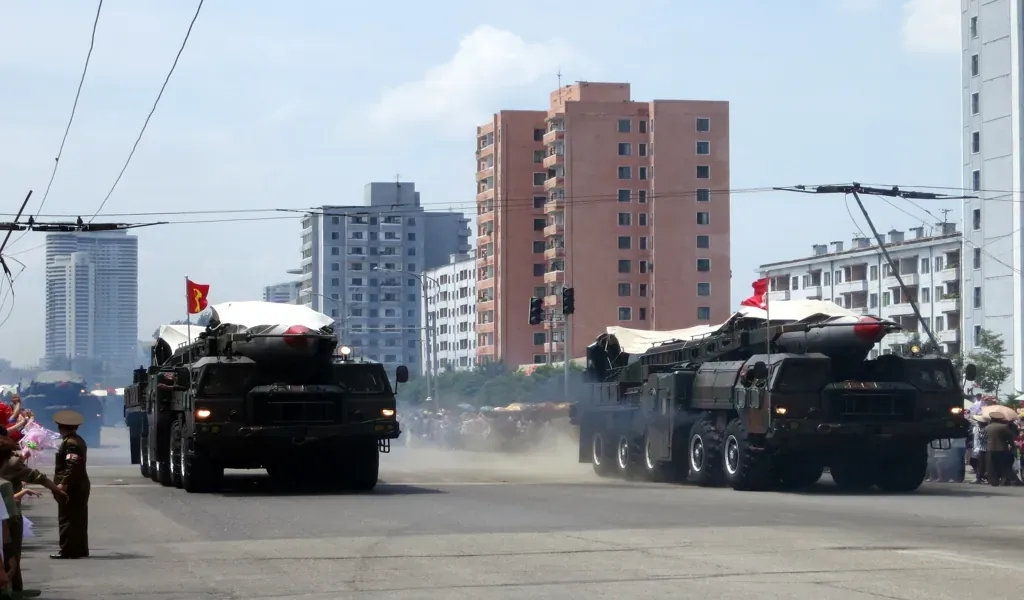
SEOUL, South Korea – North Korea has conducted a joint live-fire exercise combining missiles, artillery and attack drones, showcasing a range of weapons in what state media described as a concentrated firepower attack.
The drill was held Saturday and involved five army units, according to North Korea’s state-run Korean Central News Agency. The exercise included attack drones, tactical cruise missiles, tactical ballistic missiles and large-caliber multiple rocket launchers.
North Korean authorities said the exercise was designed to improve the operation of an integrated firepower-control system and demonstrated what they described as the weapons’ “huge destructive power.”

The drill came the same day South Korea’s military detected multiple short-range ballistic missiles launched from the North Korean coastal area of Wonsan toward the East Sea.
Multiple strike systems used together
The exercise brought together weapons designed for different battlefield roles.
North Korean state media reported the use of various attack drones alongside tactical cruise and ballistic missiles and large-caliber multiple rocket launchers. The combination allowed Pyongyang to demonstrate a coordinated strike rather than a test involving a single weapons system.
North Korea’s military leadership presented the exercise as a test of its ability to coordinate firepower across units.
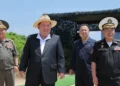
State media quoted Marshal Pak Jong Chon as saying the drill demonstrated the ability to inflict substantial damage on opposing forces. North Korean claims about the effectiveness of the weapons were not independently verified.
■ Related News

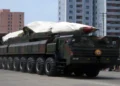
The exercise also highlights Pyongyang’s growing emphasis on unmanned systems alongside its established missile and artillery forces.
Missile launches followed regional military exercise
South Korea’s Joint Chiefs of Staff said it detected several short-range ballistic missiles launched from the Wonsan area at about 5:20 a.m. Saturday.
The missiles flew roughly 250 kilometers before falling into the sea, according to the South Korean military. South Korean and U.S. intelligence authorities were analyzing the launches and sharing information with Japan.
The launches came one day after South Korea, the United States and Japan completed their five-day Freedom Edge military exercise.
North Korea has repeatedly criticized joint military exercises involving the three countries, describing them as preparations for confrontation. The United States, South Korea and Japan have said their exercises are intended to strengthen regional security and their ability to respond to threats.
The timing of the missile launches therefore added another layer to an already tense security environment.
Pyongyang emphasizes integrated firepower
The latest drill differs from a conventional missile test because of the number of systems used together.
North Korea has invested heavily in expanding its missile capabilities while also developing drones and increasingly sophisticated command-and-control systems. South Korea has separately been developing unmanned and artificial-intelligence-based capabilities as part of efforts to respond to North Korea’s missile and nuclear programs.
The exercise nevertheless provides only limited independent information about how effectively North Korea could employ the systems together under actual combat conditions. Much of the available information comes from North Korean state media, while outside assessments are based on launch detections, imagery and intelligence.
South Korea’s military has not publicly confirmed every weapons system claimed by Pyongyang to have participated in the exercise.
For now, the drill demonstrates that North Korea is continuing to combine missile, artillery and unmanned capabilities while maintaining pressure on the United States and its regional allies.
The immediate concern for Seoul and Washington will be whether the latest launches and exercises are followed by additional weapons tests or other military activity.
Reporting Credit: Korean Central News Agency — North Korean account of the joint firepower attack drill; Republic of Korea Joint Chiefs of Staff — detection and assessment of North Korean ballistic-missile launches; Republic of Korea Ministry of National Defense — regional security and North Korean weapons assessments.