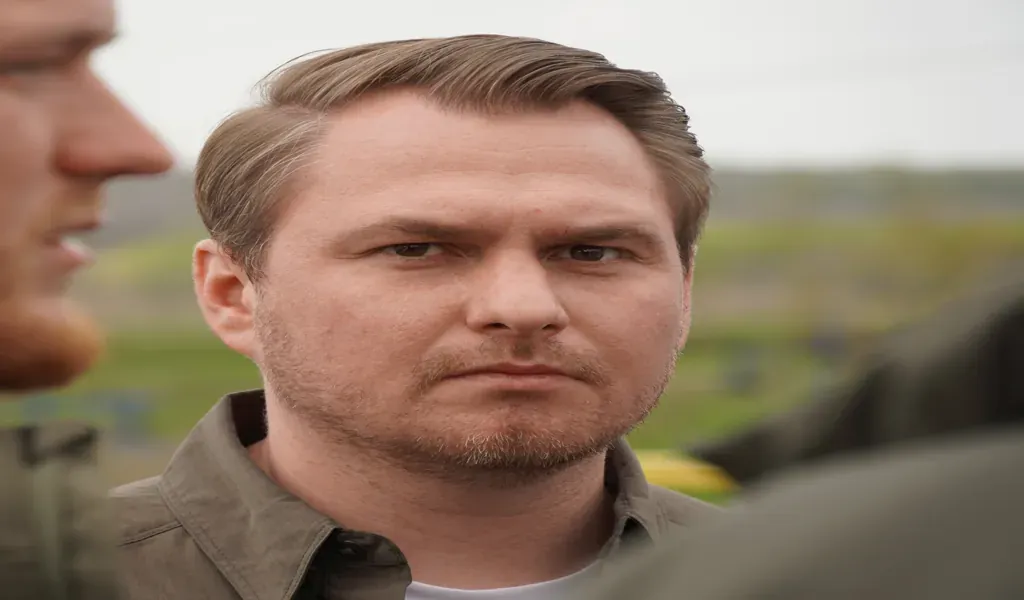
KYIV, Ukraine – Ukraine’s Prosecutor General Ruslan Kravchenko has submitted his resignation, saying he does not want the country’s top prosecutorial office to become an instrument in a political confrontation as anti-corruption authorities investigate an alleged criminal organization involving an employee of his office.
Kravchenko announced his decision late on September 7, thanking President Volodymyr Zelenskyy and the Verkhovna Rada and asking them to accept his resignation. He said his position regarding allegations connected to the anti-corruption investigation remained unchanged.
The resignation came only days after the National Anti-Corruption Bureau of Ukraine (NABU) and the Specialized Anti-Corruption Prosecutor’s Office (SAPO) announced an operation targeting an alleged criminal organization involving an official within the Prosecutor General’s Office.

The development places renewed attention on the relationship between Ukraine’s political leadership, its conventional prosecution service and institutions responsible for investigating and prosecuting high-level corruption.
Kravchenko Describes Decision as Political
Kravchenko characterized his resignation as a conscious political decision but did not publicly identify a specific political dispute behind it.
In his statement, he said he did not want the position of prosecutor general to be used as a tool in political confrontation. He also thanked prosecutors and other employees involved in criminal cases, court proceedings, assistance to victims and the documentation of alleged Russian war crimes.
The decision came only hours after Kravchenko had indicated that he did not intend to voluntarily resign, according to the supplied Ukrainian reporting on his earlier September 7 statements.
The rapid shift added to the political significance surrounding the leadership of the Prosecutor General’s Office.




Anti-Corruption Investigation Raises Institutional Questions
NABU and SAPO announced an investigation into an alleged criminal organization involved in fraudulent call-center activity. The agencies said the organization was allegedly connected to an official within the Prosecutor General’s Office.
Kravchenko has denied involvement in the alleged scheme and said his position concerning the accusations had not changed.
The investigation does not establish criminal wrongdoing by Kravchenko himself. The supplied material identifies an employee of the Prosecutor General’s Office as being connected to the allegations, while Kravchenko has rejected any involvement.
That distinction is significant as the investigation continues. A probe involving an official within an institution is separate from establishing criminal liability for the institution’s head.
Resignation Still Requires Formal Acceptance
Kravchenko’s announcement represents a submission of resignation, rather than confirmation that he has formally left office.
The prosecutor general is appointed and dismissed through a process involving the president and the Verkhovna Rada. Kravchenko was approved by parliament in June 2025 and appointed by President Zelenskyy shortly afterward.
By asking both the president and parliament to accept his resignation, Kravchenko indicated that the formal institutional process remained to be completed.
The next decision therefore rests with Ukraine’s political leadership, which must determine whether to accept the resignation and, if so, manage the transition at the Prosecutor General’s Office.
Wartime Justice Adds to the Significance
The leadership change comes as Ukraine’s law-enforcement institutions continue operating under wartime conditions.
The Prosecutor General’s Office is responsible for prosecutorial functions that include criminal proceedings and the representation of the state in court. Kravchenko also highlighted prosecutors’ work documenting alleged Russian war crimes in his resignation statement.
The controversy consequently extends beyond the position of one senior official. It touches on the functioning and institutional relationships of Ukraine’s broader law-enforcement system at a time when the country is simultaneously pursuing corruption cases and supporting investigations into alleged Russian crimes.
NABU and SAPO Play Separate Anti-Corruption Roles
Ukraine’s anti-corruption system includes institutions established to investigate and prosecute high-level corruption independently of the ordinary prosecutorial hierarchy.
NABU investigates major corruption cases, while SAPO provides prosecutorial oversight for those cases. The latest investigation involving an employee of the Prosecutor General’s Office therefore brings two parts of Ukraine’s law-enforcement structure into a particularly sensitive institutional relationship.
The case has political significance because it involves scrutiny by anti-corruption bodies of alleged conduct connected to the country’s principal prosecution institution.
Kravchenko’s resignation does not determine the outcome of that investigation, and the supplied material does not establish that he personally committed wrongdoing.
Political Leadership Faces a Transition Decision
The resignation now creates a formal decision for President Zelenskyy and the Verkhovna Rada.
If they accept it, the authorities will have to address the transition at the Prosecutor General’s Office while anti-corruption investigations involving an employee of the institution remain underway.
The episode also adds to the political debate over corruption enforcement and the role of Ukraine’s anti-corruption institutions. The country’s prosecution system remains central to both domestic law enforcement and wartime justice, including efforts to document alleged Russian war crimes.
For now, the immediate development is Kravchenko’s resignation submission and his request that the president and parliament accept it. The formal decision on his departure remains pending.
Reporting Credit: Office of the Prosecutor General of Ukraine / Ruslan Kravchenko — official resignation statement and Kravchenko’s explanation that he considered the decision political, his position on the allegations and his request that the president and Verkhovna Rada accept his resignation; National Anti-Corruption Bureau of Ukraine (NABU) — official information concerning its investigation into an alleged criminal organization and fraudulent call-center activity involving an employee of the Prosecutor General’s Office; Specialized Anti-Corruption Prosecutor’s Office (SAPO) — official prosecutorial information concerning the anti-corruption investigation and related proceedings; Verkhovna Rada of Ukraine — parliamentary authority and formal process for considering the prosecutor general’s resignation; President of Ukraine — presidential authority concerning the appointment and dismissal of the Prosecutor General and any subsequent decision on Kravchenko’s resignation.