OTTAWA, Canada – Canada has brought a new round of counter-tariffs on specified U.S. goods into force, escalating a trade dispute with Washington while the two countries continue negotiations over their deeply integrated economic relationship.
The Canadian government said the measures took effect September 8 and impose duties of 15%, 25% or 50%, depending on the product. The tariffs target U.S.-origin goods affected by recent American trade measures and are intended as a response to restrictions imposed by Washington on Canadian products.
The move shifts Canada’s response from announced retaliation to tariffs being applied at the border.

New Tariffs Apply to Specified U.S. Goods
The Department of Finance Canada published the product list covering goods subject to the new counter-tariffs.
The measures include products affected by U.S. tariff actions under Section 338 of U.S. trade law, along with other targeted American measures. The Canadian duties vary according to the products covered.
Ottawa has characterized the measures as targeted countermeasures rather than a blanket tariff on U.S. imports.
That approach reflects the close integration of the Canadian and U.S. economies, where cross-border trade supports manufacturing, agriculture, energy and consumer-goods supply chains.
Ottawa Responds to U.S. Tariffs
The new Canadian duties follow additional U.S. tariffs on Canadian goods.
■ Related News


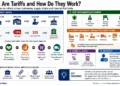

According to Canada’s Department of Finance, Washington imposed a 50% tariff on $27.6 billion of Canadian goods, prompting Ottawa to establish countermeasures alongside programs designed to support affected businesses and workers.
Canada’s response therefore combines tariff retaliation with domestic assistance intended to help companies and workers manage the disruption caused by the trade measures.
Businesses Face Higher Import Costs
The Canadian counter-tariffs will raise the cost of affected U.S. products entering Canada.
Companies importing those goods may absorb the additional expense, pass some or all of it to Canadian businesses and consumers, or seek alternative suppliers. The eventual effects will vary according to individual products, the availability of substitutes and how companies adjust their supply chains.
The Canadian government has also established support programs for businesses affected by continuing tariff disruptions.
Cross-Border Trade Faces Additional Pressure
The latest measures add strain to an economic relationship that remains highly interconnected.
Canada identifies the United States as its largest trading partner and the largest foreign supplier of energy to the United States. Manufacturing, energy, agriculture and other sectors maintain extensive cross-border commercial links.
As a result, the consequences of the tariffs could extend beyond the direct cost of individual products. Companies operating across both markets may have to reassess sourcing, production and inventory decisions if the dispute continues.
Negotiations Continue Alongside Retaliation
Ottawa is maintaining negotiations with Washington while implementing the new tariffs.
Global Affairs Canada says Canada’s response to U.S. tariffs includes countermeasures, support for affected industries and continued trade negotiations. The two governments are also engaged in work connected to the scheduled review of the Canada-United States-Mexico Agreement (CUSMA).
The parallel approach leaves Canada pursuing diplomatic and trade engagement while using tariffs to increase pressure on the United States.
For companies dependent on predictable cross-border commerce, the uncertainty creates additional challenges in planning procurement, production and distribution.
Companies May Diversify Supply Chains
A prolonged tariff dispute could increase incentives for affected companies to find alternative sources of goods.
Businesses facing Canadian duties on U.S. imports may consider domestic suppliers or other international markets. Canadian exporters affected by U.S. tariffs may similarly seek alternative destinations for their products.
The Canadian government has linked its business-support measures to efforts to diversify markets, strengthen supply chains and help companies adjust to continuing trade disruptions.
Trade Dispute Enters a New Phase
The September 8 measures mark another stage in the Canada-U.S. trade confrontation.
Canada is now applying counter-tariffs of 15%, 25% and 50% to specified U.S. products while maintaining negotiations with Washington and continuing engagement surrounding CUSMA.
The trajectory of the dispute will depend on subsequent decisions by both governments, including whether additional tariff measures are introduced or negotiations produce an agreement.
For businesses on both sides of the border, the immediate challenge is managing higher trade costs and supply-chain uncertainty while the two governments continue discussions.
Reporting Credit: Department of Finance Canada — official August 25, 2026 announcement establishing the new countermeasures, tariff rates, affected trade and effective date; Government of Canada, Department of Finance — official product list identifying U.S.-origin goods subject to the 15%, 25% and 50% counter-tariffs effective September 8; Global Affairs Canada — official Canada-U.S. engagement and trade-relations information, including Canada’s broader response to U.S. tariffs, countermeasures and ongoing CUSMA engagement; Atlantic Canada Opportunities Agency — official Regional Tariff Response Initiative information documenting federal support for Canadian businesses affected by U.S. tariffs and Canadian counter-tariffs.