Japan’s exports and imports both accelerated in April, underscoring the resilience of the country’s trade sector even as energy supply concerns linked to the Middle East conflict continued to pressure import costs and industrial supply chains.
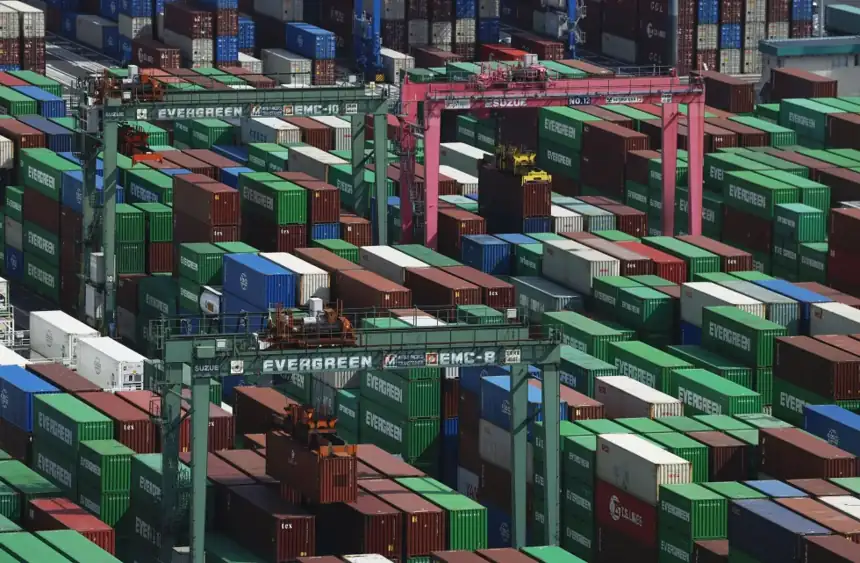
Exports rose 14.8% year-over-year in April, marking the eighth consecutive month of growth and significantly exceeding market expectations, according to Finance Ministry data released Thursday. Imports increased 9.7% from a year earlier, while the country recorded a trade surplus of 301.9 billion yen ($1.9 billion), reversing a deficit posted during the same month in 2025.
The dominant driver behind the export growth was surging global demand for semiconductors and artificial intelligence infrastructure. Shipments of semiconductors climbed nearly 42% by value compared with a year earlier, reflecting continued strength in global technology investment cycles.

Semiconductor Demand Strengthens Export Momentum
Japan’s export performance highlighted the country’s growing role in the global semiconductor supply chain as demand for AI-related hardware continued to accelerate across major markets.
Exports to China increased 15.5% in April, while shipments to the United States rose 9.5%, supported by stronger overseas demand for electrical machinery, medical products, and industrial components. Imports from China rose 15%, while imports from the U.S. jumped 23%, according to government trade figures.
Analysts said the weak yen also supported export competitiveness by making Japanese products more attractive abroad. The Japanese currency has remained under pressure amid diverging monetary policy expectations between the Bank of Japan and the U.S. Federal Reserve.
Oil Supply Disruptions Continue to Pressure Imports
Despite the stronger trade performance, energy supply risks remained a significant concern for Japan’s economy due to the ongoing conflict involving Iran and disruptions to shipping routes through the Strait of Hormuz.
Japan’s oil imports fell nearly 50% by value in April, while imports of liquefied natural gas declined 20%, according to government data. The Strait of Hormuz remains a critical route for Asian energy imports and has faced severe disruption amid regional tensions.


Japan imports almost all of its crude oil, with more than 90% traditionally sourced from the Middle East. Rising crude prices and a weaker yen have sharply increased import costs for energy-dependent industries.
Prime Minister Sanae Takaichi has ordered the release of strategic petroleum reserves to stabilize domestic supply conditions and ease pressure on manufacturers dependent on petroleum-derived products such as naphtha.
Economic Outlook Faces Mixed Pressures
The stronger-than-expected trade data follows recent figures showing Japan’s economy expanded at an annualized rate of 2.1% during the first quarter, supported by consumer spending and exports.
However, economists warned that prolonged energy market instability could eventually weigh on industrial output, household spending, and business confidence. Rising input costs have already increased concerns across sectors reliant on petrochemicals and imported fuel.
Industry analysts also noted that the recent slowdown in machinery orders and weaker services activity may signal that elevated energy prices are beginning to affect broader economic momentum.
Japan’s government has sought to reassure markets by emphasizing the country’s strategic energy reserves and efforts to diversify oil import routes away from the Persian Gulf.