BRUSSELS, Belgium – The European Union introduced new measures on Wednesday aimed at protecting its steel industry and tightening oversight of low-value e-commerce imports, as the bloc seeks to address its growing trade imbalance with China, The Associated Press reported.
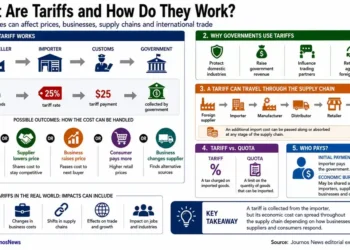
The European Commission announced new steel import safeguards alongside a 3 euro ($3.42) customs duty on small parcels previously exempt from import charges. EU officials said the policies are intended to strengthen European industries, improve consumer safety, and create fairer trading conditions.
European Commission President Ursula von der Leyen said the rapid increase in low-value online imports has placed European retailers at a competitive disadvantage while allowing products that often fail to meet EU safety standards to enter the market.

New Duty Targets Low-Value Imports
Beginning Wednesday, the EU removed the “de minimis” customs exemption for parcels valued below 150 euros.
According to the European Commission, Chinese e-commerce platforms such as Temu and Shein account for about 90% of this segment of online trade. The United States adopted a similar policy last year.
The Commission said approximately 5.9 billion small parcels entered the EU in 2025, up sharply from about 1.4 billion in 2022. Although these shipments represented roughly 97% of all imported parcels, they accounted for only about 2% of the total value of imports.
EU officials also said many of the products failed safety inspections and raised environmental concerns because of excessive plastic packaging.
Bernd Lange, chair of the European Parliament’s trade committee, welcomed the measure, describing it as a stronger response to the growing volume of low-cost imports.
■ Related News


However, Gary Ng of the Central European Institute of Asian Studies said the relatively small customs duty is unlikely to significantly narrow the price gap between European and Chinese products. He added that while the measure may discourage impulse purchases, consumers and retailers could still reduce costs by placing larger group orders.
Steel Industry Receives Additional Protection
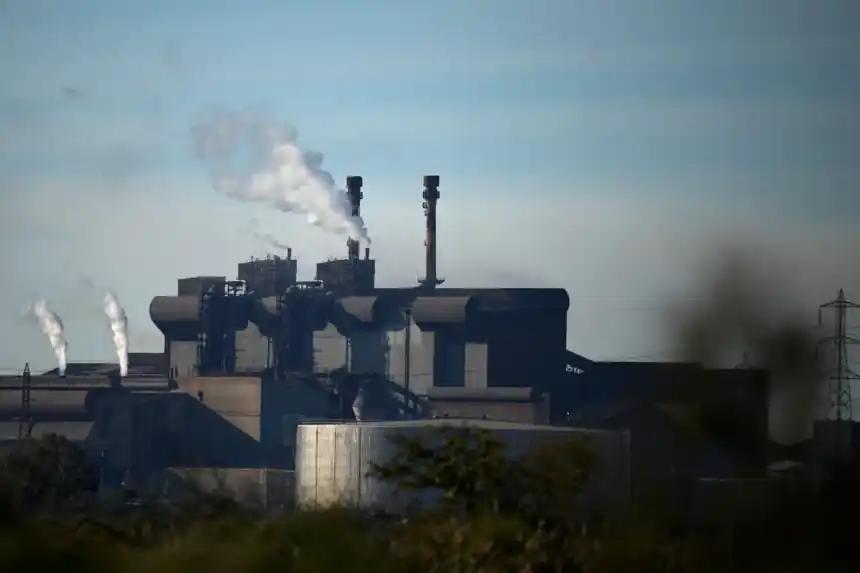
The European Commission also announced revised steel import safeguards designed to shield European manufacturers from what it described as the damaging effects of global overcapacity.
Under the new framework, tariff-free steel imports will be capped at 18.3 million metric tons annually. Imports exceeding those quotas will face a 50% tariff across 26 categories of steel products.
The rules also require importers to disclose where the “melt and pour” stage of steel production occurred, a measure intended to prevent products from being rerouted through third countries to avoid trade restrictions.
The Commission said the safeguards are intended to protect a strategically important industry and preserve jobs across the bloc.
Growing Trade Imbalance With China
The measures come as the EU’s trade deficit with China continues to widen.
According to the report, the deficit reached approximately 360 billion euros ($410 billion) in 2025 and has continued increasing in 2026.
At the same time, China’s global trade surplus reached nearly $1.2 trillion last year despite higher U.S. tariffs introduced under the Trump administration. Chinese exports of advanced technology products and vehicles have continued to grow, helping sustain its export-driven economy.
The European Steel Association has warned that crude steel production across Europe has fallen to historic lows while imported steel occupies a growing share of the market.
Director General Axel Eggert urged EU policymakers to implement the new safeguards quickly, warning that further delays could result in additional losses of industrial capacity.
Although China produces more than half of the world’s steel, the EU imports much of its steel from countries including the United Kingdom, Ukraine, India, Taiwan, Turkey, Japan, and South Korea. The new rules include certain exemptions for Ukraine because of the ongoing war with Russia.
Beijing Signals Opposition
China has already indicated it opposes the new measures, even though they are not directed exclusively at Chinese exports.
Economist Alicia García-Herrero of French bank Natixis said Beijing is likely concerned the new rules could become a model for broader trade actions targeting Chinese industrial overcapacity.
China’s Ministry of Commerce warned in May that it would respond firmly to what it described as discriminatory measures against Chinese companies and products.
Meanwhile, researchers at Tsinghua University in Beijing recently warned of what they called a “wolf pack effect,” arguing that coordinated trade restrictions by multiple countries could increasingly challenge China’s export sector and international business environment.
Chinese officials have rejected the characterization of “China Shock 2.0,” instead describing China’s manufacturing growth as an opportunity that benefits global markets through technological innovation.
Trade Talks Continue
Despite rising trade tensions, diplomatic engagement between Brussels and Beijing remains ongoing.
Chinese Commerce Minister Wang Wentao met European Union Trade Commissioner Maroš Šefčovič in Brussels earlier this week to discuss efforts to rebalance trade relations.
Following the meeting, Šefčovič said the EU remains open to trade but must also protect its industrial base and ensure fair competition for European companies.
He said meaningful progress toward rebalancing trade should be achieved before an October deadline, emphasizing that maintaining current trade conditions is “not an option.”
Tags: European Union, China, European Commission, Ursula von der Leyen, Steel Industry, Trade, E-Commerce, Temu, Shein, Maroš Šefčovič, Tariffs, Global Trade