Greece, Athens – Greece’s government has unveiled a €3.5 billion package of tax cuts, wage increases and household support measures extending through 2030, setting out a long-term economic agenda less than a year before the country’s next general election.
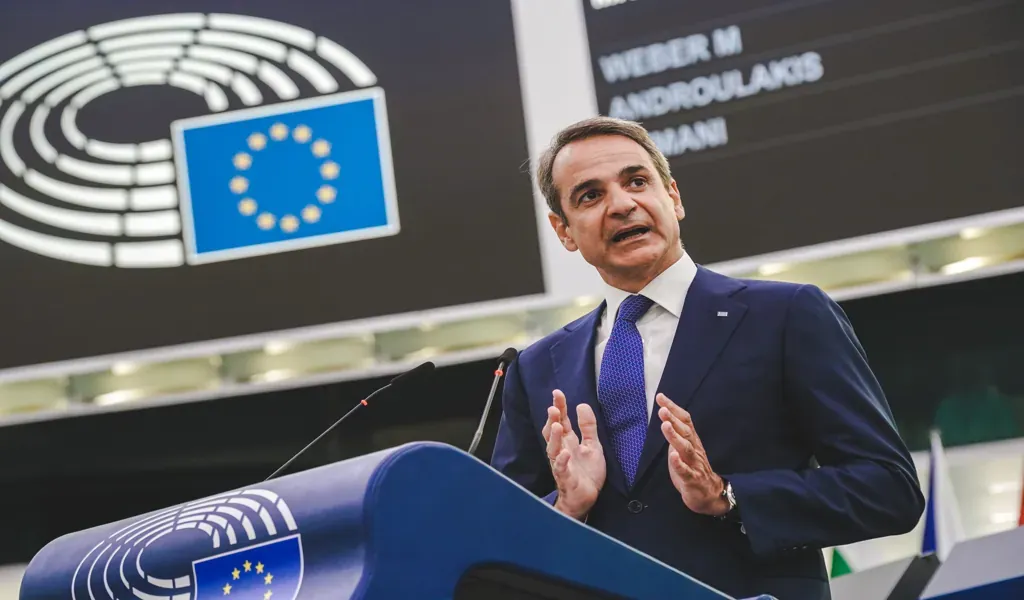
Prime Minister Kyriakos Mitsotakis presented the measures during his annual address at the Thessaloniki International Fair, describing them as a four-year economic roadmap. The government estimates that the measures will cost about €2.2 billion in 2027 before rising to roughly €3.5 billion by 2030.
Mitsotakis has ruled out an early election and said the next national vote will be held in spring 2027.

Families, farmers and workers targeted by tax measures
A major part of the program focuses on reducing income-tax burdens for households and selected groups of workers.
The government plans to eliminate income tax for professional farmers earning up to €20,000 annually. Families with three children will also receive a zero income-tax rate on earnings up to €20,000 under the proposed measures.
For self-employed workers, the advance income-tax payment will fall from 55% to 50% beginning with the 2027 tax year. The package also changes the calculation of taxable income for some professionals and reduces certain imputed-income charges.
The measures are intended to increase disposable income while extending tax relief across groups that have faced different forms of financial pressure.
Public employees and pensioners included
The program also provides new permanent payments for public-sector employees and pensioners.
■ Related News



From 2027, the government plans to introduce a €500 Christmas allowance for about 720,000 public employees. Mitsotakis said the payment will count toward pensionable earnings.
Public-sector measures will accompany annual wage adjustments that are partly linked to increases in the minimum wage.
Pensioners over 65 are also set to receive a permanent annual payment of €400, while the package includes additional support for people with disabilities and uninsured elderly people.
Government raises minimum-wage ambitions
Mitsotakis also set out higher wage targets extending beyond the next election.
He said the minimum wage will exceed €950 in April 2027, moving above a target previously established by his government for that year. The next objective is to reach €1,000 by January 2028.
The government is also targeting an average monthly salary above €1,800 by 2030.
Those targets place wage growth at the center of the government’s longer-term economic agenda as it seeks to translate broader economic performance into higher household incomes.
Businesses to receive additional tax incentives
The package extends tax relief to companies and investment.
Businesses outside the Attica region will have the annual business tax abolished from 2027, while the charge in Attica will be progressively reduced before being eliminated by 2029.
The government also plans to accelerate depreciation for business equipment, reducing the depreciation period from 10 years to six.
For legal entities, advance tax payments are scheduled to decline progressively from 80% to 50% beginning in 2028.
The measures are intended to reduce business costs while supporting investment and economic activity.
Housing and energy measures broaden the package
The economic program also addresses household costs outside the tax system.
Household electricity network charges are scheduled to fall by half from January 2027, while the government plans to gradually reduce wholesale electricity prices by 30% between 2027 and 2029.
A new housing initiative, “Spiti mou III,” is expected to begin in early 2027. Mitsotakis said eligibility would be expanded to allow more prospective homeowners to participate.
Housing affordability and purchasing power remain central concerns addressed by the package, which combines direct financial support with measures intended to reduce household costs.
Government ties spending plans to economic growth
Mitsotakis presented the program against the backdrop of Greece’s recovery from the fiscal crisis that dominated much of the previous decade.
The government is targeting annual economic growth above 2%, unemployment below 6% and public debt below 110% of gross domestic product by 2030.
It is also seeking average monthly wages above €1,800 and continued increases in the statutory minimum wage.
The government says sustained economic growth will provide the fiscal capacity required to support higher household incomes and maintain the new measures.
Election timetable gives package political significance
The economic program comes as Mitsotakis prepares for the 2027 general election, although he has said he will not seek an earlier vote.
That timetable gives the measures an immediate political dimension while allowing the government to frame them as part of a multi-year economic strategy rather than a single election-year intervention.
The package includes measures taking effect in 2026, alongside policies beginning in 2027 and extending through 2030.
Its political and economic significance will ultimately depend on whether households see meaningful gains in disposable income while the government maintains the fiscal performance required to finance the commitments.
Reporting Credit: Office of the Prime Minister of the Hellenic Republic; Greek Prime Minister Kyriakos Mitsotakis’ 90th Thessaloniki International Fair address and Sept. 7, 2026 press conference.