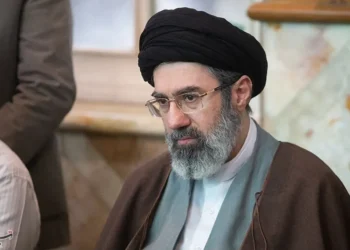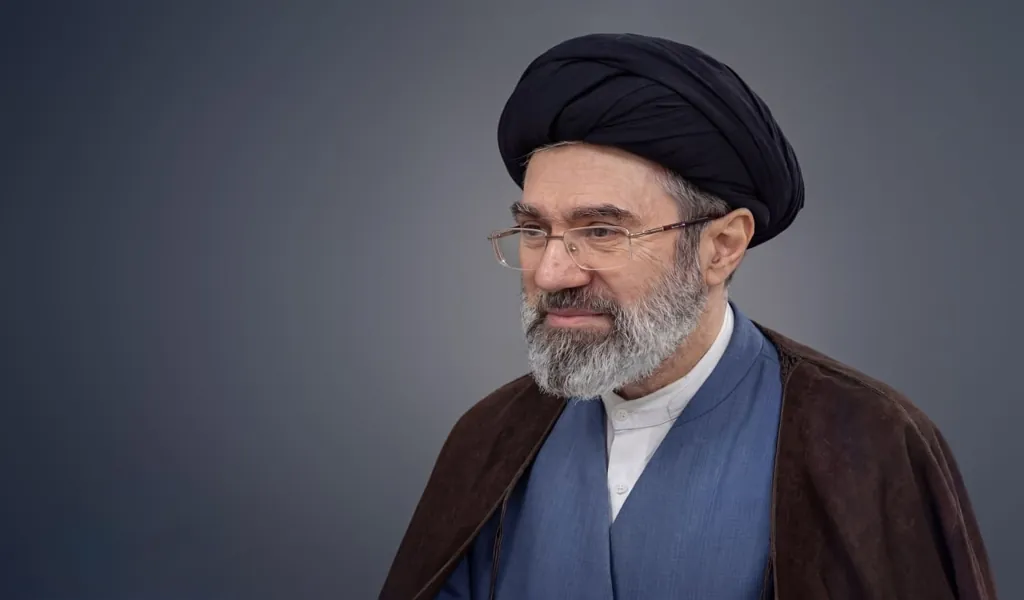
DUBAI, United Arab Emirates – Six months into the war with the United States and Israel, Iran’s leadership is increasingly organized around hard-line military commanders and clerics who appear determined to withstand American pressure while preventing renewed unrest at home. The shift follows the deaths of much of Iran’s previous senior leadership, including Supreme Leader Ayatollah Ali Khamenei, and the emergence of his son, Ayatollah Mojtaba Khamenei, as Iran’s new supreme leader.
Rather than producing the political collapse that President Donald Trump initially hoped for, the war has helped push Iran’s remaining leadership toward tighter internal control and a more confrontational position toward Washington.
Iran’s rulers are now preparing the country for a potentially prolonged confrontation, even as the war has placed enormous pressure on the economy and exposed divisions among political factions.

Hard-liners consolidate control
Mojtaba Khamenei has moved to strengthen his position by surrounding himself with longtime hard-line allies.
Among the most significant appointments is Mohsen Rezaei, a former commander of the Islamic Revolutionary Guard Corps, and Hossein Taeb, a veteran intelligence official who has been appointed to lead Iran’s Basij paramilitary force.
The appointments announced in August have reinforced the influence of officials with long histories inside Iran’s security establishment. Analysts cited by the Associated Press describe the new leadership as a closely connected group of senior military and security figures.
The appointments also send a message about the government’s priorities: preserving the Islamic Republic’s political system and preventing another wave of domestic unrest.
Iran’s new supreme leader remains largely unseen
One of the most unusual features of Iran’s postwar leadership is the absence of Mojtaba Khamenei from public view.
■ Related News
The new supreme leader has not made a public appearance since the war began, fueling speculation about his health and his ability to govern directly.
Iranian officials maintain that he remains involved in major decisions and continues to exercise authority.
But the lack of recent photographic, video or audio evidence has created uncertainty around the country’s leadership at a time when Iran is facing military, economic and political pressure.
The uncertainty has not prevented Iran’s political and military institutions from functioning.
The Revolutionary Guards and the Supreme National Security Council have played important roles in maintaining the government’s authority and coordinating the country’s response to the war.
Tehran rejects pressure from Washington
Iran’s leadership has shown little willingness to accept an agreement with the Trump administration on U.S. terms.
Iranian officials have demanded changes to the American position before negotiations can resume, while continuing to insist on its right to defend itself and maintain control over the Strait of Hormuz.
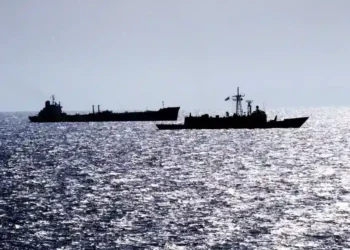
The strategic waterway has become one of the central pressure points of the conflict because it is a major route for global oil and liquefied natural gas shipments.
Washington, meanwhile, has intensified sanctions and economic pressure in an attempt to isolate Iran.
The result has been a confrontation in which neither side has achieved a decisive political resolution.
Economic pressure is mounting
Iran’s defiance comes at a steep economic cost.
President Masoud Pezeshkian has reported a 35% decline in foreign trade, while annual inflation has climbed to about 66%, according to Reuters.
The U.S. blockade and sanctions have further restricted Iran’s ability to export oil and access international financial markets.
Pezeshkian has called for economic stabilization and reducing the country’s dependence on the U.S. dollar while also supporting efforts to revive diplomatic arrangements that could provide Iran with economic relief.
The economic situation could become one of the greatest challenges to the government’s strategy.
Iran’s leadership must maintain domestic stability while the population faces higher prices, declining trade and restrictions on economic activity.
Authorities are preparing for dissent
The government’s concern is not limited to the external war.
Iranian authorities have increasingly focused on preventing domestic opposition from turning into another nationwide protest movement.
Security forces have already targeted suspected opponents and people accused of cooperating with foreign governments.
More recently, Iranian authorities have moved toward tougher measures against students, activists and others viewed as potential sources of dissent. Rights groups reported in July that more than 100 Iranian students had been arrested, expelled or imprisoned amid an expanding crackdown at universities.
The government has also considered legislation imposing severe penalties on contacts with foreign media as part of a broader effort to prevent what officials describe as foreign influence.
The Basij is again central to internal security
Taeb’s appointment to lead the Basij is particularly significant.
The paramilitary organization has historically been used by Iran’s government to suppress demonstrations and enforce social and political control.
Putting a veteran intelligence official in charge of the force reinforces the importance the leadership places on preventing unrest.
The move comes after years of protests that challenged the Islamic Republic, including demonstrations over economic conditions, political restrictions and women’s rights.
The new leadership appears determined not to allow another large-scale protest movement to develop while Iran is under military pressure.
Moderates face a difficult choice
President Pezeshkian and other more moderate political figures have advocated diplomacy as a way to prevent further economic destruction.
But the balance of power remains heavily tilted toward the military and security establishment.
That creates a difficult situation for Pezeshkian.
His government must address the country’s economic crisis while operating within a political system increasingly dominated by officials who favor confrontation and strict internal control.
The division does not necessarily mean the Iranian leadership is close to breaking apart.
Instead, it suggests a government attempting to manage internal disagreement without allowing it to threaten the political system.
The war has not produced the political outcome Washington expected
When the conflict began, Trump expressed hopes that military pressure could bring about a major political transformation in Iran.
Six months later, Iran’s political system remains in place.
The country’s senior leadership has suffered extraordinary losses, its economy has deteriorated and its military infrastructure has been heavily damaged.
Yet the surviving leadership has reorganized around institutions that have long been central to the Islamic Republic.
The result is a government that appears weaker economically but more security-focused politically.
A prolonged confrontation remains possible
Iran’s leadership appears to be preparing for the possibility that the conflict will continue.
Officials have little confidence in agreements with Washington after Iran came under attack while negotiations were underway, according to the Associated Press.
That experience has reinforced the view among hard-liners that concessions could leave the country vulnerable to another attack.
At the same time, the economic consequences of continued confrontation are becoming increasingly difficult to absorb.
That leaves Tehran facing a strategic dilemma: negotiate with Washington and risk appearing to surrender under pressure, or continue resisting and expose the Iranian economy and population to deeper hardship.
The Strait of Hormuz remains a major pressure point
Control of the Strait of Hormuz has become particularly important.
Iran maintains that the waterway remains under its control, while the United States has challenged Tehran’s ability to restrict international shipping.
The strait carries a substantial share of the world’s energy trade, making any prolonged disruption a threat well beyond Iran and the Persian Gulf.
For Tehran, the waterway provides one of its most important sources of leverage.
For Washington and global energy markets, it remains one of the greatest risks created by the continuing conflict.
What happens next
The immediate future of Iran’s political system will depend on whether its leadership can maintain unity while absorbing the economic and military consequences of the war.
The government’s increasingly hard-line appointments suggest that Tehran is prioritizing internal security and resistance over political liberalization.
But economic pressure could test that strategy.
If inflation, unemployment and shortages continue to worsen, the government could face renewed public anger.
For now, however, Iran’s leadership appears determined to prevent that anger from becoming organized political opposition.
Six months after the war began, the Islamic Republic has not collapsed.
Instead, it has become more militarized, more security-focused and increasingly resistant to internal dissent, even as the economic costs of its confrontation with Washington continue to rise.
Key Facts
- Conflict: U.S.-Israel war with Iran
- War began: February 28, 2026
- Iran’s supreme leader: Ayatollah Mojtaba Khamenei
- Previous supreme leader: Ayatollah Ali Khamenei
- Iranian president: Masoud Pezeshkian
- Major internal-security appointment: Hossein Taeb to lead the Basij
- Reported foreign-trade decline: 35%
- Reported annual inflation: 66%
- Major strategic issue: Strait of Hormuz
- Current trend: Hard-line consolidation and increased pressure on dissent
- Status: DEVELOPING
Reporting Credit: Iranian government — Supreme Leader’s Office; Iranian Presidency; Islamic Revolutionary Guard Corps; Iranian judiciary and security authorities; Iran’s state media and official government statements.