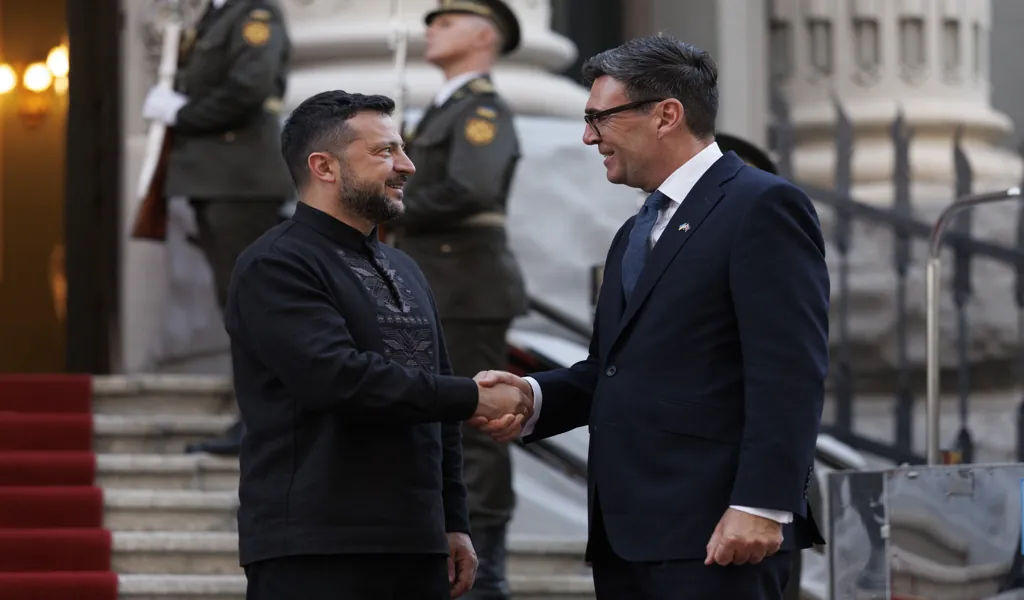
LONDON – Britain will share classified technical information with Ukraine to support the development of Ukrainian-produced long-range missiles, Prime Minister Andy Burnham said Monday during a visit to Kyiv.
The agreement will allow British defense company MBDA to provide Ukraine with technical details on U.K.-made components used in the Storm Shadow missile. The information is intended to help Ukraine develop the capacity to assemble its own version of the weapon.
The cooperation could eventually give Kyiv greater control over the production of long-range strike weapons. However, the initiative is not expected to provide an immediate change in Ukraine’s battlefield capabilities.

Britain Opens Technology Path for Ukrainian Missile Production
The weapons involved are part of the Storm Shadow and SCALP missile family. Britain uses the Storm Shadow designation, while France operates the comparable SCALP missile.
The air-launched cruise missiles combine French and British technology and have a reported range of more than 250 kilometers (155 miles). MBDA describes them as precision weapons designed to strike fixed targets, including hardened structures and important infrastructure.
The systems use advanced navigation technology and are designed to reduce their detectability during flight.
Storm Shadow and SCALP missiles are operated by Britain, France and Italy, as well as other countries that have received the weapons.
Ukraine has already been discussing plans with France to establish missile-production facilities inside the country. The extent of those plans and the timetable for Ukrainian-produced missiles entering service remain uncertain.




Technology Transfer Is Unlikely to Produce Immediate Results
The British agreement is primarily a long-term industrial and military-capability measure.
Douglas Barrie, a senior fellow at the International Institute for Strategic Studies, said the eventual effect would depend partly on how quickly Ukrainian-produced missiles could be assembled and brought into operational service.
Arun Dawson, a researcher at King’s College London’s Freeman Air and Space Institute, said the cooperation would not address Ukraine’s immediate military requirements and was unlikely to have a significant effect before next year at the earliest.
That distinction is important for Ukraine because Kyiv continues to face an immediate shortage of air-defense capabilities.
Ukrainian President Volodymyr Zelenskyy said Sunday that Ukraine was receiving substantially fewer Patriot air-defense systems while Russian ballistic-missile attacks were increasing.
The availability of Patriot systems has become a particular concern as the United States and European countries face difficulties expanding production.
Long-Range Missiles Could Expand Ukraine’s Options
Although domestic missile production would not solve Ukraine’s immediate air-defense needs, a larger supply of long-range cruise missiles could provide Kyiv with additional options for striking Russian military infrastructure.
Dawson said the weapons could potentially be used against facilities involved in Russia’s ballistic-missile operations.
Matthew Savill, director of military sciences at London’s Royal United Services Institute, said Ukraine’s development of ballistic and cruise missiles could complement its extensive use of drones.
Cruise missiles such as SCALP and Storm Shadow can travel faster than many drones and carry warheads designed for attacks against hardened or buried targets. That gives them capabilities that may not be replicated by slower, less heavily armed systems.
The effort also reflects Ukraine’s broader strategy of expanding domestic defense production and reducing its dependence on foreign deliveries.
Britain Has Supplied Long-Range Weapons Since 2023
Britain became the first country to provide Ukraine with Storm Shadow missiles in 2023.
The weapons gave Kyiv the ability to strike targets significantly farther behind the front line, including targets in Russia and Russian-occupied Crimea.
Britain is also cooperating with Ukraine on other long-range weapons programs. Officials have been testing a ground-launched strike system designed to reach targets more than 500 kilometers (310 miles) away and carry a 225-kilogram (496-pound) warhead.
The latest technology-sharing agreement therefore extends Britain’s existing support for Ukraine into the area of domestic weapons production.
Russia Condemns the Agreement
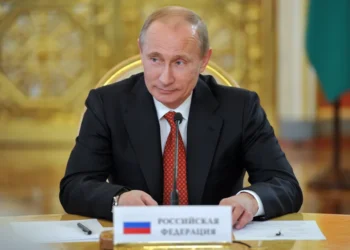
The Kremlin criticized Britain’s continued military support for Ukraine.
Russian presidential spokesman Dmitry Peskov accused London of escalating the conflict by providing additional assistance to Kyiv.
Burnham rejected the accusation when questioned about Russia’s criticism, responding: “Who started the fire?”
The technology transfer nevertheless represents a significant step in Britain’s military cooperation with Ukraine because it focuses not only on supplying weapons but also on helping Kyiv develop its own production capabilities.
The immediate military effect is expected to remain limited. The longer-term significance will depend on whether Ukraine can establish production lines, manufacture the required components and successfully bring domestically assembled long-range missiles into service.
This report is based on reporting by The Associated Press.