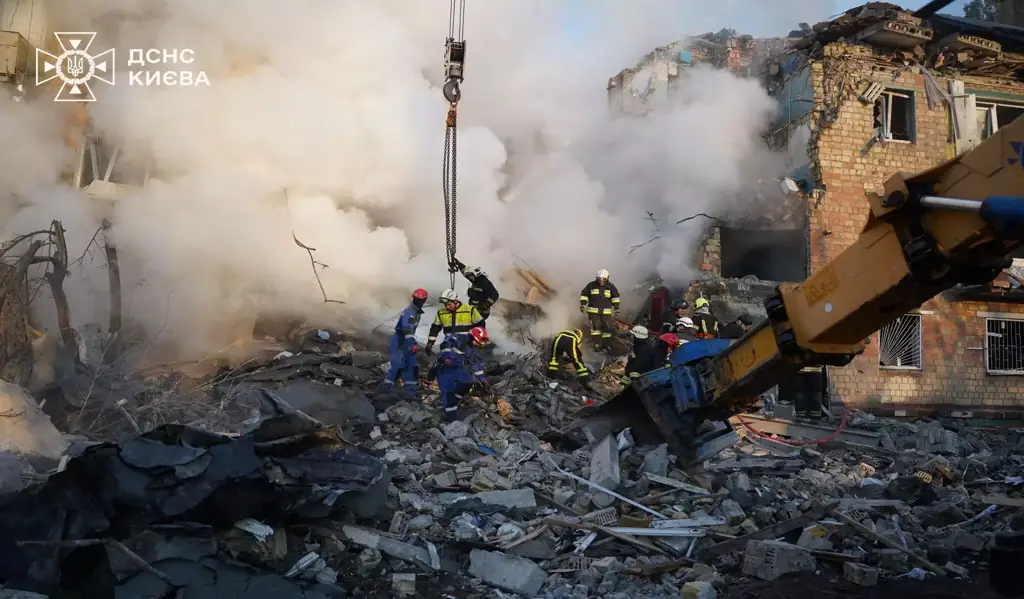
KYIV, Ukraine – Russia’s growing use of ballistic missiles is placing increasing pressure on Ukraine’s air defense network, exposing the country’s reliance on a limited number of advanced Patriot missile systems as supplies of interceptor missiles remain constrained.
Unlike cruise missiles, which fly at lower altitudes along more predictable routes, ballistic missiles follow steep, high-speed trajectories that leave air defense crews with only a brief window to detect, track and intercept incoming warheads before impact.
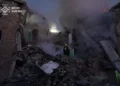
The challenge was highlighted during recent strikes on Kyiv, where Ukrainian President Volodymyr Zelenskyy said at least 17 people were killed and dozens more were injured after Russian ballistic missiles struck multiple locations, including a brewery, a warehouse and a mail-sorting facility.

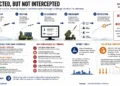
Patriot System Remains Ukraine’s Primary Ballistic Missile Defense
According to Ukrainian Air Force spokesperson Yurii Ihnat, the U.S.-made Patriot air defense system remains the only platform currently operated by Ukraine capable of intercepting several of Russia’s most advanced ballistic missile threats.
Those include the Iskander-M ballistic missile, modified S-300 and S-400 missiles used in ground-attack roles, and the Zircon missile, whose extreme speed presents interception challenges similar to those posed by ballistic weapons.
The Patriot’s PAC-3 interceptor is designed to destroy incoming ballistic missiles through direct impact rather than relying primarily on explosive fragmentation. Successfully engaging these weapons requires rapid detection, accurate trajectory calculations and immediate launch decisions within seconds.
Military analysts say the combination of speed, altitude and steep descent makes ballistic missiles substantially more difficult to intercept than cruise missiles.
Thomas Withington, an electronic warfare specialist at the Royal United Services Institute, compared the challenge to attempting to catch an object traveling at extremely high speed, noting that interception becomes significantly more difficult as velocity increases.


Limited Coverage Leaves Critical Areas Vulnerable
Even advanced Patriot batteries cannot provide complete protection.
Their effectiveness depends on being positioned close enough to defended areas and having sufficient interceptor missiles available when attacks occur.
Ukrainian officials have repeatedly said the country lacks enough Patriot systems and interceptor stockpiles to defend every major city and critical infrastructure site simultaneously.
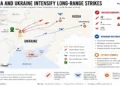
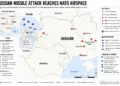
Russia frequently combines ballistic missiles with cruise missiles, long-range drones and decoys during coordinated attacks, forcing Ukrainian air defense units to prioritize targets while conserving limited interceptor inventories.
As a result, cities outside Patriot coverage—or locations where interceptor supplies have been depleted—remain especially vulnerable to missile strikes.
Global Demand Continues to Pressure Missile Supplies
Ukraine’s shortage of interceptor missiles reflects broader international demand for advanced air defense systems.
According to previous Associated Press reporting, conflicts involving the United States, Israel and Iran have consumed significant numbers of Patriot and THAAD interceptors, placing additional pressure on production and inventories.
Although the Pentagon has said it maintains substantial stockpiles, expanding manufacturing capacity will take time.
Lockheed Martin delivered more than 600 PAC-3 MSE interceptor missiles during 2025 and plans to increase annual production capacity to approximately 2,000 missiles by the end of the decade.
Europe is also expanding manufacturing capabilities. NATO has announced that the continent’s first Patriot missile production facility is expected to begin operations in Germany later this year.
Political uncertainty has also affected future supplies.
During a NATO summit last month, President Donald Trump said the United States would provide Ukraine with a license to manufacture Patriot systems domestically. Weeks later, however, he said no final decision had been made.
Defense officials and industry experts told The Associated Press that even if approval is eventually granted, establishing domestic Patriot production in Ukraine would likely require several years before meaningful output could begin.
Ukraine Pursues Alternative Defense Strategies
Alongside seeking additional interceptor missiles, Ukraine is working to reduce reliance on air defenses by targeting missile launch systems before attacks are launched.
People familiar with discussions told The Associated Press that Zelenskyy asked Trump to help secure Elon Musk’s approval for expanded Ukrainian use of Starlink satellite communications to support targeting operations inside Russia, where access has been restricted.
Neither the White House, the Ukrainian Embassy nor SpaceX has publicly confirmed the request.
Ukraine is also developing a domestic missile defense system known as Freya, intended to provide a lower-cost alternative to Patriot interceptors.
In July, Ukraine and nine European countries formed a coalition to jointly develop an air and missile defense capability. Zelenskyy said participating countries hope to produce a shared system within 12 months, although Freya remains under development and no operational timetable has been announced.
Following the latest Russian missile attacks, Zelenskyy said Ukraine received only about one-third as many air defense missiles during the first half of 2026 as it did during the same period in 2025.
He argued that countries unable to increase interceptor deliveries should strengthen sanctions targeting Russia’s missile production, saying parts of Moscow’s ballistic missile manufacturing sector remain largely unaffected by existing restrictions.
As Russia continues expanding its use of high-speed missile strikes, Ukraine’s ability to defend population centers and critical infrastructure is expected to depend heavily on continued international military support, increased interceptor production and the development of new domestic air defense capabilities.
This report is based on reporting by The Associated Press.